Category: Dental — Preventive & Restorative | Medical Specialist: Dentist; restorative dentist; preventive dentist | References: American Dental Association (ADA); National Institute of Dental and Craniofacial Research (NIDCR)
Introduction: When “Just Baby Teeth” Become a Big Problem
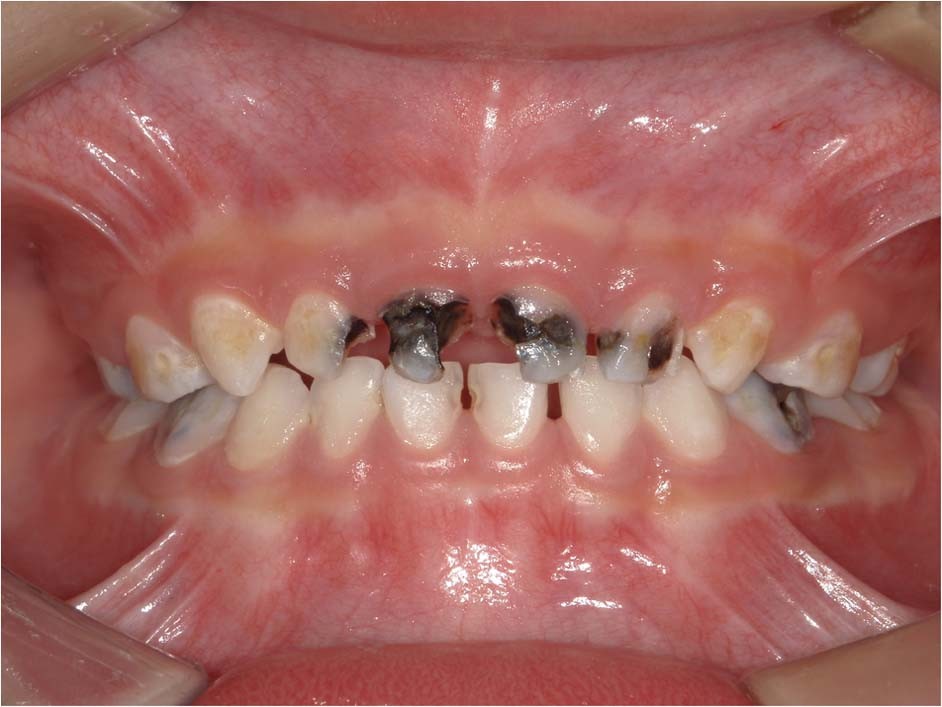
A child may have only one tiny white spot on a baby tooth—and yet that spot can be the beginning of a much bigger problem.
Early childhood caries (ECC) is one of the most common chronic diseases affecting young children. It can progress quickly, causing tooth sensitivity, pain, difficulty eating, disturbed sleep, infection, and missed activities. The World Health Organization notes that more than 530 million children worldwide have dental caries affecting their primary teeth, highlighting the scale of the problem.
The encouraging part? ECC is largely preventable, and modern early childhood caries treatment is no longer simply about “drilling and filling.” Depending on the child’s age, risk level, and severity of decay, treatment may include fluoride, dietary changes, minimally invasive techniques, restorations, or more advanced care.
The key is recognizing the problem before a small lesion becomes a painful emergency.
What Is Early Childhood Caries?
Early childhood caries is tooth decay occurring in young children, particularly during the first years of life. It can affect newly erupted primary teeth and may progress rapidly because young teeth can be more vulnerable to acid attacks.
The disease is multifactorial. It is not caused simply by “eating sweets” or by poor brushing.
The American Academy of Pediatric Dentistry (AAPD) describes ECC as a chronic disease resulting from an imbalance between multiple risk factors and protective factors over time.
That distinction matters.
A child may brush regularly but still have a high risk because of frequent sugary drinks. Another child may occasionally eat sweets but have excellent fluoride exposure, good oral hygiene, and a low overall caries risk.
How Does Tooth Decay Start?
The process is surprisingly simple:
- Oral bacteria use sugars and fermentable carbohydrates.
- Acids are produced.
- Repeated acid attacks remove minerals from enamel.
- Saliva and fluoride can help repair early mineral loss.
- When mineral loss repeatedly exceeds repair, the enamel breaks down.
- A visible cavity eventually develops.
The National Institute of Dental and Craniofacial Research explains that an early white spot can represent mineral loss and, at this stage, decay may potentially be stopped or reversed.
This is why early detection is so valuable.
What Causes Early Childhood Caries?
ECC usually develops through an interaction between bacteria, diet, teeth, saliva, fluoride exposure, oral hygiene, and everyday habits.
1. Frequent Sugar Exposure
The issue isn’t only how much sugar a child consumes—it is how often the teeth are exposed to it.
Frequent sipping of:
- Fruit juice
- Sweetened milk or milk drinks
- Soft drinks
- Sweetened tea
- Flavoured beverages
- Sugary snacks
- Sticky sweets
can repeatedly expose teeth to acid-producing bacteria.
WHO identifies high consumption of free sugars, inadequate fluoride exposure, and inadequate plaque removal as important contributors to dental caries.
2. Bottle and Night-Time Feeding Habits
One classic pattern of ECC involves prolonged or frequent exposure to milk, formula, juice, or other carbohydrate-containing liquids—particularly when a child falls asleep while feeding.
The important point is not to blame parents. Feeding routines can be complicated, especially during infancy.
Instead, think of it as a risk-management issue: once teeth erupt, prolonged and frequent exposure to fermentable carbohydrates deserves attention.
3. Inadequate Fluoride Exposure
Fluoride strengthens enamel and helps reverse early mineral loss.
Children should use age-appropriate amounts of fluoride toothpaste under caregiver supervision. Current AAPD recommendations support twice-daily brushing with a rice-sized smear for children younger than 3 years and a pea-sized amount for children aged 3–6 years.
4. Plaque Accumulation
Young children rarely have the dexterity to brush perfectly on their own.
That is why parental involvement matters.
A useful rule is:
Let children practice brushing, but let adults finish the job.
5. Enamel Defects and Other Risk Factors
Some children have developmental enamel abnormalities that can increase susceptibility to caries.
ECC risk can also be influenced by:
- Limited access to dental care
- Socioeconomic circumstances
- Dietary patterns
- Oral hygiene habits
- Fluoride exposure
- Frequent snacking
- Previous caries experience
- Certain medical or developmental circumstances
WHO emphasizes that social and environmental determinants can significantly influence childhood oral health.
Symptoms and Signs of Early Childhood Caries
One of the tricky things about ECC is that early decay may not hurt at all.
That means waiting for a child to complain about toothache is not a good screening strategy.
Early Signs
Parents may notice:
- Chalky white spots
- White lines near the gumline
- Yellow, brown, or dark discoloration
- Rough-looking enamel
- Small pits or grooves
- Food repeatedly getting trapped around a tooth
More Advanced Symptoms
As decay progresses, children may develop:
- Toothache
- Sensitivity to hot, cold, or sweet foods
- Pain while chewing
- Avoidance of certain foods
- Difficulty eating
- Night-time discomfort
- Irritability
- Bad breath
- Visible cavities
Untreated decay can eventually reach the pulp, resulting in infection or an abscess. NIDCR notes that advanced tooth decay may cause pain, infection, facial swelling, and fever.
Red Flags Requiring Prompt Dental Attention
Seek dental care promptly if your child develops:
- Facial or gum swelling
- Fever associated with dental symptoms
- Pus around a tooth
- Significant toothache
- Difficulty eating or drinking
- Difficulty opening the mouth
- Increasing lethargy or illness associated with oral infection
These symptoms should not be managed simply with home remedies.
Early Childhood Caries vs. Ordinary Tooth Decay
ECC is still dental caries, but its presentation and management can differ from decay in older patients.
| Feature | Early Childhood Caries | Typical Caries in Older Children/Adults |
|---|---|---|
| Age | Infants and young children | Older children and adults |
| Progression | Can be rapid | Often varies |
| Common risk | Frequent sugar exposure and feeding patterns | Diet, plaque, fluoride, lifestyle and other factors |
| Commonly affected teeth | Often upper front teeth early in disease | Depends on risk and tooth anatomy |
| Symptoms initially | May be absent | May also be absent |
| Management | Strong emphasis on prevention and behavior change | Prevention plus restorative care |
| Caregiver role | Very important | Increasingly self-managed |
WHO describes the earliest ECC pattern as often involving the upper front teeth, with disease patterns changing as children age and additional teeth erupt.
Early Childhood Caries Treatment: What Are the Options?
There is no single treatment that works for every child.
The dentist first considers the severity of disease, child’s age, cooperation, caries risk, affected teeth, symptoms, and overall health.
1. Fluoride and Remineralization
If decay is detected early, treatment may focus on stopping progression.
This can involve:
- Fluoride toothpaste
- Professional fluoride varnish
- Dietary changes
- Improved plaque control
- Regular monitoring
The AAPD recognizes fluoride as an effective tool for preventing and controlling dental caries in children.
2. Silver Diamine Fluoride
For certain cavitated lesions, silver diamine fluoride (SDF) may be used to arrest caries.
Its major advantage is that it can sometimes control active decay without immediately requiring conventional drilling.
However, there is an important trade-off: treated carious areas generally become dark or black.
The AAPD includes SDF among options for arresting cavitated caries lesions in primary teeth, while emphasizing that treatment should form part of comprehensive caries management.
WHO’s 2026 guideline also highlights minimally invasive approaches, including fluoride varnish and SDF, alongside mercury-free restorative options.
3. Dental Fillings
When a cavity has progressed beyond a stage where remineralization is realistic, the dentist may restore the tooth.
Depending on the tooth and clinical situation, materials may include:
- Glass ionomer cement
- Resin-modified glass ionomer
- Resin-based composite
- Other pediatric restorative materials
The choice depends on factors such as moisture control, cavity size, tooth location, expected lifespan of the primary tooth, and the child’s cooperation.
4. Stainless Steel Crowns
For severely damaged primary molars, a stainless steel crown may provide durable coverage.
Crowns can be particularly useful when a large portion of the tooth has been destroyed or when the tooth has undergone pulp therapy.
5. Pulp Therapy
If decay reaches the dental pulp, simply placing a filling may not be enough.
Depending on the diagnosis, pediatric pulp treatment may be considered to manage infection or inflammation and preserve the tooth until its natural exfoliation.
6. Extraction
Sometimes a primary tooth is too damaged to predictably restore.
In such cases, extraction may be recommended. If a primary tooth is lost significantly before its normal exfoliation time, the dentist may also consider whether space management is necessary.
Prevention: The Best “Treatment” for ECC
The most effective ECC strategy is to reduce risk before cavities appear.
A Practical Daily Routine
Morning
- Brush with fluoride toothpaste.
- Use a child-sized soft toothbrush.
- Supervise brushing.
During the Day
- Make water the default drink.
- Limit frequent sugary snacks and drinks.
- Avoid letting children continuously sip sweetened beverages.
Night
- Brush again with fluoride toothpaste.
- Make the final brushing of the day especially important.
- Avoid returning to sugary drinks after brushing.
For children younger than 3, AAPD recommends a rice-sized amount of fluoride toothpaste; from ages 3–6, a pea-sized amount is recommended.
When Should a Child First Visit the Dentist?
Don’t wait until your child’s first cavity.
The AAPD recommends establishing a dental home within six months of the first tooth erupting and no later than 12 months of age.
That first visit is less about performing complicated treatment and more about:
- Assessing caries risk
- Examining erupting teeth
- Discussing feeding habits
- Demonstrating brushing
- Reviewing fluoride exposure
- Identifying early enamel changes
- Creating a prevention plan
In other words, the first dental appointment can be a coaching session for the entire family.
A Parent-Friendly ECC Prevention Checklist
| Habit | Better Approach |
| Sugary drinks | Keep them limited; choose water routinely |
| Toothbrushing | Twice daily with fluoride toothpaste |
| Child brushing alone | Adult supervises and assists |
| First dental visit | By age 1 or within 6 months of first tooth eruption |
| White spots | Have them checked rather than waiting |
| Night-time routine | Brush after the final food/drink exposure |
| Regular dental visits | Follow the schedule recommended for the child’s risk level |
| Fluoride varnish | Consider when recommended by the dental professional |
Key Insight: Don’t Judge ECC by Pain
One of the biggest misconceptions about childhood tooth decay is:
“If my child isn’t complaining, the tooth must be fine.”
Not necessarily.
Early caries can be completely silent. By the time pain appears, the disease may already be considerably advanced.
Another misconception is that baby teeth don’t matter because they eventually fall out.
They do.
Healthy primary teeth help children chew, speak, maintain space for developing permanent teeth, and avoid unnecessary pain and infection. WHO emphasizes that ECC can affect children’s health and quality of life and can influence oral health across the life course.
The Bigger Picture: Treat the Child, Not Just the Cavity
The most effective early childhood caries treatment doesn’t end when the cavity is restored.
If the underlying risk factors remain unchanged, another cavity may appear a few months later.
A better approach is to ask:
Why did this child develop caries?
Was it frequent snacking? A sugary bedtime drink? Difficulty brushing? Limited fluoride exposure? Delayed dental care? A combination of several factors?
That question shifts treatment from simply repairing damage to breaking the cycle of disease.
The AAPD specifically recommends combining preventive strategies, dietary counseling, fluoride, minimally invasive care, and restorative treatment when necessary.
Conclusion: Small Teeth Deserve Big Protection
Early childhood caries is common, but it shouldn’t be considered an unavoidable part of childhood.
The good news is that parents have powerful tools available: fluoride toothpaste, sensible dietary habits, supervised brushing, early dental visits, and prompt treatment of suspicious changes.
And when decay does develop, modern pediatric dentistry offers more choices than simply “drill and fill.” Fluoride varnish, minimally invasive care, SDF, restorations, crowns, pulp therapy, and other approaches can be selected according to the child’s individual needs.
The most important step is often the simplest one:
Don’t wait for pain.
If you notice white spots, discoloration, sensitivity, or visible cavities, arrange a dental examination early. Treating a small problem today can prevent a much bigger problem tomorrow.
Ready to protect your child’s smile?
Explore more of our [dental care guides] and learn about practical oral-health habits, dental products, preventive care, and common childhood dental conditions. If your child already has visible decay or dental pain, speak with a qualified pediatric dentist for an individualized diagnosis and treatment plan.
Disclaimer: This article is for educational purposes only and does not replace examination, diagnosis, or treatment by a qualified dental professional.
Suggested Visual Elements
Featured image: Use a child-friendly dental illustration showing healthy primary teeth beside early and advanced caries.
Infographic: “6 Steps to Prevent Early Childhood Caries”
- First dental visit by age 1
- Brush twice daily
- Use age-appropriate fluoride toothpaste
- Reduce frequent sugar exposure
- Choose water as the routine drink
- Treat early changes promptly
Suggested internal-link topics:
- Dental Caries: Causes, Symptoms & Treatment
- Children’s Dental Care Guide
- Fluoride Treatment for Children
- How to Choose a Children’s Toothbrush
- Dental Consumables: A Complete Buying Guide
Authoritative external resources: