How to Choose the Right Diagnostic Equipment: A Complete Guide for Healthcare Professionals

Introduction: The Best Diagnostic Equipment Is Not Always the Most Advanced

1732944651338?e=2147483647&v=beta&t=CsgWkniC03sAbDnX81zhIsv7ZXt1SLBjtnnGvuHyRQ4

A new diagnostic device can look impressive on a product brochure: sharper images, faster processing, more features, and a long list of technical specifications. But healthcare professionals know that a machine can be technologically impressive and still be the wrong choice for a particular clinic, laboratory, or hospital.

The real question is not, “Which Diagnostic Equipment has the most features?” It is “Which equipment will reliably help us make better clinical decisions in our actual working environment?”

That distinction matters.

A small outpatient clinic may benefit more from a dependable, easy-to-maintain point-of-care analyser than a sophisticated system that requires specialist training. A busy hospital laboratory may prioritize throughput and automation. A rural facility may place greater value on portability, battery backup, and service availability.

The World Health Organization (WHO) recommends considering medical equipment across its entire lifecycle—from needs assessment and procurement to installation, training, maintenance, and eventual decommissioning.

In other words, buying Diagnostic Equipment is not simply a purchasing decision. It is a clinical, operational, financial, and patient-safety decision.


What Counts as Diagnostic Equipment?

Diagnostic Equipment includes devices and systems used to detect, measure, monitor, or help identify disease and health conditions.

Depending on the healthcare setting, this can include:

  • Blood pressure monitors
  • Pulse oximeters
  • Digital thermometers
  • ECG machines
  • Patient monitors
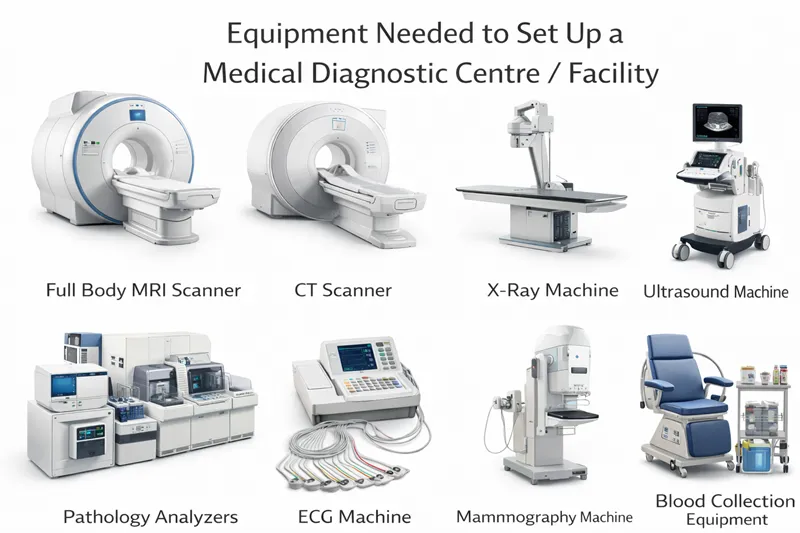
  • Ultrasound systems
  • X-ray and digital radiography equipment
  • CT and MRI systems
  • Blood glucose meters
  • Haematology and biochemistry analysers
  • Urinalysis systems
  • Microscopes
  • Point-of-care testing devices
  • In-vitro diagnostic (IVD) instruments
  • Dental diagnostic equipment
  • Ophthalmic diagnostic devices
  • Spirometers and pulmonary function testing systems

IVDs are particularly important because they include reagents, instruments, and systems used to examine specimens taken from the human body for diagnostic purposes.

The right choice depends heavily on what you need to diagnose, where testing occurs, who operates the equipment, and how the results will influence patient care.


Step 1: Start With the Clinical Need, Not the Brand

One of the most common purchasing mistakes is beginning with a product catalogue.

Instead, begin with a clinical question:

What diagnostic problem are we trying to solve?

For example, if a primary-care clinic wants to improve cardiovascular assessment, the requirement might include ECG capability, blood pressure measurement, pulse oximetry, and reliable patient monitoring.

A laboratory may instead need an analyser capable of handling a particular sample type, test menu, daily workload, and turnaround time.

Ask these questions first:

  • What conditions do we diagnose most frequently?
  • Which tests are currently outsourced?
  • How many tests are performed per day or month?
  • What turnaround time do clinicians expect?
  • Will the equipment be used for screening, diagnosis, monitoring, or all three?
  • Who will operate it?
  • What level of technical expertise is available?
  • What happens if the device fails?

This needs-based approach aligns with WHO procurement guidance, which emphasizes selecting equipment appropriate for the intended setting, users, and testing requirements rather than simply choosing products based on price.


Step 2: Compare Accuracy, Precision, and Clinical Performance

A device may produce results quickly, but speed means little if those results are unreliable.

When comparing Diagnostic Equipment, look beyond marketing claims and investigate:

Accuracy

How close are measurements or test results to the accepted reference value?

Precision

Does the equipment provide consistent results when the same sample or measurement is repeated?

Sensitivity and specificity

For diagnostic tests, these characteristics can be critical because they influence the likelihood of detecting a condition correctly.

Reproducibility

Can comparable results be achieved across operators, locations, and repeated tests?

Validation evidence

Look for credible clinical or performance evidence rather than relying exclusively on manufacturer claims.

For laboratory and IVD equipment, performance evaluation, quality control, and regulatory requirements deserve particular attention. In India, IVDs are regulated under the Medical Devices Rules, 2017 and classified according to risk.


Step 3: Check Regulatory Compliance

A diagnostic device should not enter a healthcare environment simply because it is available commercially.

Regulatory status matters because medical devices are subject to requirements concerning safety, performance, quality, labelling, manufacturing, and post-market monitoring.

For healthcare organizations in India, the Central Drugs Standard Control Organisation (CDSCO) provides regulatory information concerning medical devices and diagnostics. India regulates medical devices under the Drugs and Cosmetics Act and the Medical Devices Rules, 2017.

Check CDSCO medical-device and diagnostic guidance

Healthcare buyers should verify, where applicable:

  • Device classification
  • Applicable licence or registration requirements
  • Manufacturer/importer details
  • Intended use
  • Labelling and instructions
  • Performance documentation
  • Applicable standards
  • Calibration requirements
  • Post-market safety information

For international procurement, the applicable regulatory authority will depend on the market in which the equipment is being purchased and used. The FDA, for example, regulates medical devices marketed in the United States.

FDA medical-device regulatory overview


Step 4: Evaluate Total Cost of Ownership

The purchase price is only the beginning.

Consider the total cost of ownership (TCO) over the expected working life of the device.

Cost FactorWhat to Consider
Initial purchaseDevice, accessories, installation
ConsumablesReagents, electrodes, probes, cartridges
MaintenancePreventive and corrective servicing
CalibrationFrequency and certification costs
TrainingInitial and refresher training
SoftwareLicences, updates, subscriptions
InfrastructurePower, networking, space, ventilation
DowntimeLost testing capacity and clinical delays
ReplacementParts, batteries, sensors and accessories
DisposalDecommissioning and end-of-life requirements

This is where an apparently inexpensive device can become expensive.

For example, an analyser with a low purchase price but proprietary consumables and frequent service requirements may cost considerably more over five years than a higher-priced system with predictable operating costs.

WHO’s recent health technology assessment guidance emphasizes evaluating the clinical, economic, organizational, and broader implications of health technologies before adoption.


Step 5: Match the Equipment to Your Workflow

A technically excellent device can still fail operationally if it slows down the people using it.

Consider the entire patient journey:

Patient registration → sample collection → testing → result generation → interpretation → reporting → clinical action

Ask where the proposed equipment fits into this workflow.

For high-volume facilities, prioritize:

  • Throughput
  • Automation
  • Barcode compatibility
  • LIS/HIS connectivity
  • Multiple sample handling
  • Fast turnaround
  • Minimal operator intervention

For smaller clinics, prioritize:

  • Ease of use
  • Portability
  • Simple maintenance
  • Compact footprint
  • Rapid testing
  • Clear displays
  • Minimal training requirements

The best Diagnostic Equipment is often the device that creates the least friction between testing and clinical decision-making.


Step 6: Don’t Underestimate Connectivity

Modern diagnostic equipment increasingly produces digital data, making connectivity an important purchasing criterion.

Before buying, determine whether the device can integrate with:

  • Laboratory Information Systems (LIS)
  • Hospital Information Systems (HIS)
  • Electronic Health Records (EHR)
  • Barcode systems
  • Cloud platforms
  • Existing patient-monitoring systems

Also ask about data export formats, user permissions, audit trails, software updates, and cybersecurity.

This is especially important as diagnostic equipment becomes increasingly software-driven. The FDA’s current medical-device guidance includes specific attention to cybersecurity and software assurance as part of modern device quality and regulatory considerations.

A machine that generates excellent results but creates manual data-entry work may introduce a new source of error.


Step 7: Assess Training and Usability

A diagnostic device is only as effective as the people operating it.

During evaluation, involve actual users—not only procurement teams.

Ask nurses, laboratory technicians, radiographers, physicians, biomedical engineers, and other relevant staff to assess:

  • Interface simplicity
  • Workflow
  • Sample preparation
  • Error messages
  • Cleaning requirements
  • Calibration procedure
  • Routine maintenance
  • Result interpretation
  • Training time

A useful strategy is to arrange a hands-on demonstration before purchase.

Don’t ask only, “Can you operate this machine?”

Ask:

“Can a trained employee operate it correctly during a busy shift when something goes wrong?”

That question often reveals more than a technical brochure.


Step 8: Investigate Service, Maintenance, and Downtime

One of the most overlooked purchasing questions is:

Who will fix the equipment when it stops working?

Before signing a purchase order, investigate:

  • Local service availability
  • Response time
  • Preventive maintenance schedule
  • Availability of spare parts
  • Calibration support
  • Warranty duration
  • Extended service contracts
  • Remote diagnostics
  • Engineer qualifications
  • Expected repair turnaround time

WHO’s medical equipment management framework treats maintenance as part of the equipment lifecycle, alongside procurement, training, inventory, safe use, and decommissioning.

WHO medical equipment inventory and maintenance guidance

For a critical analyser or imaging system, downtime can affect not only revenue but also patient flow and clinical decisions.


Step 9: Consider the Physical Environment

A device designed for a sophisticated hospital may not perform equally well in every environment.

Before installation, assess:

  • Available floor or bench space
  • Electrical supply
  • Voltage fluctuations
  • UPS or backup power
  • Temperature and humidity
  • Water supply
  • Ventilation
  • Internet/network connectivity
  • Infection-control requirements
  • Accessibility for service engineers

WHO technical specifications are specifically intended to help healthcare planners and procurement teams define equipment requirements for purchasing, installation, maintenance, and training.

This is particularly relevant in settings where infrastructure is inconsistent.


Diagnostic Equipment Comparison: What Should You Prioritize?

There is no universal ranking because priorities vary by facility. However, the following framework can help:

FactorSmall ClinicHospitalDiagnostic Laboratory
Ease of useVery HighHighHigh
ThroughputMediumVery HighVery High
PortabilityHighMediumLow–Medium
AutomationMediumVery HighVery High
ConnectivityHighVery HighVery High
Service supportVery HighVery HighVery High
Consumable costHighHighVery High
Regulatory complianceVery HighVery HighVery High
Training needsHighHighVery High
Total cost of ownershipVery HighVery HighVery High

The important insight is that price should not be treated as an isolated purchasing metric.

A better question is:

What value will this equipment deliver per patient, per test, or per clinical decision over its useful life?


Five Questions to Ask Every Diagnostic Equipment Supplier

Before purchasing, ask the supplier to answer these questions in writing:

1. What is the intended use?

Make sure the manufacturer’s intended use matches your actual clinical application.

2. What evidence supports performance?

Request appropriate technical, validation, and performance documentation.

3. What are the recurring costs?

Ask specifically about consumables, software, calibration, servicing, and replacement parts.

4. What happens during downtime?

Clarify service response times, backup arrangements, loaner equipment, and escalation procedures.

5. What happens after the warranty ends?

A device may have a five-year clinical life but become difficult to support after only a few years if spare parts or software updates disappear.


A Practical Procurement Scorecard

Instead of choosing equipment based on one attractive feature, create a weighted score.

For example:

  • Clinical performance — 25%
  • Reliability — 15%
  • Total cost of ownership — 15%
  • Workflow and usability — 10%
  • Service support — 10%
  • Regulatory compliance — 10%
  • Connectivity — 5%
  • Training requirements — 5%
  • Infrastructure requirements — 5%

The exact percentages should change according to your clinical environment.

The advantage is simple: everyone evaluates the same criteria before opinions become purchasing decisions.


Common Mistakes to Avoid

Buying based on the lowest price

Low upfront cost does not necessarily mean low lifetime cost.

Choosing too many features

Every additional feature can increase training, maintenance, complexity, or cost.

Ignoring consumables

For many diagnostic systems, recurring consumables can represent a substantial portion of lifetime expenditure.

Forgetting service availability

A device without dependable technical support can become an expensive piece of furniture.

Failing to involve end users

The people who actually operate the equipment should have a voice in its selection.

Skipping a site assessment

Power, space, networking, temperature, and workflow requirements should be checked before installation.

Treating procurement as the finish line

Installation, acceptance testing, training, calibration, maintenance, inventory management, and performance monitoring should continue throughout the equipment lifecycle.


The Future of Diagnostic Equipment: Smaller, Smarter, More Connected

Healthcare diagnostics are moving toward portability, automation, artificial intelligence, remote monitoring, and decentralized testing.

Point-of-care systems can bring testing closer to the patient. Digital imaging can simplify information sharing. Connected devices can reduce manual documentation. AI-assisted technologies may support interpretation and workflow.

But technological progress does not eliminate the fundamentals.

A sophisticated device still needs:

good clinical evidence + appropriate regulation + trained users + reliable infrastructure + quality assurance + maintenance.

WHO’s health technology assessment framework reinforces this broader perspective: technology should be evaluated not only for what it can do, but also for its clinical, economic, organizational, and social implications.


Final Takeaway: Buy for the Real Clinical World

Choosing Diagnostic Equipment is ultimately about matching technology to reality.

The right device should be accurate enough for its intended clinical purpose, simple enough for its users, affordable throughout its lifecycle, compatible with the facility’s infrastructure, supported by dependable service, and compliant with applicable regulations.

Before approving a purchase, ask one final question:

“If this equipment were installed tomorrow, would it make our clinical workflow safer, faster, or more reliable?”

If the answer is yes—and the evidence, cost, service, and regulatory requirements support that conclusion—you are much closer to making a sound investment.

Healthcare professionals should remember that the most expensive Diagnostic Equipment is not necessarily the best equipment. The best equipment is the one that consistently delivers the right information, to the right professional, at the right time.

Ready to Upgrade Your Diagnostic Setup?

Whether you are equipping a clinic, expanding a laboratory, or upgrading a hospital department, evaluate equipment based on clinical need, performance, total cost of ownership, usability, compliance, connectivity, and after-sales support.

Explore your diagnostic requirements, compare suitable equipment carefully, and speak with qualified suppliers before making a final purchasing decision. A thoughtful equipment choice today can improve workflow, reduce avoidable costs, and—most importantly—support better patient care.


Suggested Visual Elements

Hero image: Healthcare professional comparing modern diagnostic devices in a clinical environment.

Infographic: “8 Steps to Choose Diagnostic Equipment”

  1. Define clinical need
  2. Compare performance
  3. Check regulatory compliance
  4. Calculate total cost
  5. Evaluate workflow
  6. Assess connectivity
  7. Check training needs
  8. Confirm service and maintenance

Suggested alt text: Healthcare professional evaluating diagnostic equipment for a modern medical facility.

Suggested comparison graphic: Diagnostic equipment selection criteria: accuracy, cost, workflow, connectivity, compliance, and maintenance.


Leave a Reply

Your email address will not be published. Required fields are marked *

Related Post

latest technology trends 2025

Healthcare Technology: New Technologies, Innovations & Industry Trends Transforming Modern Healthcare

Introduction: Healthcare Is Becoming Smarter, Not Just More Digital Imagine a doctor reviewing a patient’s medical history while an AI system highlights potential warning signs, a wearable continuously monitors vital signs from home, and a virtual consultation connects the patient to a specialist hundreds of kilometres away. This is no longer science fiction. Artificial intelligence in healthcare is becoming part of everyday clinical workflows, while telemedicine, connected medical devices, robotics, cloud computing, predictive analytics and digital health platforms are changing how healthcare is delivered. The shift is significant. An American Medical Association survey published in 2026 found that 81% of physicians surveyed reported using AI professionally, with applications ranging from summarizing medical research to documentation and patient communication. But the most important healthcare technology trend isn’t simply “more technology.” It is the movement from reactive healthcare toward predictive, personalized and continuously connected care. The question for hospitals, clinics, healthcare professionals and patients is therefore changing from “Will technology transform healthcare?” to “How can we adopt it responsibly and make it genuinely useful?” The Biggest Healthcare Technology Trends Shaping Modern Medicine Healthcare innovation is happening across several connected areas. Some technologies support clinicians directly, while others improve how patients monitor and manage their health. Technology Main Application Potential Impact Artificial intelligence Diagnosis, documentation, prediction and decision support Faster and more data-driven care Generative AI Clinical documentation, research and patient communication Reduces administrative workload Telemedicine Remote consultation and follow-up Expands access to specialists Wearable devices Continuous health monitoring Earlier detection and prevention Robotics Surgery, rehabilitation and hospital automation Greater precision and efficiency IoT medical devices Connected monitoring and equipment Real-time healthcare data Big data analytics Population and clinical analysis Better planning and decision-making 3D printing Prosthetics, implants and surgical planning Personalized medical solutions Cloud healthcare platforms Data storage and interoperability Connected healthcare ecosystems The real opportunity comes when these technologies work together rather than operating as isolated tools. 1. Artificial Intelligence in Healthcare: From Experiment to Everyday Tool Artificial intelligence is arguably the most influential healthcare technology trend today. AI systems can analyze large volumes of medical information much faster than humans. Depending on the application, they can assist with medical imaging, identify patterns in patient records, support clinical decision-making, summarize research and automate repetitive administrative tasks. The FDA maintains an evolving list of AI-enabled medical devices authorized for marketing in the United States, demonstrating how AI is moving from experimental projects into regulated medical products. Where is AI already making a difference? AI can assist with: One particularly practical application is reducing paperwork. Doctors don’t necessarily need AI to “replace” their clinical judgment. They often need technology to eliminate tasks that consume time without requiring their highest-level expertise. That distinction matters. The AMA reported that addressing administrative burden through automation was the leading opportunity identified by physicians, while privacy assurances and integration with electronic health records were among the important requirements for adoption. The next step: Generative and multimodal AI Generative AI goes beyond analyzing existing information. It can produce text, summarize documents, interpret multiple forms of information and assist with complex workflows. The World Health Organization’s guidance on large multimodal models notes that these systems can work across inputs such as text, images and video, creating potential applications across healthcare, research and drug development. However, healthcare cannot treat AI like an ordinary productivity app. A confident but incorrect AI output can have serious consequences. Human oversight, clinical validation, privacy protection and clear accountability remain essential. 2. Telemedicine and Virtual Care Telemedicine has changed the traditional assumption that healthcare requires patients and clinicians to be in the same physical location. A patient can now consult a physician remotely, receive follow-up care, share digital reports and, in some cases, transmit health information through connected devices. Telemedicine can be particularly valuable for: But telemedicine shouldn’t be viewed as a universal replacement for physical care. Some conditions still require physical examination, diagnostic testing or emergency intervention. The better model is often hybrid healthcare: combining digital convenience with face-to-face clinical care when necessary. 3. Wearables and Remote Patient Monitoring Smartwatches and connected health devices have evolved beyond counting steps. Modern wearable technologies can collect information such as heart rate, activity patterns, sleep data and, depending on the device, other health measurements. The important innovation isn’t the device itself. It is the continuous stream of information. Traditional healthcare often provides a snapshot: Patient visits doctor → measurements are taken → treatment is recommended. Connected healthcare can create a longer picture: Data is collected continuously → changes are detected → healthcare professional reviews relevant information → intervention occurs when appropriate. This could support earlier identification of concerning trends, particularly in chronic disease management. However, more data doesn’t automatically mean better healthcare. Poor-quality measurements, unnecessary alerts and patient anxiety can create new problems. The future therefore isn’t about collecting everything. It is about collecting the right information and turning it into useful clinical insight. 4. Robotics and Automation Robotics is another major healthcare innovation, particularly in surgery, rehabilitation and hospital logistics. Robotic-assisted surgical systems can help clinicians perform complex procedures with enhanced precision and control. Meanwhile, rehabilitation robots can support patients recovering from injury or neurological conditions. Automation is also appearing behind the scenes. Hospitals can use automated systems for: This creates an important but often overlooked trend: healthcare technology isn’t only about treating patients; it’s also about making healthcare organizations operationally smarter. For clinics and hospitals, better inventory systems, connected equipment and automated workflows can reduce delays and improve resource utilization. 5. Internet of Medical Things (IoMT) The Internet of Medical Things, or IoMT, connects medical devices to digital networks so that information can be collected, transmitted and analyzed. Examples include connected: Imagine a hospital where equipment status, patient measurements and maintenance information can be monitored through connected systems. That creates opportunities for predictive maintenance, faster response times and more efficient resource management. But connectivity introduces another responsibility: cybersecurity. Healthcare organizations must protect sensitive patient information and connected devices from unauthorized access. Technology that improves healthcare

SunriseHospitalTour013118 004 1536x1001 1

How to Compare Medical Equipment Before Buying: A Complete Buyer’s Guide

Buying medical equipment is rarely as simple as choosing the model with the lowest price or the longest list of features. A device may look impressive on paper yet prove difficult to maintain, expensive to operate, or poorly suited to your clinic’s workflow. The smarter approach is to compare Medical Equipment as a complete investment—not just a product. Whether you are setting up a new clinic, upgrading a hospital department, replacing an outdated device, or expanding your diagnostic capabilities, the right comparison process can protect your budget while improving patient care. The World Health Organization (WHO) recommends considering technical specifications before purchasing medical devices because good specifications support appropriate selection, implementation, maintenance, and eventual decommissioning. This guide explains exactly what to compare, what questions to ask suppliers, and which seemingly small details can make a major difference after the purchase. Why Comparing Medical Equipment Matters Two machines can perform the same basic function but deliver very different ownership experiences. Consider two patient monitors. One costs less initially, but its sensors are proprietary, replacement parts take weeks to arrive, and staff require extensive training. The second costs slightly more but uses readily available accessories, has local technical support, and requires less downtime. Which one is cheaper? The answer may change completely once you consider its entire operating life. WHO’s current health-technology-management guidance treats equipment management as a lifecycle process extending from needs assessment and procurement through inspection, training, maintenance, and decommissioning. That is why a good comparison should evaluate: Step 1: Start With the Clinical Need—not the Brand One of the most common purchasing mistakes is starting with a product catalogue. Instead, begin with the question: “What problem are we trying to solve?” For example, a small outpatient clinic may need a compact, reliable vital-signs monitor. A large hospital may prioritize connectivity, continuous monitoring, data integration, and high patient throughput. Before comparing brands, write down: WHO’s procurement guidance emphasizes needs assessment and defining minimum performance and operational requirements before selecting specific products. This simple change prevents a surprisingly expensive mistake: buying technology because it is impressive rather than because it is necessary. Step 2: Create a Technical Comparison Sheet Never compare equipment from memory. Create one standardized specification sheet and ask every supplier to complete the same fields. This makes differences much easier to identify. Comparison Factor What to Check Why It Matters Intended use Clinical applications Prevents buying unsuitable equipment Accuracy Measurement accuracy and tolerance Directly affects clinical decisions Capacity Patients/tests per hour Determines workflow efficiency Dimensions Size and footprint Ensures adequate space Power Voltage, consumption, backup requirements Important for installation and continuity Connectivity USB, Ethernet, Wi-Fi, HL7 or other interfaces Supports data integration Consumables Type, availability, cost Influences recurring expenses Maintenance Preventive maintenance requirements Helps predict downtime Warranty Duration and coverage Reduces financial risk Service Response time and technician availability Critical when equipment fails Training Included training and materials Supports safe operation Expected lifespan Manufacturer guidance Helps calculate long-term value The goal is not to find the product with the longest specification sheet. It is to find the equipment whose specifications best match your actual clinical environment. Step 3: Look Beyond the Purchase Price The purchase price is only the beginning. A more useful calculation is Total Cost of Ownership (TCO). A simple TCO formula Total Cost of Ownership = Purchase Price + Installation + Training + Consumables + Maintenance + Repairs + Software/Service Fees − Residual Value For example, suppose: At first glance, Equipment A looks like the obvious choice. But if A requires expensive consumables and frequent servicing while B has lower operating costs and better local support, B could become the more economical option over five years. WHO procurement guidance specifically notes that the most economically advantageous purchase is not necessarily the lowest tender price; delivery, installation, commissioning, training, warranty, and after-sales service also matter. The cheapest machine is not necessarily the cheapest machine to own. Step 4: Compare Quality, Safety and Compliance Price and features should never outrank patient safety. Ask suppliers for documentation demonstrating that the equipment meets the regulatory and quality requirements applicable to your market and intended use. Depending on the product and jurisdiction, this may include: For manufacturers, ISO 13485 is an internationally recognized quality-management standard specifically addressing medical devices. ISO says the standard helps organizations consistently provide medical devices and related services that meet customer and regulatory requirements. However, certification should be treated as one part of due diligence, not as an automatic guarantee that a particular model is perfect for your facility. Always verify the specific product, manufacturer, regulatory status, and documentation. Step 5: Compare Usability—Because Staff Time Has a Cost A technically advanced device can become a poor investment if staff struggle to operate it. Ask your clinical team to evaluate the equipment directly whenever possible. Look at: A useful test is to ask an actual operator to perform a typical procedure without assistance. Watch where they hesitate. Those moments are valuable purchasing information. A machine that saves 30 seconds per patient may not sound revolutionary. But at 40 patients per day, that becomes 20 minutes every day. Over hundreds of working days, small workflow improvements can become significant. Step 6: Investigate Maintenance and Service Support This is where many purchasing decisions go wrong. Equipment does not become valuable merely because it works on installation day. It must continue working reliably months and years later. WHO describes maintenance as including performance inspections, safety inspections, preventive maintenance, and corrective maintenance. Preventive maintenance is intended to extend equipment life and reduce failures. Before buying, ask: Service questions A supplier who gives vague answers before the sale may not become more responsive after it. Step 7: Compare Consumables and Accessories Sometimes the machine is affordable because the recurring products are expensive. Check every item needed to operate the equipment: Then ask whether those items are proprietary or compatible with standardized alternatives. A device requiring a ₹500 consumable for every procedure can become dramatically more expensive than a machine using a

nBFSecqGFTPZgr6dzxfrtBUSd DT joCVa4J43RtaYPtmvKfLEOcJN18Ho5NifT4hAoRkGoBYe7Annf7HK4t4JR9RNn7QKXx8R8lpGhJBiLne HUEg4MrRFfobLX2k5GJ6rt3zTpJR0ZqCd1JiYjF wb3JX BRBqdEgRGKkleOs8c QhPjwzMOgVT6KhffFh

How to Choose the Right Dental Chair for Your Clinic: A Complete Buying Guide

How to Choose the Right Dental Chair for Your Clinic A dental chair is easy to underestimate. At first glance, it looks like another piece of clinical furniture. But spend eight hours working around one and you quickly discover that the chair influences almost everything: your posture, patient positioning, assistant access, treatment efficiency, cleaning routine, and even how professional your operatory feels. I learned this the hard way: the most expensive dental chair isn’t automatically the best chair for a particular clinic. A better approach is to match the chair to your procedures, room dimensions, patient profile, workflow, and long-term service requirements. And while a conventional fixed dental chair remains the obvious choice for most permanent clinics, a portable dental chair can be surprisingly practical for mobile dentistry, outreach programs, temporary treatment rooms, home visits, camps, and clinics where flexibility matters. So, how do you choose? Let’s break it down. What Should You Look for in a Dental Chair? Before comparing brands or getting distracted by touchscreen controls and premium upholstery, start with five questions: That last question is often ignored. A chair that costs less initially but sits unusable for several days because a replacement actuator or control board isn’t readily available can become more expensive than a premium model. ISO 7494-1:2018 establishes requirements and test methods for stationary dental units and dental patient chairs, so buyers should also verify the relevant standards and documentation for the equipment they are considering. Fixed vs. Portable Dental Chair: Which Is Better? There isn’t one universal winner. The right choice depends on how your clinic operates. Feature Fixed Dental Chair Portable Dental Chair Best for Permanent clinics Mobile/temporary dentistry Mobility Low High Installation Usually required Minimal or simpler Space flexibility Moderate Excellent Heavy daily use Usually better suited Depends on model Outreach camps Less practical Excellent Home visits Impractical Excellent Integrated equipment Often extensive Usually more limited Long-term operatory setup Excellent Good for selected applications Initial setup complexity Higher Lower Storage Not usually relevant Important consideration When a Portable Dental Chair Makes Sense A portable dental chair isn’t simply a “cheaper dental chair.” Its real advantage is flexibility. Consider one if you: However, don’t buy portable equipment purely because it takes up less space. Check its weight capacity, stability, adjustment range, upholstery, folding mechanism, transport case, and compatibility with the rest of your equipment. For a busy permanent clinic performing complex restorative, surgical, implant, or endodontic procedures every day, a properly installed fixed chair may provide a more appropriate workflow. 1. Prioritize Ergonomics Over Fancy Features This is probably the most important buying decision. Dentistry involves repetitive positioning, reaching, twisting, and prolonged concentration. Poor equipment positioning can make those movements worse. A-dec, for example, specifically emphasizes ergonomics and positioning as part of reducing physical strain during clinical work. Look for a chair that allows you to: Don’t Test the Chair as a Patient—Test It as a Dentist This is a useful buying trick. When visiting a showroom, don’t simply sit in the chair and ask, “Is it comfortable?” Pretend you’re performing an actual procedure. Adjust the chair, position the headrest, sit on the operator stool, reach toward the patient’s mouth, and imagine where your assistant would sit. If your shoulder rises, your back twists, or your knees hit the chair base, you’ve just discovered a problem that a glossy brochure won’t show you. 2. Check Chair Height and Positioning Range Chair height matters more than many first-time buyers realize. A wider adjustment range can accommodate different dentists, assistants, procedures, and patient needs. Modern dental chairs can offer substantial vertical adjustment. For example, A-dec’s current chair range includes models with different height ranges and patient weight ratings, demonstrating why buyers should compare actual specifications rather than assuming every “motorized dental chair” performs similarly. Pay particular attention to: Don’t compare chairs based only on whether they are “electric” or “hydraulic.” The useful question is: Can I position my patient exactly where I need them for the procedures I perform? 3. Electric vs. Hydraulic Dental Chairs Both systems can work well. Electric Chairs Electric systems can offer precise positioning and convenient controls. Depending on the model, movement may be controlled through foot switches, touch controls, or integrated delivery-system controls. They can be particularly attractive for clinics that want programmable positions and modern digital integration. Hydraulic Chairs Hydraulic systems have been used extensively in dental equipment and can provide smooth movement and substantial lifting capability. The important point is not to choose based on technology terminology alone. Ask the supplier: A quiet, dependable chair that your service team can repair quickly is often more valuable than a chair packed with features you rarely use. 4. Don’t Ignore the Headrest The headrest looks like a small component. Clinically, it isn’t. A properly adjustable headrest helps position the patient’s head for different procedures and can make access significantly easier. Look for: If you treat children, elderly patients, or patients with limited mobility, test the headrest with those use cases in mind. 5. Patient Comfort Is Part of Clinical Efficiency Patient comfort isn’t simply about luxury. An uncomfortable patient may move more, ask for more breaks, or struggle to remain positioned during treatment. Look at: Some premium chairs use very smooth movement systems and ergonomic backrest designs specifically to improve patient positioning and access. The goal isn’t to buy the softest chair. It’s to find a chair that supports the patient without interfering with your clinical access. 6. Think About Infection Control Before Buying A dental chair is exposed to saliva, aerosols, disinfectants, gloves, instruments, and frequent cleaning. That makes surface design important. Look for upholstery and surfaces that are: Also ask the manufacturer for specific cleaning and disinfection instructions rather than assuming every surface can tolerate the same chemical. This matters because inappropriate cleaning products can damage upholstery and other components. For the dental unit itself, ISO 7494-2:2022 addresses requirements concerning air, water, suction, wastewater systems, connections, materials, construction, and related interfaces in stationary dental units. 7.