How to Build an Efficient Dental Clinic Inventory: A Complete Guide

A dental clinic can lose money in surprisingly small ways: an expired composite sitting in a drawer, five nearly identical burs nobody remembers ordering, or a sudden shortage of gloves just before a busy surgical day.

That is why an Efficient Dental Clinic Inventory is about much more than counting boxes. It is about ensuring the right product, in the right quantity, at the right time—without tying up unnecessary cash or compromising patient care.

The American Dental Association (ADA) recommends keeping dental supply costs under control and notes a general rule of thumb that inventory costs should be around 5–6% of collections. It also recommends assigning responsibility for inventory management and training a backup person.

A well-designed inventory system therefore sits at the intersection of clinical safety, purchasing, finance, infection control, and workflow efficiency.

What Does an Efficient Dental Clinic Inventory Look Like?

blog11

An efficient inventory system should answer five questions immediately:

  1. What do we have?
  2. Where is it stored?
  3. How quickly are we using it?
  4. When should we reorder it?
  5. Is it still safe and usable?

If staff have to open three cabinets, check WhatsApp messages, and call a supplier to answer those questions, the system is not really an inventory system—it is institutional memory.

A better approach is to create a centralized inventory master containing information such as:

  • Product name
  • Brand
  • Category
  • Product type
  • SKU
  • Pack size
  • Unit of measurement
  • Batch/lot number
  • Expiry date
  • Current quantity
  • Minimum stock level
  • Maximum stock level
  • Supplier
  • Purchase price
  • Storage requirements
  • Reorder status

This structure can work in a spreadsheet, inventory application, ERP, or dental practice-management system.


Step 1: Divide Your Dental Inventory into Logical Categories

One of the easiest mistakes is treating every product as an individual item without understanding its clinical role.

Start by grouping products according to how they are used.

Inventory CategoryExamplesPriority
Infection ControlGloves, masks, sterilization pouches, disinfectantsCritical
Restorative MaterialsComposite, GIC, bonding agents, matricesHigh
EndodonticsFiles, gutta-percha, sealers, irrigantsHigh
ProsthodonticsImpression materials, trays, retraction cordMedium–High
Oral SurgerySutures, blades, gauze, forcepsHigh
Preventive DentistryFluoride products, sealants, prophylaxis materialsMedium
ConsumablesCotton rolls, suction tips, bibs, cupsHigh
InstrumentsScalers, mirrors, probes, forcepsMedium
EquipmentAutoclaves, curing lights, compressorsCritical
Emergency SuppliesOxygen, emergency medications, basic emergency equipmentCritical

The advantage of categorization is simple: not every product deserves the same inventory strategy.

A box of cotton rolls and a specialized implant component should never be managed using identical reorder rules.


Step 2: Identify Your “Never Run Out” Items

Some products are inexpensive but operationally critical.

For example, running out of a particular composite shade may be inconvenient. Running out of gloves, sterilization pouches, suction tips, or essential emergency supplies can interrupt the entire day’s workflow.

Create a Critical Stock List containing products that could stop treatment if unavailable.

These typically include:

  • Examination gloves
  • Masks and protective barriers
  • Sterilization pouches
  • Surface disinfectants
  • Suction tips
  • Needles
  • Local anesthetic supplies
  • Gauze
  • Cotton products
  • Basic restorative materials
  • Endodontic essentials
  • Emergency supplies

For these items, maintain a larger safety buffer than you would for slow-moving specialty products.


Step 3: Use Minimum, Maximum and Reorder Levels

Instead of ordering whenever a drawer “looks empty,” establish inventory thresholds.

A simple reorder-point formula is:

Reorder Point = Average Daily Usage × Supplier Lead Time + Safety Stock

For example, suppose your clinic uses approximately 20 pairs of a particular type of gloves per day.

If the supplier usually takes five days to deliver:

20 × 5 = 100 pairs

If you want another 50 pairs as safety stock:

Reorder Point = 150 pairs

Once available inventory reaches 150 pairs, the system should trigger a reorder.

This approach transforms purchasing from guesswork into a predictable process.

A useful rule

Don’t ask:

“How many should we buy?”

Ask:

“How long must this stock last, and how reliable is the supplier?”

That small change in thinking can significantly reduce both shortages and overstocking.


Step 4: Apply ABC Inventory Analysis

Not all products have equal financial importance.

ABC analysis divides inventory according to consumption value:

  • A items: High-value or financially significant products requiring close monitoring
  • B items: Moderate-value products requiring routine monitoring
  • C items: Low-cost, frequently used products that can often be managed with simpler controls

For a dental clinic, an expensive implant component might be an A item, while cotton rolls may be a C item.

However, there is an important clinical twist.

Add a “Criticality” layer

A cheap product can still be clinically critical.

Therefore, consider combining ABC value analysis with clinical criticality.

For example:

ProductFinancial ValueClinical CriticalityMonitoring
Implant componentHighHighVery close
Composite syringeMediumMediumRegular
Cotton rollsLowHighFrequent
Specialty burMediumMediumRegular
Paper cupsLowLowSimple

This is one of the most useful improvements a dental clinic can make to traditional inventory management.


Step 5: Make Expiry Management a Daily Habit

Expired dental materials are more than wasted money. Depending on the product, improper storage or use beyond the manufacturer’s specified shelf life can affect performance and patient safety.

Use the FEFO method: First Expire, First Out.

FEFO is different from FIFO.

  • FIFO: First In, First Out
  • FEFO: First Expire, First Out

For dental clinics, FEFO is usually the better approach for products with expiry dates.

When new stock arrives, don’t simply place it in front of existing stock. Check the expiry date and position inventory so that products expiring sooner are used first.

A useful monthly report can flag:

  • Expiring within 30 days
  • Expiring within 60 days
  • Expiring within 90 days
  • Already expired
  • No expiry recorded

This simple report can prevent thousands of rupees of avoidable wastage in a busy clinic.


Step 6: Treat Infection-Control Supplies as a Separate Inventory Priority

Inventory management and infection prevention are closely connected.

The CDC’s dental infection-prevention guidance covers standard precautions, instrument processing, environmental infection control, personal protective equipment and other measures necessary for safe dental care.

The ADA also emphasizes sterilization monitoring and following manufacturer instructions for processing dental instruments and materials.

That means inventory records should not merely show “sterilization supplies.”

They should identify specific items such as:

  • Sterilization pouches
  • Chemical indicators
  • Biological indicators where applicable
  • Instrument cleaning products
  • Surface disinfectants
  • PPE
  • Disposable barriers
  • Sharps containers
  • Hand hygiene products
  • Sterilization equipment consumables

The WHO similarly identifies infection prevention and control as fundamental to safe healthcare delivery, including in primary-care settings.

Inventory failure can become infection-control failure.

That is why these supplies deserve their own monitoring rules.


Step 7: Standardize Your Product Master Data

Imagine two staff members entering the same product as:

  • “3M Composite A2”
  • “3M Filtek A2”
  • “Filtek Composite Shade A2”

Your inventory software may interpret these as three separate products.

This creates false stock counts and unnecessary purchasing.

Create standardized product records containing:

Brand → Category → Product Family → Product Type → Variant → Size → Pack Size → SKU

For example:

Brand: 3M
Category: Restorative
Product Family: Composite
Product Type: Universal Composite
Shade: A2
Pack Size: 4 g
SKU: Standardized internal code

The goal is not simply to make the database look professional. Clean master data makes purchasing decisions more accurate.


Step 8: Choose Suppliers Based on More Than Price

The cheapest supplier is not always the lowest-cost supplier.

Consider:

  • Product authenticity
  • Delivery reliability
  • Lead time
  • Minimum order quantity
  • Return policy
  • Batch traceability
  • Expiry period
  • Availability of replacement stock
  • Customer service
  • Regulatory documentation
  • Payment terms

The ADA notes that practices may choose between single-supplier purchasing and multiple suppliers, depending on their circumstances and needs.

A practical strategy is to maintain:

Primary Supplier + Backup Supplier

For critical products, knowing where the backup stock will come from before an emergency occurs is much better than searching for a supplier after the shortage has already disrupted the clinic.


Step 9: Track Inventory by Usage, Not Just Quantity

Quantity alone doesn’t tell you whether inventory is healthy.

Consider two clinics:

Clinic A:
100 units in stock, uses 5 per month.

Clinic B:
100 units in stock, uses 50 per week.

The same quantity means completely different things.

Track:

  • Monthly consumption
  • Average daily usage
  • Stock turnover
  • Days of inventory remaining
  • Expiry losses
  • Emergency purchases
  • Stockout frequency
  • Purchase price changes

These metrics reveal where money and time are actually being lost.


Step 10: Create a Simple Inventory Routine

You don’t need staff checking every product every day.

Instead, use different review frequencies.

TaskFrequency
Critical stock checkDaily/weekly
Fast-moving consumablesWeekly
Expiry reviewMonthly
Full inventory countMonthly/quarterly
Supplier performance reviewMonthly
Slow-moving stock reviewQuarterly
Equipment safety/maintenance reviewAccording to manufacturer and clinic protocol

The ADA recommends assigning responsibility for inventory control and having at least one trained backup.

That matters because “everyone is responsible” often means nobody is responsible.

Give one person ownership, while keeping appropriate oversight by the dentist or clinic manager.


Manual Inventory vs Digital Inventory

For a small clinic, a spreadsheet can work surprisingly well—if it is structured properly.

As the clinic grows, however, digital systems can reduce manual work.

FeatureManual SpreadsheetDigital Inventory System
Basic stock trackingGoodExcellent
Reorder alertsLimitedStrong
Expiry alertsManualAutomated
Multi-location trackingDifficultEasier
Barcode scanningLimitedUsually available
ReportingModerateAdvanced
Staff accountabilityModerateStronger
Setup costLowHigher

The important point is that technology does not fix poor inventory processes.

If product names are inconsistent, quantities are inaccurate and nobody records consumption, moving the same problems into software will simply create a more expensive mess.


A Practical Dental Inventory Dashboard

A useful dashboard should show the clinic manager what requires attention—not overwhelm them with data.

Consider displaying:

🔴 Critical Alerts

  • Stock below minimum
  • Emergency supplies unavailable
  • Expired products

🟠 Attention Required

  • Products expiring within 60–90 days
  • Slow-moving stock
  • Supplier delays
  • Unusual consumption increases

🟢 Healthy Inventory

  • Stock within target range
  • No imminent expiries
  • Reliable supplier availability

This turns inventory management from a storage task into a decision-making system.


The Hidden Cost of Overstocking

Dentists often worry more about stockouts than excess stock.

But overstocking creates its own problems:

  • Cash gets trapped on shelves
  • Products expire before use
  • Storage becomes crowded
  • Staff lose visibility
  • Duplicate products accumulate
  • Purchasing becomes harder to audit

The goal is not to maintain the biggest inventory.

The goal is to maintain the smallest inventory that can reliably support safe, uninterrupted clinical care.

That distinction is at the heart of an efficient system.


Don’t Forget Dental Equipment

Inventory management shouldn’t stop with consumables.

Dental equipment also requires structured records.

Track:

  • Equipment name
  • Manufacturer
  • Model
  • Serial number
  • Purchase date
  • Warranty expiry
  • Service history
  • Preventive maintenance schedule
  • Calibration requirements where applicable
  • Service provider
  • Next inspection date

The ADA recommends routine safety checks for equipment such as sterilization systems, X-ray equipment, dental unit waterlines, patient monitoring equipment and emergency oxygen equipment.

For regulated products and devices, clinics should also follow applicable local requirements and manufacturer instructions. The FDA, for example, maintains specific information on dental devices and their regulatory framework in the United States.


The 80/20 Insight: Fix the Items Causing Most Problems

One of the most useful exercises is to review the previous three months of purchasing.

Look for:

  • Products repeatedly purchased urgently
  • Products frequently out of stock
  • Products repeatedly expiring
  • Products ordered by multiple staff members
  • Products with inconsistent names
  • Products purchased from unnecessarily expensive suppliers

You will often discover that a relatively small number of products create a disproportionately large share of inventory problems.

Fix those first.

Inventory optimization is not about making everything perfect at once. It is about identifying the biggest sources of waste and systematically eliminating them.


Efficient Dental Clinic Inventory: A Simple Implementation Plan

If your current system is messy, don’t attempt to reorganize the entire clinic overnight.

Week 1: Clean the Data

Create one master list and remove duplicate product names.

Week 2: Categorize

Separate consumables, instruments, materials, infection-control products and equipment.

Week 3: Set Stock Levels

Define minimum, maximum and reorder quantities for critical and fast-moving products.

Week 4: Add Expiry Control

Implement FEFO and create an expiry-alert report.

Month 2: Review Suppliers

Compare price, delivery reliability, product quality and lead times.

Month 3: Measure Performance

Track stockouts, expiry losses, emergency purchases and inventory spending.

At that point, you will have something far more valuable than a well-organized cupboard: a measurable inventory management process.


Final Takeaway

Building an Efficient Dental Clinic Inventory isn’t about buying more products or finding the cheapest supplier.

It is about creating visibility.

You should know what you have, what you need, what is approaching expiry, what is being overused, what is sitting unused, and which products could interrupt patient care if they suddenly disappear.

Start with clean product data. Categorize inventory. Establish reorder points. Use FEFO. Separate clinically critical products from ordinary stock. Assign responsibility. Review suppliers. Then automate the repetitive work where technology genuinely adds value.

Most importantly, treat inventory as part of clinical quality—not just administration.

A well-managed inventory quietly improves the entire practice: fewer interruptions, less waste, better purchasing decisions, stronger infection-control readiness and more predictable operating costs.

Ready to improve your clinic’s inventory? Start by auditing your top 50 most-used dental products this week. Record their current stock, monthly usage, expiry dates, supplier lead times and reorder levels. That small exercise can reveal your biggest inventory problems faster than a complete stockroom overhaul.

If you found this guide useful, share it with your dental team and explore your related content on dental supplies, dental instruments, infection control and clinic management to build a more efficient practice from the ground up.

Suggested Visuals for the Blog

Hero image: A modern dental clinic storeroom with clearly labeled shelves, dental consumables, instruments, PPE and a digital inventory dashboard.

Infographic: “10 Steps to an Efficient Dental Clinic Inventory” showing categorization → stock levels → FEFO → ABC analysis → supplier management → expiry tracking → usage monitoring → audits → reporting → optimization.

Comparison graphic: “Manual Spreadsheet vs Digital Dental Inventory System.”

Suggested authoritative resources:
Leave a Reply

Your email address will not be published. Required fields are marked *

Related Post

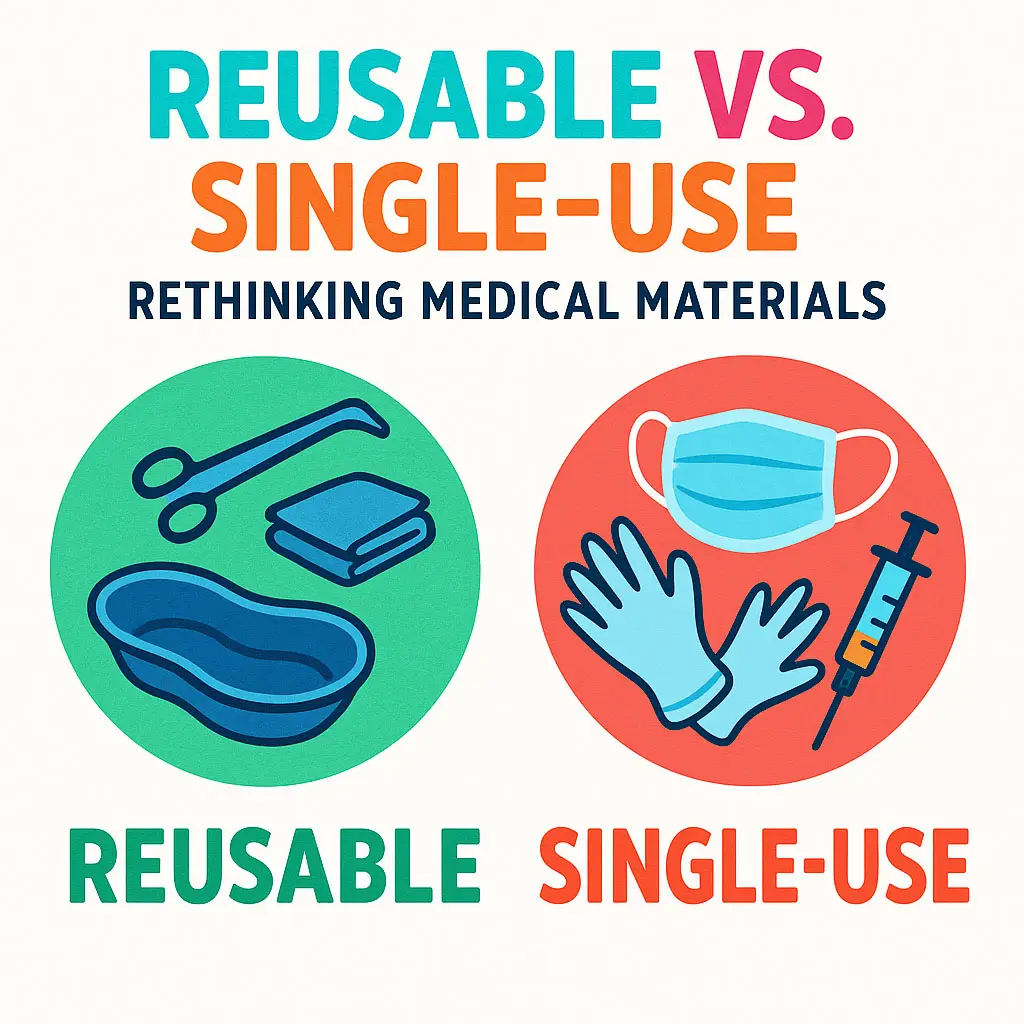
Reusable vs Single Use Rethinking Medical Materials

Disposable vs. Reusable Medical Products: Which Is Better for Healthcare?

Introduction: The “Best” Medical Product Depends on the Job In healthcare, few decisions are as deceptively simple as choosing between disposable and reusable Medical Products. A disposable syringe is opened, used, and discarded. A reusable surgical instrument may serve hundreds or even thousands of procedures—but only if it is correctly cleaned, disinfected or sterilized after every use. So, which is better? The honest answer is: neither option wins in every situation. The better choice depends on infection risk, clinical purpose, reprocessing capabilities, total cost, product design, availability, and environmental impact. The World Health Organization (WHO) specifically encourages healthcare facilities to minimize waste and, where safe and viable, consider reusable products as part of broader sustainable procurement strategies. That makes this less of a “disposable vs. reusable” debate and more of a “right product for the right clinical task” decision. Disposable vs. Reusable Medical Products: What Is the Difference? What Are Disposable Medical Products? Disposable or single-use products are designed to be used once—or, depending on labeling, on a single patient during a single procedure—and then discarded. Common examples include: Their biggest advantage is simplicity. Once the procedure is complete, the product does not need to enter a cleaning and sterilization cycle before the next use. However, “throw away after use” does not mean “zero responsibility.” Used disposable products can become infectious, sharps, chemical, or other regulated waste depending on their contamination and composition. WHO estimates that around 15% of healthcare waste is hazardous, while the remaining 85% is generally non-hazardous. What Are Reusable Medical Products? Reusable products are specifically designed to be used multiple times after appropriate reprocessing. Examples include: The important word is “appropriate.” A reusable instrument is not simply wiped down and put back into circulation. The U.S. FDA explains that reprocessing generally involves cleaning followed by disinfection or sterilization according to the device’s intended use and manufacturer instructions. Disposable vs. Reusable Medical Products: Side-by-Side Comparison Factor Disposable Medical Products Reusable Medical Products Initial purchase Usually lower per item Usually higher Reuse No, when labeled single-use Yes, when designed and approved for reuse Cleaning required Generally no reprocessing between uses Yes Sterilization Usually not required for another use because product is discarded Often required for critical instruments Infection-control workflow Simple after use Requires validated reprocessing Waste generation Higher Generally lower per use Staff time Lower reprocessing burden Higher Long-term cost Can become expensive at high volume Often economical over repeated use Supply dependency Requires continuous stock Requires effective instrument turnaround Environmental considerations More material becomes waste Can reduce waste, but consumes water, energy and processing resources Best suited to High-volume, low-complexity or single-use applications Durable instruments and repeated procedures The table reveals an important point: purchase price is only one part of the equation. A hospital buying a reusable instrument for ₹1,000 cannot compare it fairly with a ₹100 disposable instrument without considering how many times the reusable product can safely be used, how much reprocessing costs, and how much staff time is involved. 1. Infection Control: Where Disposable Products Have a Clear Advantage When contamination risk is high and safe reprocessing is impractical, disposable products can offer a straightforward infection-control strategy. There is no need to transport a contaminated item to a sterilization department, clean it, inspect it, package it and sterilize it before another patient uses it. This can be particularly useful in: But disposables are not automatically risk-free. Incorrect handling, storage, reuse of single-use items, poor hand hygiene, and improper waste disposal can still create risks. WHO emphasizes that healthcare waste can expose healthcare workers, waste handlers and communities to infectious materials, toxic substances and injuries when it is poorly managed. 2. Reusable Products Can Be Excellent—If the Reprocessing System Is Excellent Reusable Medical Products make economic and environmental sense only when the healthcare facility has the infrastructure and discipline to reprocess them correctly. The FDA describes reprocessing as a multistep process that can include point-of-use treatment, thorough cleaning, and then disinfection or sterilization depending on the device. That means a reusable instrument’s real cost includes much more than its purchase price. The hidden costs may include: This is why a facility should never evaluate reusable products simply by asking, “How many times can we use this?” The better question is: “Can we reliably reprocess this product to the required standard every time?” If the answer is no, the theoretical savings of reuse can disappear very quickly. 3. The Economics: Look Beyond the Purchase Price One of the biggest mistakes in medical procurement is comparing products based only on unit price. Consider a clinic that performs 5,000 procedures annually. A disposable item costing ₹50 could represent ₹2.5 lakh in annual purchasing expense. A reusable alternative might cost ₹500 initially and survive hundreds of validated use cycles. But if every cycle requires cleaning, sterilization, packaging and labor, the actual cost per use could be significantly different from the purchase price. A better calculation is: Total Cost of Ownership = Purchase Cost + Reprocessing + Labor + Maintenance + Replacement + Waste Management This approach is particularly important for hospitals, dental clinics, laboratories and diagnostic centers where products are used repeatedly. In some situations, reusable instruments become more economical over time. In others, the simplicity of disposables makes them the better financial decision. 4. Sustainability: Is Reusable Always Greener? This is where the discussion becomes more interesting. It is tempting to assume: Reusable = environmentally friendlyDisposable = environmentally harmful Real-world healthcare is more complicated. Reusable products can reduce the amount of physical waste generated per procedure. WHO recommends waste minimization and notes that switching to reusable products can be appropriate when safe and viable. But reusable products require: Meanwhile, disposable products require manufacturing and transportation and ultimately create waste that must be segregated and treated appropriately. Therefore, environmental performance should ideally be assessed through a life-cycle perspective, rather than simply counting how many products enter a waste bin. WHO’s guidance on environmentally sustainable healthcare facilities emphasizes optimizing resources and minimizing environmental releases while maintaining safe, high-quality

Dental Materials

Dental Consumables: A Complete Buying Guide for Dentists & Dental Clinics

Introduction: The “Small” Dental Supplies That Keep a Clinic Running A dental clinic can have an excellent dental chair, advanced imaging equipment, and experienced clinicians—but if the right consumables are missing, the entire workflow can slow down. From examination gloves and masks to composite resin, impression materials, bonding agents, burs, suction tips, sterilization pouches and endodontic accessories, dental consumables are the products dentists use repeatedly during everyday clinical care. The challenge is not simply finding dental supplies near me. The real challenge is finding supplies that are clinically appropriate, consistently available, authentic, safely packaged and economical over time. A low-priced box that produces inconsistent results—or expires before it is used—is rarely a bargain. This guide explains how dentists and clinic managers can evaluate dental consumables more intelligently, build an efficient purchasing system and avoid some of the most common procurement mistakes. What Are Dental Consumables? Dental consumables are products that are used during diagnosis, treatment, infection prevention or routine clinic operations and are either disposed of after use or gradually depleted. They include everything from basic PPE to sophisticated restorative and endodontic materials. Common categories include: The important point is that consumables are not one homogeneous category. A disposable saliva ejector and a light-cured restorative composite may both be consumables, but their purchasing criteria are completely different. Why Buying Dental Consumables Requires More Than Comparing Prices One of the easiest purchasing mistakes is comparing two products solely on their price per box. Instead, think about cost per successful procedure. For example, a composite may look cheaper per syringe but require more material, have poorer handling characteristics or produce more wastage. A premium product with better handling and predictable results can sometimes have a lower effective cost. A useful purchasing formula is: True Cost = Purchase Price + Wastage + Storage Cost + Expiry Loss + Replacement Cost + Clinical Failure Risk This is particularly important for high-value materials. A simple purchasing comparison Factor Budget Product Premium Product Initial price Lower Higher Handling consistency Variable Usually more predictable Packaging Basic to advanced Often advanced Wastage May be higher Potentially lower Technical support Variable Often stronger Cost per procedure Not always lower Can be competitive Best use High-volume basic items Critical clinical materials The lesson is simple: buy for value, not merely for the lowest invoice total. The 8 Major Types of Dental Consumables Every Clinic Should Understand 1. Infection-Control Consumables These are among the most frequently purchased products in a dental practice. Typical items include: The CDC identifies hand hygiene, PPE, sharps safety, sterile instruments and clean/disinfected environmental surfaces among the core elements of standard precautions in dental settings. The ADA also emphasizes that instruments and materials should be processed according to appropriate infection-control procedures and manufacturer instructions. Buying tip Don’t stock PPE purely according to the number of patients. Calculate consumption according to procedures per day × staff members × expected usage per procedure + safety stock. 2. Restorative Materials Restorative dentistry can involve a surprisingly large number of consumables: When comparing restorative materials, look beyond shade selection. Evaluate: For a busy clinic, predictable handling can be just as important as laboratory specifications. 3. Endodontic Consumables Endodontic procedures depend heavily on consumable quality and dimensional consistency. Common products include: A useful procurement strategy is to divide endodontic inventory into high-frequency, procedure-specific and emergency stock. For example, basic hand files may be high-frequency inventory, while specialized rotary systems can be purchased according to the clinicians’ treatment preferences. 4. Impression and Prosthodontic Materials Prosthodontic workflows often depend on materials where small variations can affect the final result. Common consumables include: What should you compare? Property Why It Matters Working time Determines clinical convenience Setting time Affects appointment duration Dimensional stability Important for accuracy Tear strength Important during removal Mixing characteristics Reduces bubbles and inconsistencies Shelf life Helps control inventory losses Packaging Protects material from contamination/moisture 5. Preventive and Periodontal Consumables Preventive dentistry requires a different inventory mix. Typical supplies include: These products are often inexpensive individually but can represent significant monthly expenditure because of their high usage. This makes consumption tracking particularly valuable. 6. Surgical Consumables Dental surgery requires products where sterility, packaging integrity and clinical suitability are particularly important. Common products include: For sterile products, inspect packaging before use. A damaged or compromised package should not simply be treated as “probably fine.” 7. Orthodontic Consumables Orthodontic practices have their own inventory ecosystem. These can include: Orthodontic inventory is particularly vulnerable to SKU confusion because products may differ by prescription, size, torque, angulation, material and configuration. A standardized inventory naming system can save considerable time. 8. Disposable Chairside Accessories These products are easy to overlook until they run out. Examples include: A clinic may not notice the value of these items individually, but collectively they can become a major recurring expense. How to Choose the Right Dental Consumables 1. Start With Clinical Requirements Don’t begin with: “Which brand is cheapest?” Start with: “What clinical problem does this product need to solve?” For example, a restorative material for anterior esthetic work may require different properties from one used for posterior restorations. 2. Verify Authenticity and Regulatory Information When purchasing medical devices or regulated products in India, clinics should understand the applicable regulatory requirements. The Central Drugs Standard Control Organisation (CDSCO) states that medical devices in India are regulated under the Drugs & Cosmetics Act and Medical Devices Rules, 2017, with risk-based classification from Class A through Class D. Therefore, depending on the product, purchasing teams should check: Don’t assume that an attractive online listing automatically means the product is genuine. 3. Check the Expiry Date—But Also Check Your Consumption Rate Expiry management is one of the most overlooked areas of dental inventory. A clinic purchasing a large quantity because of a discount can actually lose money if the products expire before they are used. Better approach: FEFO Use FEFO — First Expiry, First Out. This means products with the earliest expiry date should generally be used first, provided they remain within required

Medical Equipment

Medical Equipment Buying Guide for New Clinics: What Every Healthcare Professional Should Know

Opening a new clinic is exciting—until you start building the equipment list. A blood pressure monitor seems simple. A patient monitor looks straightforward. Then you discover that every device has specifications, warranties, calibration requirements, consumables, service contracts, training needs, and regulatory considerations. That is why searching for a medical supply store near me should not be the first step in your buying journey. The better first step is understanding exactly what your clinic needs. The World Health Organization (WHO) emphasizes that medical equipment selection should consider the facility, available workforce, clinical needs, infrastructure, maintenance, and lifecycle management—not simply the purchase price. For a new clinic, the smartest equipment strategy is not “buy everything.” It is buy what you can use safely, maintain reliably, and justify clinically. Why Medical Equipment Selection Matters More Than You Think Imagine opening a general practice with a limited budget. You could spend heavily on an impressive diagnostic device that gets used twice a week—or invest in dependable examination equipment, vital-sign monitors, emergency supplies, sterilization equipment, examination furniture, and basic diagnostic tools that are used throughout the day. The second approach often creates more practical value. WHO describes medical equipment as devices that may require calibration, maintenance, repair, user training, and eventual decommissioning. In other words, the purchase is only the beginning. A device that costs ₹50,000 but requires expensive servicing and proprietary consumables may ultimately cost more than a ₹70,000 device with dependable local service and readily available parts. Step 1: Start With Your Clinic, Not the Catalogue Before visiting a supplier or searching online, answer five questions: A general physician’s clinic, dental clinic, orthopaedic centre, diagnostic laboratory, physiotherapy clinic, and multispecialty centre will have very different equipment requirements. WHO similarly notes that there is no single universal list of “core” medical equipment because requirements depend on the type of facility, workforce, infrastructure, and disease burden. A simple way to create your first equipment list Divide products into three groups: Must Have: Equipment required for routine patient care and safety. Useful: Equipment that improves efficiency or expands services. Later: Expensive or specialized equipment that can wait until patient volume justifies the investment. This simple classification can prevent a new clinic from tying up too much capital in equipment that sits unused. Essential Medical Equipment for a New General Clinic While the exact list varies by specialty, many outpatient clinics need equipment across several categories. Category Examples What to Check Examination Examination couch, stools, screens Stability, cleaning, ergonomics Vital Signs BP monitor, thermometer, pulse oximeter Accuracy, calibration, durability Diagnostic Stethoscope, otoscope, ophthalmoscope Optical quality, usability Emergency Resuscitation equipment, oxygen-related equipment Readiness, accessibility, servicing Procedure Minor procedure instruments, dressing equipment Material, sterilization compatibility Sterilization Autoclave/sterilizer where appropriate Capacity, safety features, service Furniture Medical cabinets, instrument trolley Workflow and storage Consumables Gloves, syringes, dressings, disinfectants Availability, expiry, storage IT & Records Computer, printer, UPS/network equipment Reliability and data workflow The important point is that equipment and consumables should be planned together. Buying a device without considering the accessories, probes, electrodes, batteries, filters, cartridges, or other recurring supplies can create avoidable operational problems. Step 2: Compare Specifications—Not Just Brands One of the most common purchasing mistakes is comparing products by brand name or price alone. Instead, create a specification sheet. For each product, record: WHO recommends developing appropriate technical specifications before purchasing medical devices because specifications help facilities evaluate quality, safety, implementation requirements, maintenance, and eventual decommissioning. Example: Don’t compare “BP monitor vs BP monitor” Instead compare: Model A Model B Now your purchasing decision becomes objective rather than promotional. Step 3: Look Beyond the Purchase Price The real price of medical equipment is its total cost of ownership. A useful formula is: Total Cost = Purchase Price + Installation + Training + Consumables + Maintenance + Calibration + Repairs + Downtime − Residual Value For example, a diagnostic device may appear inexpensive until you discover that its proprietary consumables are costly and only one local service provider supports it. That is why asking “How much does it cost?” is only half the question. Ask: “How much will this equipment cost me over the next five years?” This perspective can dramatically change purchasing decisions. Step 4: Check Warranty and After-Sales Service For a new clinic, after-sales support can be more important than a slightly lower purchase price. Before ordering, ask the supplier: WHO’s medical equipment guidance treats maintenance as an integral part of equipment management, including inspection, preventive maintenance, corrective maintenance, and performance/safety checks. A useful rule Never buy equipment that nobody can reliably service. A sophisticated machine sitting unused because a replacement part takes months to arrive is not an asset—it is expensive downtime. Step 5: Verify Regulatory and Quality Requirements Regulatory requirements matter, particularly for equipment used for diagnosis, monitoring, treatment, or other regulated medical purposes. For clinics in India, the Central Drugs Standard Control Organization (CDSCO) states that medical devices are regulated under the Drugs and Cosmetics Act, 1940 and the Medical Devices Rules, 2017. The rules use a risk-based classification system ranging from Class A (low risk) to Class D (high risk). Before buying a regulated device, verify the applicable requirements and documentation rather than assuming that every product sold online is automatically suitable for clinical use. The official CDSCO Medical Devices Rules resources are a useful starting point for Indian clinics. Depending on the device, also consider: Step 6: Don’t Ignore Calibration and Maintenance A device can look perfectly functional while producing unreliable measurements. This is especially important for equipment used for diagnosis, monitoring, or clinical decision-making. Create an equipment register containing: Information Example Equipment Name Digital BP Monitor Brand/Model Manufacturer model Serial Number Unique device number Purchase Date Date received Warranty Warranty period Location Consultation Room 1 Calibration Required frequency Last Service Service date Next Service Due date Responsible Person Staff member Service Provider Authorized technician WHO’s 2025 guidance specifically highlights inventory, incoming inspection, training, maintenance, and lifecycle management as parts of effective medical-device management. This is one of those administrative tasks