
Category: Men’s Health & Urology | Medical Specialist: Urologist; nephrologist for selected kidney disorders; primary-care physician | References: American Urological Association (AUA); National Institute of Diabetes and Digestive and Kidney Diseases (NIDDK); WHO
Introduction: When a Tiny Stone Causes Enormous Pain
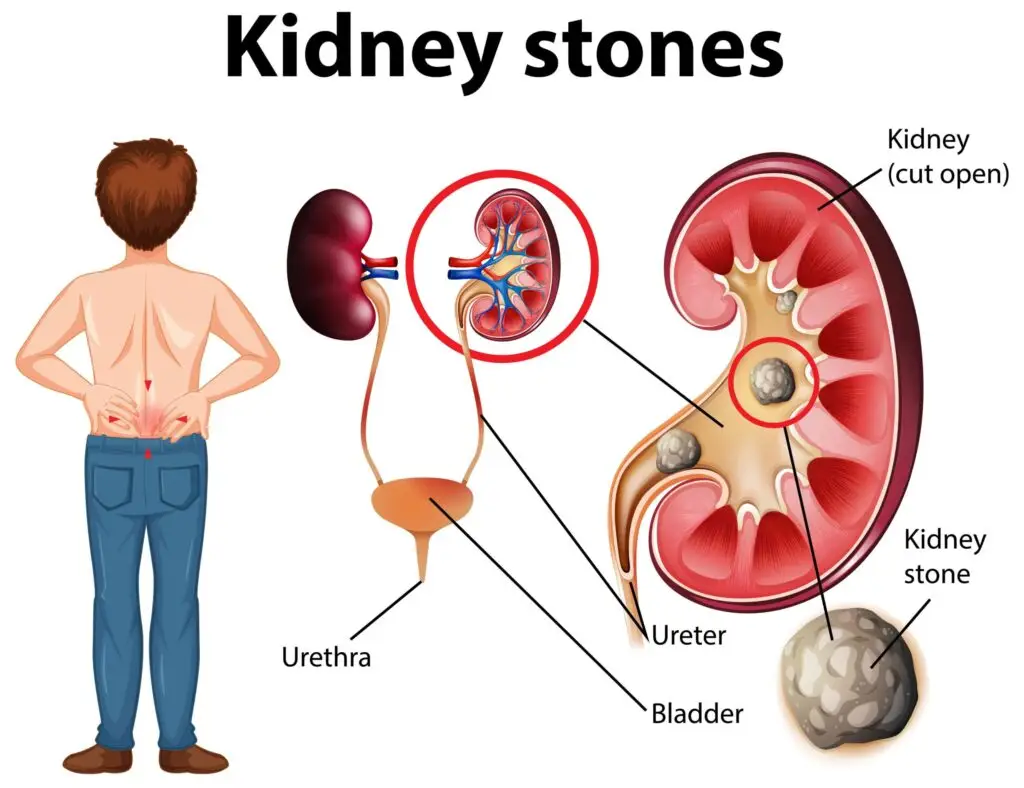
Few health problems demonstrate how something so small can cause such intense discomfort as kidney stones. A stone may be no larger than a grain of sand, yet when it moves from the kidney into the ureter—the narrow tube connecting the kidney to the bladder—it can trigger sudden, severe pain.
Kidney stones are hard, pebble-like deposits that form when certain substances in urine become concentrated enough to crystallize. They can remain quietly inside the kidney or travel through the urinary tract and cause pain, bleeding, infection, or blockage.
The good news? Many small stones pass naturally, and several practical changes can reduce the chance of developing another one. The key is understanding why the stone formed in the first place, rather than treating every stone as if it were the same.
Important: Severe pain, fever or chills, vomiting, difficulty urinating, or blood in the urine warrants prompt medical assessment. A blocked urinary tract combined with infection can become a medical emergency.
What Are Kidney Stones?
Kidney stones are solid deposits made from minerals and other substances normally present in urine. When urine becomes too concentrated, these substances can crystallize and gradually clump together.
Some stones are tiny enough to pass without noticeable symptoms. Others become lodged in the ureter and obstruct urine flow.
According to the U.S. National Institute of Diabetes and Digestive and Kidney Diseases (NIDDK), kidney stones affect roughly 11% of men and 6% of women in the United States at least once during their lifetime. Having a previous stone also increases the likelihood of developing another.
Common Types of Kidney Stones
| Stone type | What contributes to formation | Key consideration |
|---|---|---|
| Calcium oxalate | High urinary calcium or oxalate | Most common type |
| Calcium phosphate | Changes in urinary chemistry | May be associated with certain metabolic conditions |
| Uric acid | High uric acid and acidic urine | More common with high-purine diets and some metabolic conditions |
| Cystine | Genetic disorder called cystinuria | Relatively uncommon |
Identifying the stone type matters because prevention is not simply about “drinking more water.” Diet, medication and other strategies may need to be tailored to the specific stone.
What Causes Kidney Stones?
At its simplest, a kidney stone forms when urine contains more stone-forming substances than it can keep dissolved. Calcium, oxalate and phosphorus are among the substances involved.
But the underlying causes can be surprisingly varied.
1. Not Drinking Enough Fluids
Dehydration makes urine more concentrated. This creates a better environment for crystals to form.
This is particularly relevant in hot climates, during strenuous exercise, or when someone regularly spends hours without drinking water. Fluid requirements also rise when more water is lost through sweating.
2. High Sodium Intake
A high-salt diet can increase the amount of calcium released into urine, potentially increasing the risk of calcium-containing stones.
Processed foods, packaged snacks, instant meals, restaurant foods and salty sauces can contribute significant amounts of sodium without tasting excessively salty.
3. Dietary Factors
The relationship between food and stones is more complicated than simply labeling certain foods “good” or “bad.”
Depending on the stone type, healthcare professionals may recommend adjusting:
- Sodium
- Animal protein
- Oxalate-rich foods
- Dietary calcium
- Overall fluid intake
The NIDDK notes that adequate dietary calcium can actually help prevent calcium oxalate stones by binding oxalate in the digestive tract. Therefore, unnecessarily eliminating calcium from the diet can be counterproductive.
4. Family History and Medical Conditions
Some people are naturally more susceptible to kidney stones.
Risk can increase with a family history of stones, urinary tract obstruction, certain digestive disorders, cystinuria and other medical conditions.
5. Previous Kidney Stones
One stone is not necessarily a one-time event.
If the metabolic or dietary factors responsible for the first stone remain unchanged, another may form. That’s why stone prevention should begin with understanding the cause rather than simply waiting for symptoms to disappear.
Recognizing Kidney Stone Symptoms
A kidney stone can be completely silent—or extremely painful.
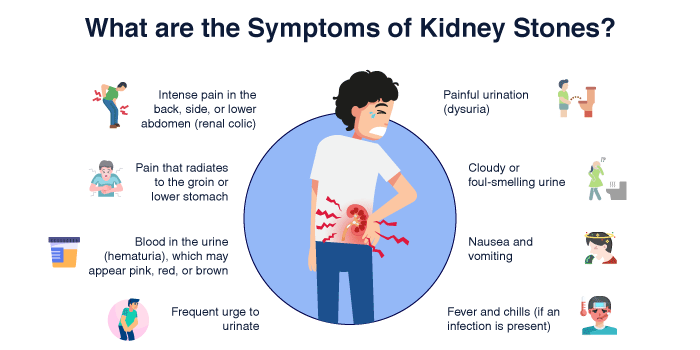
The classic symptom is sharp pain in the back, side, lower abdomen or groin. The pain may come in waves as the ureter contracts around the stone.
Other symptoms may include:
- Blood in the urine
- Pain or burning during urination
- Frequent or persistent urge to urinate
- Nausea or vomiting
- Cloudy or foul-smelling urine
- Difficulty passing urine
- Pain that moves from the back toward the abdomen or groin
Interestingly, stone size does not always tell the whole story. A relatively small stone can cause significant pain if it becomes lodged in a narrow part of the urinary tract.
Kidney Stones vs. Urinary Tract Infection: How Are They Different?
Kidney stones and urinary tract infections (UTIs) can sometimes produce overlapping symptoms, but they are different conditions.
| Feature | Kidney Stones | UTI |
| Pain | Often severe, sharp and wave-like | Usually burning or discomfort during urination |
| Location | Back, side, lower abdomen or groin | Usually bladder/pelvic region; kidney infection can cause back pain |
| Blood in urine | Can occur | Can occur |
| Fever/chills | May indicate infection or complication | Common, especially with kidney infection |
| Nausea/vomiting | Common with severe stone pain | Possible, particularly with kidney infection |
| Urine changes | May be cloudy or bloody | Often cloudy, strong-smelling or bloody |
The distinction matters because a blocked ureter plus infection can be dangerous. Fever, chills, severe weakness or worsening symptoms should not simply be attributed to “a stone passing.”
When Should You Seek Urgent Medical Care?
Not every kidney stone requires an emergency visit, but certain symptoms should never be ignored.
Seek prompt medical attention if you experience:
- Severe or worsening pain
- Fever or chills
- Difficulty urinating or inability to urinate
- Persistent vomiting or inability to keep fluids down
- Blood in the urine
- Severe weakness or feeling very unwell
- Symptoms suggesting a urinary infection alongside suspected obstruction
A blocked urinary tract can interfere with urine drainage and contribute to kidney infection.
How Are Kidney Stones Diagnosed?
Doctors generally combine your symptoms and medical history with urine, blood and imaging tests.
Urine Tests
Urinalysis can identify blood, bacteria and substances associated with stone formation. A urine culture may be needed when infection is suspected.
Blood Tests
Blood tests can help evaluate kidney function and identify abnormal levels of minerals or other substances that may contribute to stone formation.
Imaging
Imaging can determine whether a stone is present, where it is located and whether it is causing obstruction. Depending on the situation, clinicians may use ultrasound, X-ray or CT imaging.
For people who repeatedly develop stones, metabolic evaluation may provide an even more useful answer: why does this person’s urine keep forming stones?
The American Urological Association recommends stone analysis when a stone is available and, for appropriate patients, metabolic testing such as 24-hour urine collections.
Kidney Stone Treatment: From Watchful Waiting to Surgery
Treatment depends on several factors, including stone size, location, symptoms, obstruction, infection and the patient’s overall health.
1. Observation and Natural Passage
Small stones may pass naturally through the urinary tract.
During this period, doctors may recommend adequate fluids, pain management and follow-up to make sure the stone has passed and no obstruction remains.
2. Medicines
Depending on the circumstances, doctors may prescribe medication for pain or nausea. Certain medicines may also help some ureteral stones pass more easily.
Medication should be selected by a healthcare professional rather than self-prescribed because treatment depends on the stone and the patient’s medical condition.
3. Shock Wave Lithotripsy
Shock wave lithotripsy uses focused energy to break a stone into smaller fragments that can pass through the urinary tract.
It can be appropriate for selected stones, depending on their size and location.
4. Ureteroscopy
During ureteroscopy, a small instrument is passed through the urinary tract to locate and remove or fragment the stone.
This is commonly used when a stone is unlikely to pass naturally or is causing persistent symptoms or obstruction.
5. Percutaneous Nephrolithotomy
For larger or complex kidney stones, a minimally invasive procedure called percutaneous nephrolithotomy may be used to remove stones through a small opening in the back.
The goal is not simply to “get the stone out.” It is to restore urine flow, relieve symptoms and protect kidney function while choosing the safest effective approach.
Can Kidney Stones Be Prevented?
In many cases, yes—and prevention begins with identifying the reason the stone formed.
Drink Enough Water
Adequate fluid intake is one of the most important preventive measures. Water helps dilute urine and reduces the concentration of substances that can form crystals.
Rather than obsessing over a single universal water target, consider your individual needs, activity level, climate and medical conditions. People who sweat heavily in hot weather may require considerably more fluid.
Anyone with kidney failure or another condition requiring fluid restriction should follow their clinician’s advice instead.
Reduce Excess Sodium
Reducing salty processed and packaged foods can be useful, particularly for people prone to calcium stones.
Don’t Automatically Avoid Calcium
This is one of the most important—and commonly misunderstood—points.
Dietary calcium is not automatically the enemy of calcium stones. Getting appropriate calcium from food can help bind oxalate in the digestive tract.
The right amount depends on the individual, so discuss major dietary changes or supplements with a healthcare professional.
Moderate Animal Protein
Large amounts of animal protein may increase stone risk in susceptible individuals. Depending on stone type, reducing excessive intake may be part of a prevention strategy.
Understand Your Personal Stone Pattern
If you’ve passed a stone, don’t throw it away if your healthcare professional asks you to save it for analysis.
Knowing whether it was calcium oxalate, calcium phosphate, uric acid or another type can turn generic prevention advice into a personalized strategy.
Key Insights: What People Often Get Wrong About Kidney Stones
Myth 1: “If I have a kidney stone, I should stop eating calcium.”
Not necessarily. Adequate dietary calcium may actually reduce oxalate absorption.
Myth 2: “All kidney stones are caused by dehydration.”
Dehydration is an important risk factor, but genetics, diet, urinary chemistry and medical conditions also matter.
Myth 3: “Once the pain stops, the problem is over.”
Pain can improve even when a stone remains. Follow-up may be necessary to confirm passage and assess obstruction.
Myth 4: “Lemon water can dissolve every kidney stone.”
Citrus beverages provide citrate, which may help prevent certain stones, but they should not be viewed as a guaranteed treatment for an existing stone.
A Simple Kidney Stone Prevention Checklist
- Drink enough fluid throughout the day.
- Reduce excessive salt and highly processed foods.
- Maintain an appropriate dietary calcium intake.
- Avoid excessive animal protein.
- Ask about stone analysis after passing a stone.
- Consider metabolic evaluation if stones recur.
- Follow prescribed preventive medication when recommended.
- Seek medical care for severe pain, fever, chills or difficulty urinating.
For readers who want a deeper understanding of urinary health, consider adding an internal link to your existing article on urinary tract infections, and another to your related content about kidney health, hydration or healthy diet. These links can help readers move naturally from kidney stone education to broader urinary-health information.
Conclusion: The Best Kidney Stone Treatment May Be Preventing the Next One
The pain of a kidney stone can be unforgettable—but the experience can also provide valuable information about your health.
A kidney stone isn’t simply a random pebble that appeared in the kidney. It is often a visible clue that something about urine concentration, diet, metabolism, genetics or another health factor deserves attention.
Treatment can range from observation and medication to procedures such as lithotripsy or ureteroscopy. But after the immediate problem is solved, the bigger question is: Why did the stone form, and how can you prevent the next one?
That shift—from treating the stone to understanding the person—is where long-term kidney stone care becomes much more effective.
Take Action Today
If you’ve experienced kidney stones before, speak with a qualified healthcare professional about your stone type, hydration needs, diet and whether metabolic testing could help identify your recurrence risk.
And if this guide helped you understand kidney stones more clearly, share it with someone who may benefit from it and explore your other kidney-health resources for practical prevention tips.
Medical Disclaimer: This article is intended for general educational purposes and does not replace professional medical advice, diagnosis or treatment. If you have severe pain, fever, chills, difficulty urinating, persistent vomiting or other concerning symptoms, seek medical care promptly.