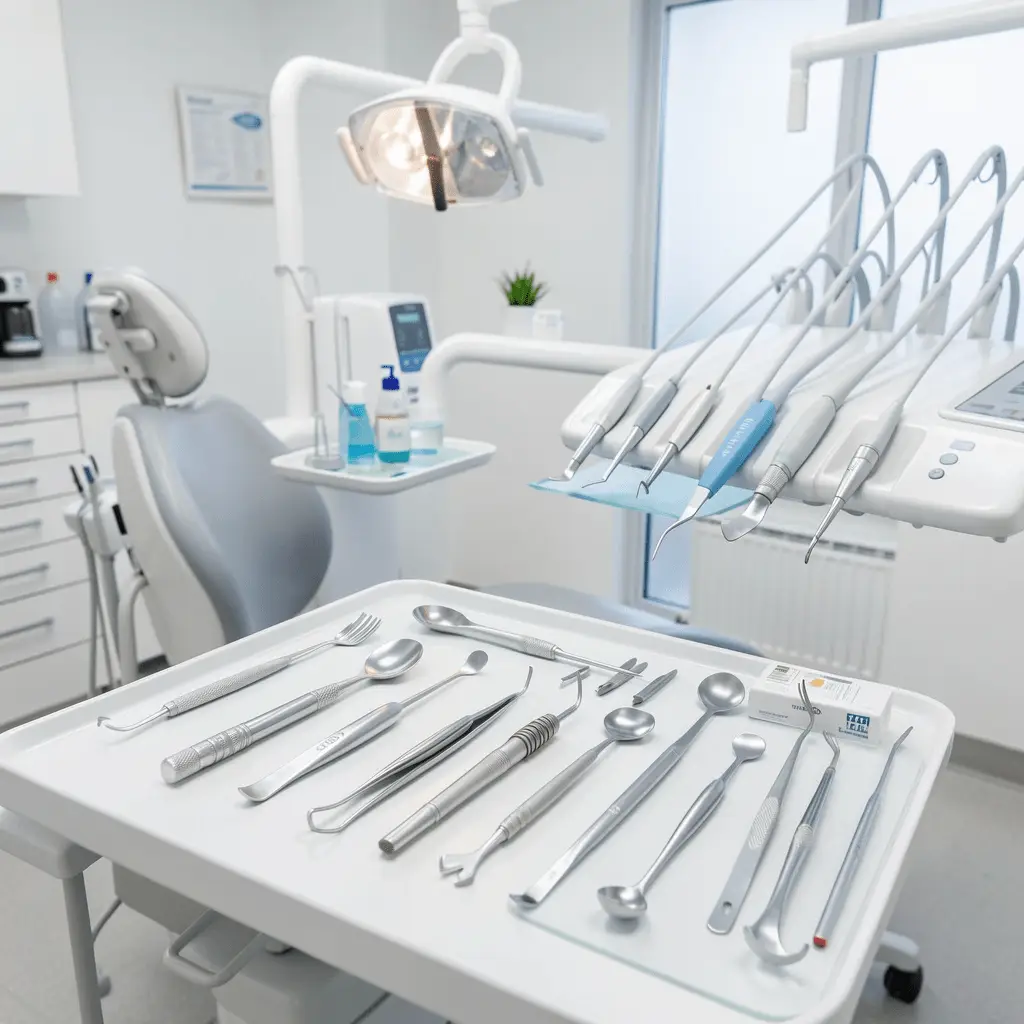
A dental clinic can have the latest chair, impressive technology, and a beautifully designed reception area—but when treatment begins, success often comes down to something much simpler: the instruments in the dentist’s hands.
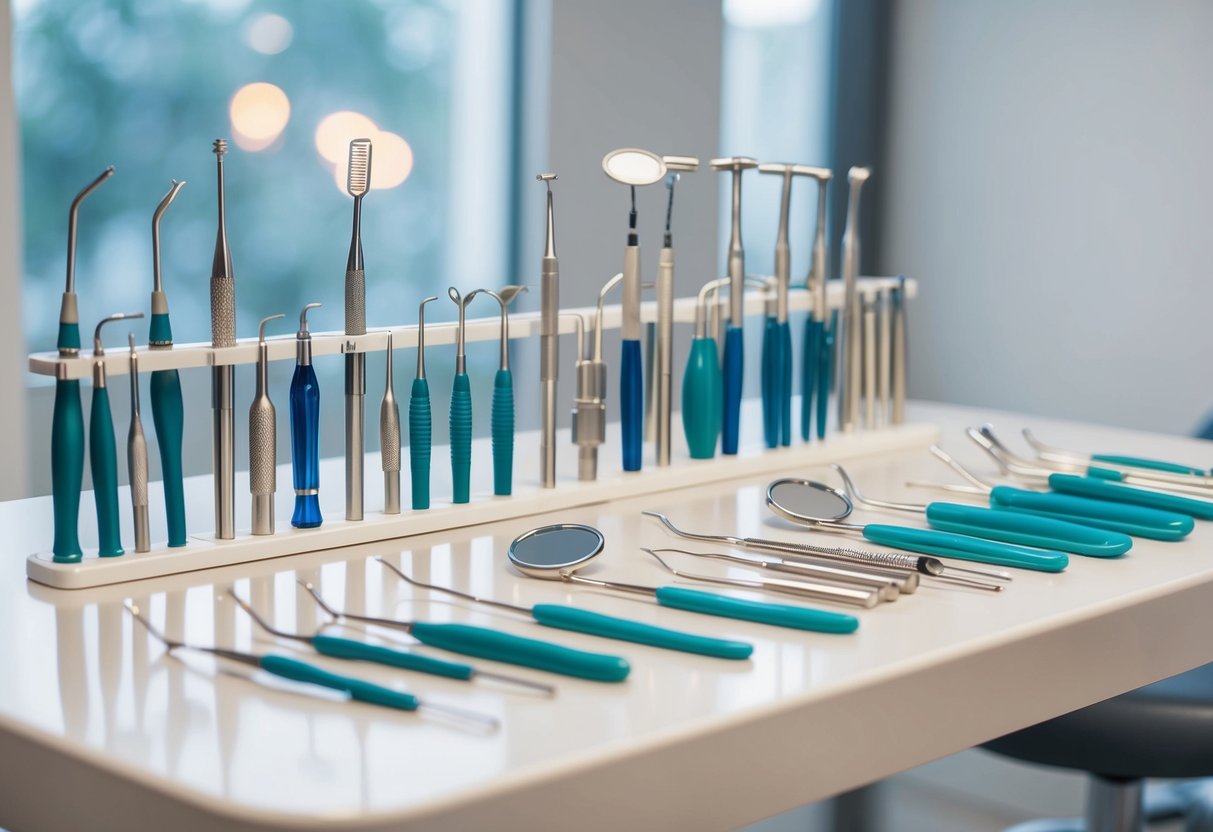
The right Essential Dental Instruments improve visibility, precision, efficiency, patient comfort, and infection control. More importantly, a well-planned instrument setup prevents a common clinic problem: buying too many specialized tools while overlooking the everyday instruments used in almost every appointment.
Whether you are opening a new dental practice, upgrading an established clinic, or building an inventory system for dental supplies, the goal should not be to own the largest collection. It should be to have the right instruments, in the right quantities, with a reliable sterilization and maintenance workflow.
The following 10 instruments form a practical foundation for general dentistry.
What Makes a Dental Instrument “Essential”?
Before looking at individual instruments, it helps to define what “essential” actually means.
An instrument deserves a place in the core inventory when it is:
- Used frequently across multiple procedures
- Reliable and ergonomically comfortable
- Easy to clean, sterilize, and maintain
- Available in appropriate sizes or configurations
- Durable enough to withstand repeated clinical use
- Supported by clear manufacturer instructions
- Suitable for the procedures routinely performed by the clinic
Infection prevention is particularly important. The CDC classifies patient-care items according to their intended use and infection-transmission risk. Critical and semicritical instruments generally require appropriate sterilization or high-level processing according to their classification and manufacturer instructions.
That means purchasing an instrument is only half the decision. How that instrument will be processed after every patient matters just as much.
10 Essential Dental Instruments for a General Dental Clinic
1. Dental Mouth Mirror
The mouth mirror is one of the simplest instruments in dentistry—and one of the most frequently used.
It provides indirect vision, helps retract the cheek or tongue, reflects light into difficult-to-see areas, and can assist with examination of tooth surfaces.
A good mouth mirror should offer:
- Clear, distortion-free reflection
- A comfortable handle
- Secure attachment between mirror and handle
- Appropriate size for the clinical procedure
- Easy cleaning and sterilization
For a busy practice, having several mirror handles and replacement mirror heads can be more practical than maintaining only a small number of sets.
Buying insight: Don’t judge mirrors purely by price. Poor-quality reflective surfaces or loose mirror heads can become frustrating during routine examinations.
2. Dental Explorer or Probe
A dental explorer is designed for tactile examination of teeth and surrounding structures. Different probe designs are used for different clinical purposes.
Common examples include explorers for general examination and periodontal probes for assessing periodontal pocket depths.
A probe should have a comfortable grip and a properly finished working end. Excessively sharp or damaged instruments should not remain in circulation.
Best practice: Inspect probes regularly for bent tips, corrosion, or damage. A small defect can affect tactile sensitivity and clinical accuracy.
3. College Tweezers / Dental Cotton Pliers
Dental tweezers may look basic, but they perform countless small tasks throughout the day.
They can be used to:
- Carry cotton pellets
- Position small materials
- Handle wedges or accessories
- Transfer items within the oral cavity
- Assist with routine restorative procedures
Their value is largely about efficiency. When an assistant or dentist repeatedly needs to pick up a small item, reliable cotton pliers save time and reduce unnecessary hand movements.
For clinics managing multiple treatment rooms, these instruments are inexpensive enough to stock in adequate numbers.
4. Dental Excavator
Excavators are commonly associated with removal of softened carious dentin and other procedures where controlled removal of material is required.
Different shapes and sizes provide different working angles and access.
A good excavator should have:
- A well-defined working end
- A secure handle
- Smooth transitions without sharp manufacturing defects
- Appropriate size for posterior and anterior access
Although rotary instrumentation has transformed restorative dentistry, hand instruments remain valuable when tactile control and selective removal are important.
5. Dental Scaler
Scalers are essential for removing calculus and deposits during periodontal and preventive procedures.
There are several designs, including instruments intended for specific tooth surfaces and areas of the mouth.
This is an area where instrument selection should match the clinician’s technique rather than simply choosing the largest possible set.
The CDC considers periodontal scalers among critical instruments because certain instruments can penetrate tissue or contact bone, meaning appropriate sterilization is essential.
Inventory tip: Keep periodontal instruments organized by design and procedure. A well-labeled instrument cassette can make setup significantly faster.
6. Dental Curette
Curettes are particularly important in periodontal therapy because their rounded working ends are designed for subgingival instrumentation.
Universal and area-specific curettes serve different purposes, so a periodontal practice may require a broader selection than a general dental clinic.
When purchasing curettes, pay attention to:
- Shank design
- Working-end geometry
- Handle diameter
- Instrument balance
- Clinician preference
- Intended tooth surfaces
Ergonomics deserve special attention here. An instrument that feels acceptable for five minutes may become uncomfortable during a long periodontal procedure.
7. Dental Handpiece
If the mouth mirror is one of dentistry’s simplest tools, the handpiece is one of its most technologically important.
High-speed and low-speed handpieces are used for procedures ranging from tooth preparation and caries removal to finishing and polishing.
Important buying factors include:
- Speed and torque
- Cooling-water performance
- Chuck/bur retention
- Ergonomics and weight
- Noise and vibration
- Maintenance requirements
- Sterilization compatibility
- Manufacturer support
The CDC and ADA emphasize that reusable dental handpieces should be appropriately cleaned and heat sterilized between patients when applicable, following validated manufacturer instructions.
This is one reason a clinic should never purchase a handpiece solely because it is inexpensive. Reprocessing requirements should be part of the purchasing decision from day one.
8. Dental Extraction Forceps
For clinics performing routine extractions, extraction forceps are indispensable.
Their designs vary according to tooth type, location, and clinical application. Because different teeth require different approaches, a clinic should build its forceps inventory around the extractions it actually performs.
A practical starter inventory may include forceps suitable for:
- Upper anterior teeth
- Upper posterior teeth
- Lower anterior teeth
- Lower posterior teeth
- Roots and selected surgical applications
Forceps should provide a secure grip without excessive hand strain.
Important: Extraction instruments are considered critical patient-care items because they can penetrate soft tissue or contact bone. Appropriate cleaning and sterilization are therefore essential.
9. Dental Elevators
Elevators are commonly used during tooth extraction to loosen teeth or roots and assist in creating controlled mobility before forceps application.
Straight and angled designs are available, with different sizes and shapes serving different clinical situations.
A useful elevator should have:
- A secure handle
- A properly formed working end
- Appropriate strength
- Smooth surfaces
- Resistance to corrosion
Because elevators can transmit substantial force, quality matters. A poorly manufactured instrument can bend, chip, or become difficult to control.
10. Air-Water Syringe
The air-water syringe is sometimes overlooked when clinics create instrument inventories because it is integrated into many dental units.
Yet its role is fundamental.
It helps clinicians:
- Rinse the treatment area
- Dry tooth surfaces
- Remove debris
- Improve visibility
- Assist during restorative procedures
Tips and removable components must be handled according to the manufacturer’s reprocessing instructions. Dental devices connected to air and water systems can require specific infection-control procedures, making manufacturer instructions an important part of equipment management.
Essential Dental Instruments: Quick Comparison
| Instrument | Primary Use | Frequency of Use | Key Buying Consideration |
|---|---|---|---|
| Mouth Mirror | Vision, reflection, retraction | Very High | Optical clarity |
| Explorer/Probe | Examination | Very High | Tip design and ergonomics |
| Cotton Pliers | Handling small items | Very High | Grip and alignment |
| Excavator | Hand excavation | High | Working-end design |
| Scaler | Calculus removal | High | Tip geometry |
| Curette | Periodontal therapy | High | Shank and ergonomics |
| Handpiece | Rotary procedures | Very High | Performance + sterilization |
| Extraction Forceps | Tooth extraction | Moderate–High | Tooth-specific design |
| Elevators | Tooth/root luxation | Moderate | Strength and control |
| Air-Water Syringe | Rinsing/drying | Very High | Tip compatibility + reprocessing |
The Instrument Set Matters More Than Individual Pieces
One of the biggest inventory mistakes in a new clinic is evaluating instruments individually.
Instead, think in procedure-based sets.
For example, a basic examination setup might contain:
- Mouth mirror
- Explorer/probe
- Cotton pliers
- Periodontal probe
- Basic accessories
A restorative setup could require examination instruments plus excavators, matrix-related instruments, placement tools, and finishing equipment.
An extraction setup would be built differently, with elevators, forceps, surgical instruments, and appropriate accessories.
This approach makes inventory easier to count, sterilize, replenish, and standardize.
Don’t Ignore Sterilization When Buying Dental Instruments
An instrument’s clinical function is only one part of its lifecycle.
The CDC and ADA recommend cleaning instruments before sterilization or high-level disinfection, with processing based on the item’s intended use and risk classification. Sterilization monitoring should also be incorporated into the practice’s infection-control program.
When evaluating a new instrument, ask:
- Can it be safely reprocessed?
- Is it compatible with the clinic’s sterilizer?
- Are manufacturer instructions readily available?
- Can staff easily identify the correct processing procedure?
- Are replacement parts available?
- How long is the expected service life?
These questions can prevent a surprisingly expensive purchasing mistake.
How Many Should a Dental Clinic Buy?
There is no universal number.
A clinic with one dentist seeing 10 patients a day will have different requirements from a multi-chair practice seeing dozens of patients.
A better calculation is:
Required quantity = daily procedure demand × instrument turnover requirement + backup stock
For frequently used examination instruments, multiple sets are usually more practical than repeatedly waiting for individual instruments to complete the sterilization cycle.
The same principle applies to handpieces. Having a backup can prevent a single equipment failure from disrupting an entire treatment schedule.
New Clinic vs. Established Clinic: What Should You Prioritize?
| Clinic Situation | Priority |
| New clinic | Complete basic instrument sets |
| High patient volume | Extra instrument cassettes and duplicates |
| Periodontal-focused practice | Scalers and curettes |
| Restorative-focused practice | Hand instruments and rotary equipment |
| Oral surgery services | Extraction forceps, elevators and surgical instruments |
| Pediatric practice | Smaller, child-appropriate instruments |
| Multi-chair clinic | Standardized sets across operatories |
The key insight is simple: buy according to your clinical workflow, not according to a supplier’s largest catalogue.
A 200-piece instrument kit may look impressive, but if half of it rarely leaves the storage cabinet, your money is tied up in inventory that creates additional cleaning, tracking, and maintenance work.
Quality vs. Price: Which Should You Choose?
The cheapest instrument is rarely the cheapest over its entire lifecycle.
Consider total cost of ownership, including:
- Purchase price
- Replacement frequency
- Sharpening or maintenance
- Sterilization compatibility
- Staff handling time
- Downtime
- Warranty and after-sales support
For high-use instruments, investing in reliable construction and ergonomic design can make more sense than repeatedly replacing low-cost products.
The ADA also maintains standards and resources covering dental products, equipment, and instruments, making its professional resources useful when evaluating product quality and clinical considerations.
A Smarter Dental Instrument Buying Checklist
Before placing an order, ask:
- Purpose: What procedure will this instrument support?
- Frequency: How often will it actually be used?
- Ergonomics: Is it comfortable for prolonged use?
- Material: Is it suitable for repeated clinical processing?
- Sterilization: Can it be processed according to the manufacturer’s instructions?
- Durability: Is the working end resistant to premature damage?
- Compatibility: Does it work with existing equipment and cassettes?
- Availability: Can replacements be obtained easily?
- Standardization: Can the same design be used consistently across operatories?
This checklist can be especially useful when building a dental inventory or standardizing products across multiple branches.
Final Thoughts
The best dental clinic is not necessarily the one with the biggest instrument cabinet. It is the one where every essential instrument has a purpose, every instrument is maintained properly, and the clinical team can reach for the right tool without hesitation.
The 10 Essential Dental Instruments discussed here—mouth mirrors, probes, cotton pliers, excavators, scalers, curettes, handpieces, extraction forceps, elevators, and air-water syringes—provide a strong foundation for general dental practice.
From there, your inventory should evolve around the procedures you perform most often.
And remember: instrument quality and infection control go hand in hand. Proper cleaning, sterilization, monitoring, storage, and adherence to manufacturer instructions are fundamental parts of safe dental care.
Ready to Build a Smarter Dental Instrument Inventory?
Whether you are setting up a new clinic or upgrading an existing one, start by auditing your current instruments against actual patient demand. Identify frequently used tools, replace damaged or poorly performing instruments, standardize your core sets, and maintain adequate backup stock.
Explore your dental instrument range, compare specifications carefully, and choose products that support both clinical performance and efficient infection-control workflows.
Suggested authoritative resources: American Dental Association – Infection Control and Sterilization · CDC – Summary of Infection Prevention Practices in Dental Settings · FDA – Multiple-Use Dental Dispenser Devices