Introduction: The “Best” Medical Product Depends on the Job
In healthcare, few decisions are as deceptively simple as choosing between disposable and reusable Medical Products.
A disposable syringe is opened, used, and discarded. A reusable surgical instrument may serve hundreds or even thousands of procedures—but only if it is correctly cleaned, disinfected or sterilized after every use.
So, which is better?
The honest answer is: neither option wins in every situation.
The better choice depends on infection risk, clinical purpose, reprocessing capabilities, total cost, product design, availability, and environmental impact. The World Health Organization (WHO) specifically encourages healthcare facilities to minimize waste and, where safe and viable, consider reusable products as part of broader sustainable procurement strategies.
That makes this less of a “disposable vs. reusable” debate and more of a “right product for the right clinical task” decision.

Disposable vs. Reusable Medical Products: What Is the Difference?
What Are Disposable Medical Products?
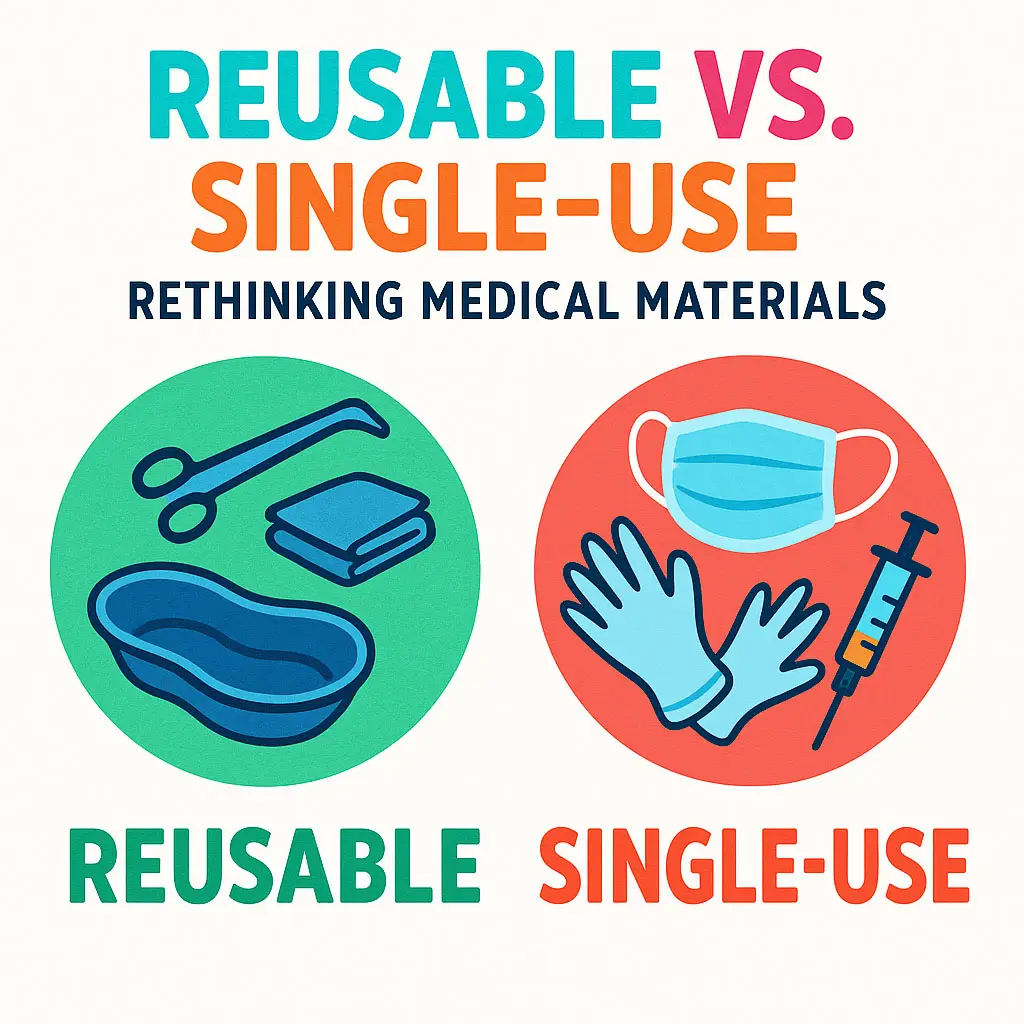
Disposable or single-use products are designed to be used once—or, depending on labeling, on a single patient during a single procedure—and then discarded.
Common examples include:
- Syringes and needles
- Gloves
- Face masks
- Disposable gowns
- Certain catheters and tubing
- Some wound-care products
- Disposable examination instruments
- Certain diagnostic accessories
Their biggest advantage is simplicity. Once the procedure is complete, the product does not need to enter a cleaning and sterilization cycle before the next use.
However, “throw away after use” does not mean “zero responsibility.” Used disposable products can become infectious, sharps, chemical, or other regulated waste depending on their contamination and composition. WHO estimates that around 15% of healthcare waste is hazardous, while the remaining 85% is generally non-hazardous.
What Are Reusable Medical Products?
Reusable products are specifically designed to be used multiple times after appropriate reprocessing.
Examples include:
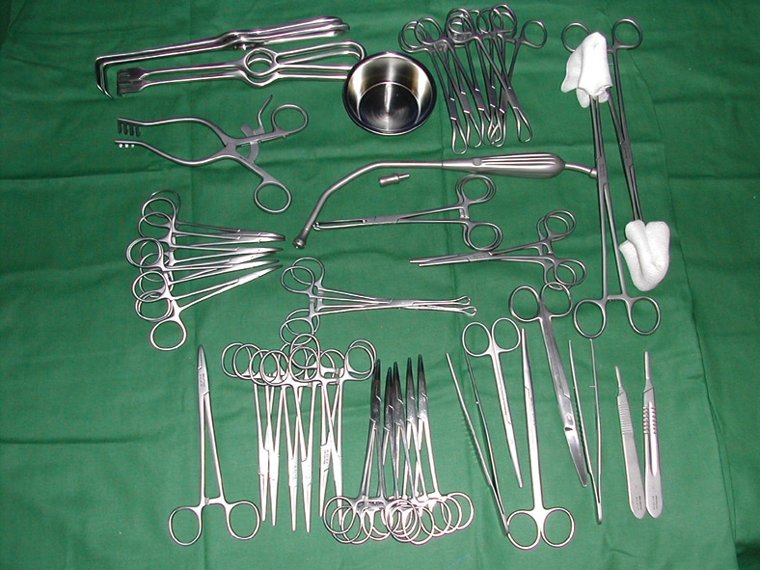
- Surgical scissors
- Forceps
- Retractors
- Some dental instruments
- Stainless-steel trays
- Certain surgical instruments
- Reusable gowns and textiles
- Some patient-care equipment
The important word is “appropriate.”
A reusable instrument is not simply wiped down and put back into circulation. The U.S. FDA explains that reprocessing generally involves cleaning followed by disinfection or sterilization according to the device’s intended use and manufacturer instructions.
Disposable vs. Reusable Medical Products: Side-by-Side Comparison
| Factor | Disposable Medical Products | Reusable Medical Products |
|---|---|---|
| Initial purchase | Usually lower per item | Usually higher |
| Reuse | No, when labeled single-use | Yes, when designed and approved for reuse |
| Cleaning required | Generally no reprocessing between uses | Yes |
| Sterilization | Usually not required for another use because product is discarded | Often required for critical instruments |
| Infection-control workflow | Simple after use | Requires validated reprocessing |
| Waste generation | Higher | Generally lower per use |
| Staff time | Lower reprocessing burden | Higher |
| Long-term cost | Can become expensive at high volume | Often economical over repeated use |
| Supply dependency | Requires continuous stock | Requires effective instrument turnaround |
| Environmental considerations | More material becomes waste | Can reduce waste, but consumes water, energy and processing resources |
| Best suited to | High-volume, low-complexity or single-use applications | Durable instruments and repeated procedures |
The table reveals an important point: purchase price is only one part of the equation.
A hospital buying a reusable instrument for ₹1,000 cannot compare it fairly with a ₹100 disposable instrument without considering how many times the reusable product can safely be used, how much reprocessing costs, and how much staff time is involved.
1. Infection Control: Where Disposable Products Have a Clear Advantage
When contamination risk is high and safe reprocessing is impractical, disposable products can offer a straightforward infection-control strategy.
There is no need to transport a contaminated item to a sterilization department, clean it, inspect it, package it and sterilize it before another patient uses it.
This can be particularly useful in:
- Emergency situations
- High-throughput clinics
- Certain isolation settings
- Procedures involving products that are difficult to clean
- Settings where sterilization infrastructure is limited
But disposables are not automatically risk-free.
Incorrect handling, storage, reuse of single-use items, poor hand hygiene, and improper waste disposal can still create risks.
WHO emphasizes that healthcare waste can expose healthcare workers, waste handlers and communities to infectious materials, toxic substances and injuries when it is poorly managed.
2. Reusable Products Can Be Excellent—If the Reprocessing System Is Excellent
Reusable Medical Products make economic and environmental sense only when the healthcare facility has the infrastructure and discipline to reprocess them correctly.
The FDA describes reprocessing as a multistep process that can include point-of-use treatment, thorough cleaning, and then disinfection or sterilization depending on the device.
That means a reusable instrument’s real cost includes much more than its purchase price.
The hidden costs may include:
- Water
- Electricity
- Sterilization equipment
- Cleaning chemicals
- Packaging materials
- Maintenance
- Staff training
- Quality-control procedures
- Instrument inspection
- Replacement of damaged instruments
- Storage and inventory management
This is why a facility should never evaluate reusable products simply by asking, “How many times can we use this?”
The better question is:
“Can we reliably reprocess this product to the required standard every time?”
If the answer is no, the theoretical savings of reuse can disappear very quickly.
3. The Economics: Look Beyond the Purchase Price
One of the biggest mistakes in medical procurement is comparing products based only on unit price.
Consider a clinic that performs 5,000 procedures annually.
A disposable item costing ₹50 could represent ₹2.5 lakh in annual purchasing expense.
A reusable alternative might cost ₹500 initially and survive hundreds of validated use cycles. But if every cycle requires cleaning, sterilization, packaging and labor, the actual cost per use could be significantly different from the purchase price.
A better calculation is:
Total Cost of Ownership = Purchase Cost + Reprocessing + Labor + Maintenance + Replacement + Waste Management
This approach is particularly important for hospitals, dental clinics, laboratories and diagnostic centers where products are used repeatedly.
In some situations, reusable instruments become more economical over time. In others, the simplicity of disposables makes them the better financial decision.
4. Sustainability: Is Reusable Always Greener?
This is where the discussion becomes more interesting.
It is tempting to assume:
Reusable = environmentally friendly
Disposable = environmentally harmful
Real-world healthcare is more complicated.
Reusable products can reduce the amount of physical waste generated per procedure. WHO recommends waste minimization and notes that switching to reusable products can be appropriate when safe and viable.
But reusable products require:
- Water
- Energy
- Detergents
- Sterilization
- Transportation within the facility
- Packaging
- Equipment maintenance
Meanwhile, disposable products require manufacturing and transportation and ultimately create waste that must be segregated and treated appropriately.
Therefore, environmental performance should ideally be assessed through a life-cycle perspective, rather than simply counting how many products enter a waste bin.
WHO’s guidance on environmentally sustainable healthcare facilities emphasizes optimizing resources and minimizing environmental releases while maintaining safe, high-quality care.
5. The Middle Ground: Smarter Medical Procurement
The strongest healthcare systems do not necessarily choose one category exclusively.
Instead, they build a hybrid product strategy.
For example:
Choose disposable products when:
- The item is labeled for single use.
- Reprocessing is unsafe or impractical.
- The product has complex internal surfaces that are difficult to clean.
- Rapid turnover is critical.
- Sterilization capacity is limited.
- The clinical risk justifies single-use design.
Choose reusable products when:
- The product is specifically designed for repeated use.
- Reliable cleaning and sterilization systems are available.
- The product is durable.
- High procedure volumes justify the investment.
- Reprocessing can be consistently validated.
- Waste reduction is an important operational goal.
This approach is more practical than treating sustainability or infection prevention as an all-or-nothing choice.
6. Don’t Reuse a Single-Use Product Just to Save Money
One particularly important distinction is between a manufacturer-designated reusable device and a product labeled for single use.
A single-use device should not automatically be treated as reusable simply because it appears physically intact.
The FDA notes that reprocessing single-use devices is a regulated activity in the United States, with requirements intended to demonstrate that the device can withstand cleaning, disinfection or sterilization and continue to meet applicable safety and performance requirements.
For healthcare organizations, the lesson is simple:
Follow the manufacturer’s instructions for use and applicable local regulations.
A product that looks reusable may not actually be designed to withstand repeated sterilization, mechanical stress or chemical exposure.
7. The Often-Ignored Factor: Staff Workflow
A medical product does not exist in isolation. It becomes part of a workflow.
Imagine two hospitals performing the same procedure.
Hospital A has:
- A modern central sterilization department
- Trained technicians
- Automated cleaning equipment
- Reliable sterilization monitoring
- Strong instrument tracking
Reusable products may work extremely well.
Hospital B has:
- Limited sterilization capacity
- High patient volume
- Inadequate instrument turnaround
- Limited trained staff
The same reusable product may create bottlenecks and increase operational risk.
This is why procurement teams should involve clinicians, infection-control professionals, sterilization teams and operations managers—not just purchasing departments.
8. A Better Way to Choose Medical Products
Before buying either disposable or reusable products, ask these questions:
Clinical questions
- What procedure will the product be used for?
- What level of contamination is expected?
- Is the product critical, semicritical or noncritical?
- What infection-control requirements apply?
Operational questions
- Do we have adequate cleaning and sterilization capacity?
- How quickly does the product need to be available again?
- Can staff consistently follow the manufacturer’s reprocessing instructions?
Financial questions
- What is the cost per use?
- What are the labor and sterilization costs?
- How often will the product need replacement?
- What is the five-year total cost of ownership?
Sustainability questions
- How much waste does each option generate?
- What resources are required for reprocessing?
- Can packaging be reduced?
- Is recycling or appropriate waste treatment available?
Procurement questions
- Is the product from a reliable manufacturer?
- Are instructions for use clearly available?
- Is the product compliant with applicable regulatory requirements?
- Can supply remain consistent during demand spikes?
Disposable vs. Reusable: The Real Winner Is the Right System
The debate often focuses on the product.
But healthcare quality is ultimately determined by the system around the product.
A disposable syringe can be an excellent choice when single-use protection is essential. A reusable surgical instrument can be an equally excellent choice when a facility has robust reprocessing systems.
The goal is not to eliminate disposables or maximize reuse.
The goal is to achieve the best balance of:
Patient safety + infection prevention + cost efficiency + operational reliability + environmental responsibility.
WHO’s current healthcare-waste guidance places waste minimization, safe segregation and environmentally sound management at the center of sustainable healthcare.
Key Takeaways
- Disposable Medical Products offer convenience and eliminate the need for routine reprocessing between patients.
- Reusable Medical Products can reduce waste and deliver strong long-term value when properly reprocessed.
- Reusable does not mean risk-free; inadequate reprocessing can allow biological contamination to remain.
- Disposable does not mean environmentally neutral; manufacturing, packaging and disposal all have impacts.
- Total cost of ownership is more useful than purchase price alone.
- Product selection should consider clinical risk, workflow, infrastructure, cost and sustainability together.
- Never reuse a product labeled for single use unless it has been appropriately reprocessed under an authorized, regulated framework.
Conclusion: Healthcare Needs Smarter Choices, Not Simple Choices
There is no universal winner in the disposable-versus-reusable debate.
The best Medical Products are the ones that match the clinical task, the patient’s safety requirements and the facility’s ability to use them correctly.
For a busy clinic, a disposable product may save time and simplify infection-control workflows. For a hospital with a highly capable sterilization department, a durable reusable instrument may deliver years of value.
The future of healthcare procurement is therefore unlikely to be “disposable everything” or “reusable everything.”
It is more likely to be intentional everything—choosing each product based on evidence, risk, total cost and real-world performance.
Ready to Make Better Medical Product Decisions?
Whether you’re managing a hospital, dental clinic, laboratory or healthcare supply operation, evaluate products beyond their unit price. Compare quality, intended use, regulatory compliance, reprocessing requirements, availability and total cost of ownership before making your next purchase.
Explore your healthcare product range, compare suitable options, and choose Medical Products that support safer, more efficient and more sustainable care.
Suggested Visual Elements
Comparison infographic:
“Disposable vs. Reusable Medical Products” with five comparison points: Infection Control, Cost, Reprocessing, Waste, and Sustainability.
Research sources:
WHO — Health-care Waste · FDA — Reprocessing Reusable Medical Devices · WHO — Environmentally Sustainable Health Care Facilities