
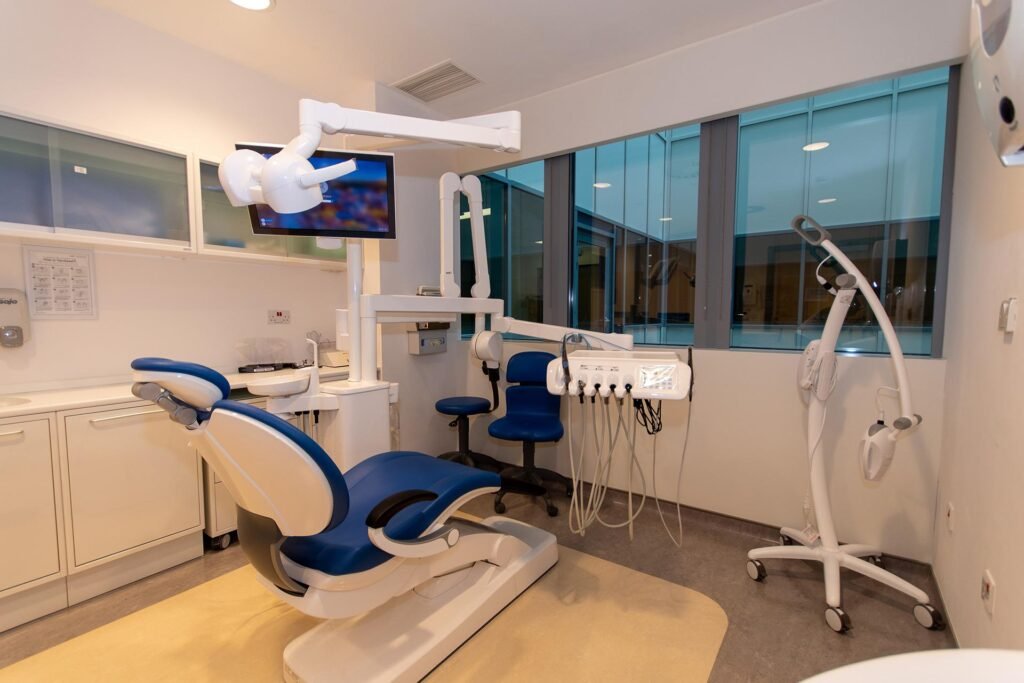
How to Choose the Right Dental Chair for Your Clinic: A Complete Buying Guide

How to Choose the Right Dental Chair for Your Clinic

A dental chair is easy to underestimate.

nBFSecqGFTPZgr6dzxfrtBUSd DT joCVa4J43RtaYPtmvKfLEOcJN18Ho5NifT4hAoRkGoBYe7Annf7HK4t4JR9RNn7QKXx8R8lpGhJBiLne HUEg4MrRFfobLX2k5GJ6rt3zTpJR0ZqCd1JiYjF wb3JX BRBqdEgRGKkleOs8c QhPjwzMOgVT6KhffFh?purpose=fullsize

At first glance, it looks like another piece of clinical furniture. But spend eight hours working around one and you quickly discover that the chair influences almost everything: your posture, patient positioning, assistant access, treatment efficiency, cleaning routine, and even how professional your operatory feels.

I learned this the hard way: the most expensive dental chair isn’t automatically the best chair for a particular clinic. A better approach is to match the chair to your procedures, room dimensions, patient profile, workflow, and long-term service requirements.

And while a conventional fixed dental chair remains the obvious choice for most permanent clinics, a portable dental chair can be surprisingly practical for mobile dentistry, outreach programs, temporary treatment rooms, home visits, camps, and clinics where flexibility matters.

So, how do you choose?

Let’s break it down.

What Should You Look for in a Dental Chair?

Before comparing brands or getting distracted by touchscreen controls and premium upholstery, start with five questions:

  1. What procedures will you perform most often?
  2. How many patients will use the chair each day?
  3. How much space is available in the operatory?
  4. How important are mobility and portability?
  5. What happens when the chair needs service or a replacement part?

That last question is often ignored.

A chair that costs less initially but sits unusable for several days because a replacement actuator or control board isn’t readily available can become more expensive than a premium model.

ISO 7494-1:2018 establishes requirements and test methods for stationary dental units and dental patient chairs, so buyers should also verify the relevant standards and documentation for the equipment they are considering.

Fixed vs. Portable Dental Chair: Which Is Better?

There isn’t one universal winner.

The right choice depends on how your clinic operates.

FeatureFixed Dental ChairPortable Dental Chair
Best forPermanent clinicsMobile/temporary dentistry
MobilityLowHigh
InstallationUsually requiredMinimal or simpler
Space flexibilityModerateExcellent
Heavy daily useUsually better suitedDepends on model
Outreach campsLess practicalExcellent
Home visitsImpracticalExcellent
Integrated equipmentOften extensiveUsually more limited
Long-term operatory setupExcellentGood for selected applications
Initial setup complexityHigherLower
StorageNot usually relevantImportant consideration

When a Portable Dental Chair Makes Sense

A portable dental chair isn’t simply a “cheaper dental chair.”

Its real advantage is flexibility.

Consider one if you:

  • Conduct dental camps or outreach programs
  • Provide home-care dentistry
  • Operate in multiple locations
  • Need a temporary treatment room
  • Have limited clinical space
  • Are testing a new location before investing heavily
  • Need backup equipment for emergencies or overflow

However, don’t buy portable equipment purely because it takes up less space. Check its weight capacity, stability, adjustment range, upholstery, folding mechanism, transport case, and compatibility with the rest of your equipment.

For a busy permanent clinic performing complex restorative, surgical, implant, or endodontic procedures every day, a properly installed fixed chair may provide a more appropriate workflow.

1. Prioritize Ergonomics Over Fancy Features

This is probably the most important buying decision.

Dentistry involves repetitive positioning, reaching, twisting, and prolonged concentration. Poor equipment positioning can make those movements worse. A-dec, for example, specifically emphasizes ergonomics and positioning as part of reducing physical strain during clinical work.

Look for a chair that allows you to:

  • Position the patient precisely
  • Get close to the oral cavity without excessive leaning
  • Maintain adequate legroom
  • Adjust patient height to your working position
  • Move easily between treatment positions
  • Access the head and neck without awkward stretching

Don’t Test the Chair as a Patient—Test It as a Dentist

This is a useful buying trick.

When visiting a showroom, don’t simply sit in the chair and ask, “Is it comfortable?”

Pretend you’re performing an actual procedure.

Adjust the chair, position the headrest, sit on the operator stool, reach toward the patient’s mouth, and imagine where your assistant would sit.

If your shoulder rises, your back twists, or your knees hit the chair base, you’ve just discovered a problem that a glossy brochure won’t show you.

2. Check Chair Height and Positioning Range

Chair height matters more than many first-time buyers realize.

A wider adjustment range can accommodate different dentists, assistants, procedures, and patient needs.

Modern dental chairs can offer substantial vertical adjustment. For example, A-dec’s current chair range includes models with different height ranges and patient weight ratings, demonstrating why buyers should compare actual specifications rather than assuming every “motorized dental chair” performs similarly.

Pay particular attention to:

  • Minimum chair height
  • Maximum chair height
  • Backrest angle
  • Headrest adjustment
  • Trendelenburg/reclining capability
  • Armrest configuration
  • Patient weight capacity
  • Base clearance

Don’t compare chairs based only on whether they are “electric” or “hydraulic.”

The useful question is: Can I position my patient exactly where I need them for the procedures I perform?

3. Electric vs. Hydraulic Dental Chairs

Both systems can work well.

Electric Chairs

Electric systems can offer precise positioning and convenient controls. Depending on the model, movement may be controlled through foot switches, touch controls, or integrated delivery-system controls.

They can be particularly attractive for clinics that want programmable positions and modern digital integration.

Hydraulic Chairs

Hydraulic systems have been used extensively in dental equipment and can provide smooth movement and substantial lifting capability.

The important point is not to choose based on technology terminology alone.

Ask the supplier:

  • How smooth is movement?
  • How noisy is the mechanism?
  • What is the lifting capacity?
  • What happens during power failure?
  • How easily are components serviced?
  • Is technical support available locally?

A quiet, dependable chair that your service team can repair quickly is often more valuable than a chair packed with features you rarely use.

4. Don’t Ignore the Headrest

The headrest looks like a small component.

Clinically, it isn’t.

A properly adjustable headrest helps position the patient’s head for different procedures and can make access significantly easier.

Look for:

  • Easy adjustment
  • Stable locking
  • Adequate neck support
  • Compatibility with different patient sizes
  • Smooth positioning
  • Easy-to-clean surfaces

If you treat children, elderly patients, or patients with limited mobility, test the headrest with those use cases in mind.

5. Patient Comfort Is Part of Clinical Efficiency

Patient comfort isn’t simply about luxury.

An uncomfortable patient may move more, ask for more breaks, or struggle to remain positioned during treatment.

Look at:

  • Cushion thickness
  • Upholstery quality
  • Back support
  • Head support
  • Armrest design
  • Smooth start/stop movement
  • Noise generated during adjustment

Some premium chairs use very smooth movement systems and ergonomic backrest designs specifically to improve patient positioning and access.

The goal isn’t to buy the softest chair.

It’s to find a chair that supports the patient without interfering with your clinical access.

6. Think About Infection Control Before Buying

A dental chair is exposed to saliva, aerosols, disinfectants, gloves, instruments, and frequent cleaning.

That makes surface design important.

Look for upholstery and surfaces that are:

  • Easy to wipe
  • Resistant to your clinic’s approved disinfectants
  • Free from unnecessary seams and difficult-to-clean recesses
  • Durable enough for repeated cleaning

Also ask the manufacturer for specific cleaning and disinfection instructions rather than assuming every surface can tolerate the same chemical.

This matters because inappropriate cleaning products can damage upholstery and other components.

For the dental unit itself, ISO 7494-2:2022 addresses requirements concerning air, water, suction, wastewater systems, connections, materials, construction, and related interfaces in stationary dental units.

7. Match the Chair to Your Procedures

Your clinical specialty should influence your choice.

General Dentistry

Prioritize:

  • Versatile positioning
  • Comfortable patient access
  • Reliable movement
  • Easy cleaning
  • Strong service support

Endodontics

Look closely at positioning precision, head support, access, illumination compatibility, and ergonomics during long procedures.

Implantology and Oral Surgery

Consider:

  • Patient weight capacity
  • Stability
  • Positioning range
  • Access around the patient
  • Integration with surgical workflow

Pediatric Dentistry

Prioritize:

  • Low minimum height
  • Comfortable positioning
  • Child-friendly design
  • Easy cleaning
  • Appropriate patient support

Mobile Dentistry

This is where a portable dental chair becomes especially interesting.

Weight, folding mechanism, transportability, setup time, stability, and compatibility with portable suction, lighting, compressors, and other equipment become more important than having every integrated feature found on a premium fixed operatory.

8. Calculate the Total Cost of Ownership

Never compare dental chairs using purchase price alone.

A better calculation is:

Total Cost = Purchase + Installation + Accessories + Service + Replacement Parts + Downtime

A chair with a low purchase price can become expensive if:

  • Spare parts are difficult to obtain
  • Service technicians aren’t available locally
  • Warranty coverage is weak
  • Installation costs are unexpectedly high
  • Consumable components wear quickly
  • Downtime interrupts appointments

As one example of how manufacturers approach longevity, A-dec states that its dental chairs are designed and tested for a service life of up to 20 years under normal use, while actual lifespan depends on factors such as environment, maintenance, and usage.

That doesn’t mean every premium chair will last 20 years.

It illustrates an important buying principle: evaluate equipment as a long-term asset, not a one-time purchase.

9. Ask These Questions Before Signing the Purchase Order

Create a simple checklist and make the salesperson answer every item.

Technical

  • What is the maximum patient weight?
  • What is the height adjustment range?
  • What type of drive system is used?
  • How many programmable positions are available?
  • What is the warranty period?
  • What components are covered?

Service

  • Who provides installation?
  • Where is the nearest service team?
  • What is the typical response time?
  • Are spare parts stocked locally?
  • How long are commonly replaced components supported?

Clinical

  • Is the chair suitable for my procedures?
  • Can my assistant work comfortably?
  • Can I reach the patient without awkward posture?
  • Does the headrest provide enough adjustment?
  • Is the chair compatible with my delivery system and other equipment?

Financial

  • Is installation included?
  • Are accessories included?
  • Are taxes and delivery included?
  • What are annual maintenance costs?
  • What will replacement parts cost?

A Practical Dental Chair Buying Scorecard

If you’re comparing three or four models, don’t rely on memory.

Score each model from 1–5.

Buying FactorSuggested Weight
Ergonomics25%
Reliability & build quality20%
Patient comfort15%
Clinical positioning15%
Service & spare parts10%
Infection-control design5%
Warranty5%
Price/value5%

This approach prevents one attractive feature—or a low price—from dominating the decision.

Common Dental Chair Buying Mistakes

Choosing Based Only on Price

The cheapest chair isn’t necessarily the most economical.

Buying More Features Than You Need

A touchscreen doesn’t automatically improve clinical outcomes.

Ignoring the Operator Stool

The chair and stool work as a system. Your seating position affects your posture just as much as patient positioning. Ergonomic stool adjustment is therefore worth testing alongside the chair.

Forgetting Room Dimensions

Measure doors, walls, plumbing points, electrical outlets, cabinet locations, assistant access, and patient movement before ordering.

Not Asking About After-Sales Support

A dental chair is critical equipment. Service availability should be part of the purchase decision—not an afterthought.

Final Verdict: Which Dental Chair Should You Buy?

The best dental chair is not necessarily the most expensive, most automated, or most attractive model.

It is the one that fits your clinical workflow.

For a high-volume permanent practice, prioritize ergonomics, positioning, durability, infection-control considerations, integration, and service support.

For a mobile clinic, outreach program, temporary setup, or home-visit service, a portable dental chair may provide the flexibility that a conventional fixed chair cannot.

And before buying, do one thing that no product brochure can do for you:

Test the chair like you actually work.

Sit at the operator position. Position an imaginary patient. Reach for the mouth. Move the headrest. Test the foot control. Ask where the assistant would sit. Imagine doing your longest procedure in that position.

If the chair still feels right after that test, you’re no longer buying based on specifications alone—you’re buying based on how your clinic will actually function.

Ready to Choose Your Dental Chair?

Before making the final purchase, compare at least three models using the scorecard above, request a live demonstration, confirm warranty and service coverage, and calculate the total cost of ownership.

If you’re setting up or upgrading a dental clinic, explore your other equipment requirements as well—and build your operatory around ergonomics, workflow, infection control, reliability, and patient experience, not just appearance.

The right dental chair shouldn’t simply hold your patient. It should make your entire clinical workflow better.
Leave a Reply

Your email address will not be published. Required fields are marked *

Related Post

WhatsApp Image 2025 11 05 at 10.41.07 AM c9f326bd 6a53 4f40 a3b7 25a0e20b808f 600x600 crop center

How to Build an Efficient Dental Clinic Inventory: A Complete Guide

A dental clinic can lose money in surprisingly small ways: an expired composite sitting in a drawer, five nearly identical burs nobody remembers ordering, or a sudden shortage of gloves just before a busy surgical day. That is why an Efficient Dental Clinic Inventory is about much more than counting boxes. It is about ensuring the right product, in the right quantity, at the right time—without tying up unnecessary cash or compromising patient care. The American Dental Association (ADA) recommends keeping dental supply costs under control and notes a general rule of thumb that inventory costs should be around 5–6% of collections. It also recommends assigning responsibility for inventory management and training a backup person. A well-designed inventory system therefore sits at the intersection of clinical safety, purchasing, finance, infection control, and workflow efficiency. What Does an Efficient Dental Clinic Inventory Look Like? An efficient inventory system should answer five questions immediately: If staff have to open three cabinets, check WhatsApp messages, and call a supplier to answer those questions, the system is not really an inventory system—it is institutional memory. A better approach is to create a centralized inventory master containing information such as: This structure can work in a spreadsheet, inventory application, ERP, or dental practice-management system. Step 1: Divide Your Dental Inventory into Logical Categories One of the easiest mistakes is treating every product as an individual item without understanding its clinical role. Start by grouping products according to how they are used. Inventory Category Examples Priority Infection Control Gloves, masks, sterilization pouches, disinfectants Critical Restorative Materials Composite, GIC, bonding agents, matrices High Endodontics Files, gutta-percha, sealers, irrigants High Prosthodontics Impression materials, trays, retraction cord Medium–High Oral Surgery Sutures, blades, gauze, forceps High Preventive Dentistry Fluoride products, sealants, prophylaxis materials Medium Consumables Cotton rolls, suction tips, bibs, cups High Instruments Scalers, mirrors, probes, forceps Medium Equipment Autoclaves, curing lights, compressors Critical Emergency Supplies Oxygen, emergency medications, basic emergency equipment Critical The advantage of categorization is simple: not every product deserves the same inventory strategy. A box of cotton rolls and a specialized implant component should never be managed using identical reorder rules. Step 2: Identify Your “Never Run Out” Items Some products are inexpensive but operationally critical. For example, running out of a particular composite shade may be inconvenient. Running out of gloves, sterilization pouches, suction tips, or essential emergency supplies can interrupt the entire day’s workflow. Create a Critical Stock List containing products that could stop treatment if unavailable. These typically include: For these items, maintain a larger safety buffer than you would for slow-moving specialty products. Step 3: Use Minimum, Maximum and Reorder Levels Instead of ordering whenever a drawer “looks empty,” establish inventory thresholds. A simple reorder-point formula is: Reorder Point = Average Daily Usage × Supplier Lead Time + Safety Stock For example, suppose your clinic uses approximately 20 pairs of a particular type of gloves per day. If the supplier usually takes five days to deliver: 20 × 5 = 100 pairs If you want another 50 pairs as safety stock: Reorder Point = 150 pairs Once available inventory reaches 150 pairs, the system should trigger a reorder. This approach transforms purchasing from guesswork into a predictable process. A useful rule Don’t ask: “How many should we buy?” Ask: “How long must this stock last, and how reliable is the supplier?” That small change in thinking can significantly reduce both shortages and overstocking. Step 4: Apply ABC Inventory Analysis Not all products have equal financial importance. ABC analysis divides inventory according to consumption value: For a dental clinic, an expensive implant component might be an A item, while cotton rolls may be a C item. However, there is an important clinical twist. Add a “Criticality” layer A cheap product can still be clinically critical. Therefore, consider combining ABC value analysis with clinical criticality. For example: Product Financial Value Clinical Criticality Monitoring Implant component High High Very close Composite syringe Medium Medium Regular Cotton rolls Low High Frequent Specialty bur Medium Medium Regular Paper cups Low Low Simple This is one of the most useful improvements a dental clinic can make to traditional inventory management. Step 5: Make Expiry Management a Daily Habit Expired dental materials are more than wasted money. Depending on the product, improper storage or use beyond the manufacturer’s specified shelf life can affect performance and patient safety. Use the FEFO method: First Expire, First Out. FEFO is different from FIFO. For dental clinics, FEFO is usually the better approach for products with expiry dates. When new stock arrives, don’t simply place it in front of existing stock. Check the expiry date and position inventory so that products expiring sooner are used first. A useful monthly report can flag: This simple report can prevent thousands of rupees of avoidable wastage in a busy clinic. Step 6: Treat Infection-Control Supplies as a Separate Inventory Priority Inventory management and infection prevention are closely connected. The CDC’s dental infection-prevention guidance covers standard precautions, instrument processing, environmental infection control, personal protective equipment and other measures necessary for safe dental care. The ADA also emphasizes sterilization monitoring and following manufacturer instructions for processing dental instruments and materials. That means inventory records should not merely show “sterilization supplies.” They should identify specific items such as: The WHO similarly identifies infection prevention and control as fundamental to safe healthcare delivery, including in primary-care settings. Inventory failure can become infection-control failure. That is why these supplies deserve their own monitoring rules. Step 7: Standardize Your Product Master Data Imagine two staff members entering the same product as: Your inventory software may interpret these as three separate products. This creates false stock counts and unnecessary purchasing. Create standardized product records containing: Brand → Category → Product Family → Product Type → Variant → Size → Pack Size → SKU For example: Brand: 3MCategory: RestorativeProduct Family: CompositeProduct Type: Universal CompositeShade: A2Pack Size: 4 gSKU: Standardized internal code The goal is not simply to make the database look professional. Clean

Basic Dental Instruments Used in Every Clinic

10 Essential Dental Instruments Every Dental Clinic Should Have

A dental clinic can have the latest chair, impressive technology, and a beautifully designed reception area—but when treatment begins, success often comes down to something much simpler: the instruments in the dentist’s hands. The right Essential Dental Instruments improve visibility, precision, efficiency, patient comfort, and infection control. More importantly, a well-planned instrument setup prevents a common clinic problem: buying too many specialized tools while overlooking the everyday instruments used in almost every appointment. Whether you are opening a new dental practice, upgrading an established clinic, or building an inventory system for dental supplies, the goal should not be to own the largest collection. It should be to have the right instruments, in the right quantities, with a reliable sterilization and maintenance workflow. The following 10 instruments form a practical foundation for general dentistry. What Makes a Dental Instrument “Essential”? Before looking at individual instruments, it helps to define what “essential” actually means. An instrument deserves a place in the core inventory when it is: Infection prevention is particularly important. The CDC classifies patient-care items according to their intended use and infection-transmission risk. Critical and semicritical instruments generally require appropriate sterilization or high-level processing according to their classification and manufacturer instructions. That means purchasing an instrument is only half the decision. How that instrument will be processed after every patient matters just as much. 10 Essential Dental Instruments for a General Dental Clinic 1. Dental Mouth Mirror The mouth mirror is one of the simplest instruments in dentistry—and one of the most frequently used. It provides indirect vision, helps retract the cheek or tongue, reflects light into difficult-to-see areas, and can assist with examination of tooth surfaces. A good mouth mirror should offer: For a busy practice, having several mirror handles and replacement mirror heads can be more practical than maintaining only a small number of sets. Buying insight: Don’t judge mirrors purely by price. Poor-quality reflective surfaces or loose mirror heads can become frustrating during routine examinations. 2. Dental Explorer or Probe A dental explorer is designed for tactile examination of teeth and surrounding structures. Different probe designs are used for different clinical purposes. Common examples include explorers for general examination and periodontal probes for assessing periodontal pocket depths. A probe should have a comfortable grip and a properly finished working end. Excessively sharp or damaged instruments should not remain in circulation. Best practice: Inspect probes regularly for bent tips, corrosion, or damage. A small defect can affect tactile sensitivity and clinical accuracy. 3. College Tweezers / Dental Cotton Pliers Dental tweezers may look basic, but they perform countless small tasks throughout the day. They can be used to: Their value is largely about efficiency. When an assistant or dentist repeatedly needs to pick up a small item, reliable cotton pliers save time and reduce unnecessary hand movements. For clinics managing multiple treatment rooms, these instruments are inexpensive enough to stock in adequate numbers. 4. Dental Excavator Excavators are commonly associated with removal of softened carious dentin and other procedures where controlled removal of material is required. Different shapes and sizes provide different working angles and access. A good excavator should have: Although rotary instrumentation has transformed restorative dentistry, hand instruments remain valuable when tactile control and selective removal are important. 5. Dental Scaler Scalers are essential for removing calculus and deposits during periodontal and preventive procedures. There are several designs, including instruments intended for specific tooth surfaces and areas of the mouth. This is an area where instrument selection should match the clinician’s technique rather than simply choosing the largest possible set. The CDC considers periodontal scalers among critical instruments because certain instruments can penetrate tissue or contact bone, meaning appropriate sterilization is essential. Inventory tip: Keep periodontal instruments organized by design and procedure. A well-labeled instrument cassette can make setup significantly faster. 6. Dental Curette Curettes are particularly important in periodontal therapy because their rounded working ends are designed for subgingival instrumentation. Universal and area-specific curettes serve different purposes, so a periodontal practice may require a broader selection than a general dental clinic. When purchasing curettes, pay attention to: Ergonomics deserve special attention here. An instrument that feels acceptable for five minutes may become uncomfortable during a long periodontal procedure. 7. Dental Handpiece If the mouth mirror is one of dentistry’s simplest tools, the handpiece is one of its most technologically important. High-speed and low-speed handpieces are used for procedures ranging from tooth preparation and caries removal to finishing and polishing. Important buying factors include: The CDC and ADA emphasize that reusable dental handpieces should be appropriately cleaned and heat sterilized between patients when applicable, following validated manufacturer instructions. This is one reason a clinic should never purchase a handpiece solely because it is inexpensive. Reprocessing requirements should be part of the purchasing decision from day one. 8. Dental Extraction Forceps For clinics performing routine extractions, extraction forceps are indispensable. Their designs vary according to tooth type, location, and clinical application. Because different teeth require different approaches, a clinic should build its forceps inventory around the extractions it actually performs. A practical starter inventory may include forceps suitable for: Forceps should provide a secure grip without excessive hand strain. Important: Extraction instruments are considered critical patient-care items because they can penetrate soft tissue or contact bone. Appropriate cleaning and sterilization are therefore essential. 9. Dental Elevators Elevators are commonly used during tooth extraction to loosen teeth or roots and assist in creating controlled mobility before forceps application. Straight and angled designs are available, with different sizes and shapes serving different clinical situations. A useful elevator should have: Because elevators can transmit substantial force, quality matters. A poorly manufactured instrument can bend, chip, or become difficult to control. 10. Air-Water Syringe The air-water syringe is sometimes overlooked when clinics create instrument inventories because it is integrated into many dental units. Yet its role is fundamental. It helps clinicians: Tips and removable components must be handled according to the manufacturer’s reprocessing instructions. Dental devices connected to air and water

latest technology trends 2025

Healthcare Technology: New Technologies, Innovations & Industry Trends Transforming Modern Healthcare

Introduction: Healthcare Is Becoming Smarter, Not Just More Digital Imagine a doctor reviewing a patient’s medical history while an AI system highlights potential warning signs, a wearable continuously monitors vital signs from home, and a virtual consultation connects the patient to a specialist hundreds of kilometres away. This is no longer science fiction. Artificial intelligence in healthcare is becoming part of everyday clinical workflows, while telemedicine, connected medical devices, robotics, cloud computing, predictive analytics and digital health platforms are changing how healthcare is delivered. The shift is significant. An American Medical Association survey published in 2026 found that 81% of physicians surveyed reported using AI professionally, with applications ranging from summarizing medical research to documentation and patient communication. But the most important healthcare technology trend isn’t simply “more technology.” It is the movement from reactive healthcare toward predictive, personalized and continuously connected care. The question for hospitals, clinics, healthcare professionals and patients is therefore changing from “Will technology transform healthcare?” to “How can we adopt it responsibly and make it genuinely useful?” The Biggest Healthcare Technology Trends Shaping Modern Medicine Healthcare innovation is happening across several connected areas. Some technologies support clinicians directly, while others improve how patients monitor and manage their health. Technology Main Application Potential Impact Artificial intelligence Diagnosis, documentation, prediction and decision support Faster and more data-driven care Generative AI Clinical documentation, research and patient communication Reduces administrative workload Telemedicine Remote consultation and follow-up Expands access to specialists Wearable devices Continuous health monitoring Earlier detection and prevention Robotics Surgery, rehabilitation and hospital automation Greater precision and efficiency IoT medical devices Connected monitoring and equipment Real-time healthcare data Big data analytics Population and clinical analysis Better planning and decision-making 3D printing Prosthetics, implants and surgical planning Personalized medical solutions Cloud healthcare platforms Data storage and interoperability Connected healthcare ecosystems The real opportunity comes when these technologies work together rather than operating as isolated tools. 1. Artificial Intelligence in Healthcare: From Experiment to Everyday Tool Artificial intelligence is arguably the most influential healthcare technology trend today. AI systems can analyze large volumes of medical information much faster than humans. Depending on the application, they can assist with medical imaging, identify patterns in patient records, support clinical decision-making, summarize research and automate repetitive administrative tasks. The FDA maintains an evolving list of AI-enabled medical devices authorized for marketing in the United States, demonstrating how AI is moving from experimental projects into regulated medical products. Where is AI already making a difference? AI can assist with: One particularly practical application is reducing paperwork. Doctors don’t necessarily need AI to “replace” their clinical judgment. They often need technology to eliminate tasks that consume time without requiring their highest-level expertise. That distinction matters. The AMA reported that addressing administrative burden through automation was the leading opportunity identified by physicians, while privacy assurances and integration with electronic health records were among the important requirements for adoption. The next step: Generative and multimodal AI Generative AI goes beyond analyzing existing information. It can produce text, summarize documents, interpret multiple forms of information and assist with complex workflows. The World Health Organization’s guidance on large multimodal models notes that these systems can work across inputs such as text, images and video, creating potential applications across healthcare, research and drug development. However, healthcare cannot treat AI like an ordinary productivity app. A confident but incorrect AI output can have serious consequences. Human oversight, clinical validation, privacy protection and clear accountability remain essential. 2. Telemedicine and Virtual Care Telemedicine has changed the traditional assumption that healthcare requires patients and clinicians to be in the same physical location. A patient can now consult a physician remotely, receive follow-up care, share digital reports and, in some cases, transmit health information through connected devices. Telemedicine can be particularly valuable for: But telemedicine shouldn’t be viewed as a universal replacement for physical care. Some conditions still require physical examination, diagnostic testing or emergency intervention. The better model is often hybrid healthcare: combining digital convenience with face-to-face clinical care when necessary. 3. Wearables and Remote Patient Monitoring Smartwatches and connected health devices have evolved beyond counting steps. Modern wearable technologies can collect information such as heart rate, activity patterns, sleep data and, depending on the device, other health measurements. The important innovation isn’t the device itself. It is the continuous stream of information. Traditional healthcare often provides a snapshot: Patient visits doctor → measurements are taken → treatment is recommended. Connected healthcare can create a longer picture: Data is collected continuously → changes are detected → healthcare professional reviews relevant information → intervention occurs when appropriate. This could support earlier identification of concerning trends, particularly in chronic disease management. However, more data doesn’t automatically mean better healthcare. Poor-quality measurements, unnecessary alerts and patient anxiety can create new problems. The future therefore isn’t about collecting everything. It is about collecting the right information and turning it into useful clinical insight. 4. Robotics and Automation Robotics is another major healthcare innovation, particularly in surgery, rehabilitation and hospital logistics. Robotic-assisted surgical systems can help clinicians perform complex procedures with enhanced precision and control. Meanwhile, rehabilitation robots can support patients recovering from injury or neurological conditions. Automation is also appearing behind the scenes. Hospitals can use automated systems for: This creates an important but often overlooked trend: healthcare technology isn’t only about treating patients; it’s also about making healthcare organizations operationally smarter. For clinics and hospitals, better inventory systems, connected equipment and automated workflows can reduce delays and improve resource utilization. 5. Internet of Medical Things (IoMT) The Internet of Medical Things, or IoMT, connects medical devices to digital networks so that information can be collected, transmitted and analyzed. Examples include connected: Imagine a hospital where equipment status, patient measurements and maintenance information can be monitored through connected systems. That creates opportunities for predictive maintenance, faster response times and more efficient resource management. But connectivity introduces another responsibility: cybersecurity. Healthcare organizations must protect sensitive patient information and connected devices from unauthorized access. Technology that improves healthcare