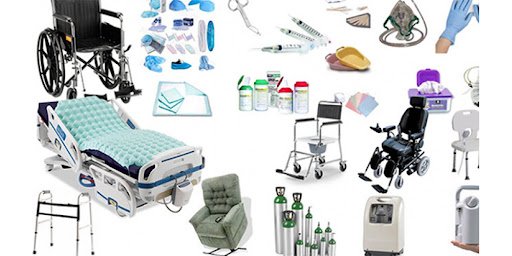
Essential Medical Supplies Every Clinic Should Stock: A Practical Guide for Safer, Smarter Care

Introduction: The Right Supply Can Change the Entire Clinical Workflow

Essential Medical Supplies Every Veterinary Clinic Needs to Have in Stock

Imagine a patient arrives with a minor wound. The clinician is ready, the examination room is prepared, and the diagnosis takes only a few minutes. Then someone realizes the clinic has run out of sterile gauze.

It sounds like a small problem. In practice, it can interrupt treatment, delay the next appointment, create unnecessary stress, and compromise workflow.

That is why essential medical supplies are not simply items stored in cupboards. They are part of a clinic’s patient-safety infrastructure.

A well-stocked clinic does not necessarily have the largest inventory. It has the right products, in appropriate quantities, available when and where they are needed. The World Health Organization (WHO) notes that equipment selection should reflect the facility, available workforce, and local disease burden rather than relying on one universal list.

This guide explains what most outpatient and primary-care clinics should consider stocking, how to prioritize purchases, and how to avoid the common mistake of confusing more inventory with better preparedness.


What Counts as Essential Medical Supplies?

The exact requirements depend on the clinic’s specialty, patient volume, procedures, and local regulations. A general outpatient clinic will have different needs from a dental practice, dermatology clinic, emergency centre, or women’s health facility.

However, most clinics can organize their core inventory into several practical groups:

  1. Infection prevention and PPE
  2. Examination and diagnostic supplies
  3. Injection and medication-administration supplies
  4. Wound-care products
  5. Basic emergency supplies
  6. Specimen-collection and testing supplies
  7. Cleaning and waste-management products
  8. Patient-care and procedure consumables

This category-based approach is more useful than simply creating a huge shopping list.


1. Infection Prevention and PPE: The First Line of Protection

If there is one category a clinic should never treat as an afterthought, it is infection-control supplies.

CDC Standard Precautions apply to all patient care and include hand hygiene, appropriate PPE, environmental cleaning, injection safety, and proper handling of reusable equipment.

Essential items include:

  • Examination gloves in multiple sizes
  • Surgical masks
  • Respirators when clinically indicated
  • Protective gowns or aprons
  • Eye protection and face shields
  • Alcohol-based hand rub
  • Liquid soap
  • Disposable tissues
  • Surface disinfectants
  • Disposable cleaning wipes
  • Sterile and non-sterile gloves

Hand hygiene products deserve special attention. WHO’s “Five Moments for Hand Hygiene” framework emphasizes cleaning hands before patient contact, before aseptic procedures, after body-fluid exposure, after patient contact, and after touching the patient’s surroundings.

Practical insight: Do not store sanitizer only at a central nursing station. Put hand-hygiene supplies where clinical decisions happen—near examination areas, treatment rooms, and other points of care.


2. Examination and Diagnostic Supplies

A diagnosis begins with good information. Even sophisticated clinical knowledge is limited when basic examination equipment is missing or unreliable.

A general clinic should consider maintaining:

  • Digital or manual blood-pressure monitors
  • Stethoscopes
  • Clinical thermometers
  • Pulse oximeters
  • Weighing scales
  • Height measurement equipment
  • Examination lights
  • Penlights
  • Reflex hammers
  • Measuring tapes
  • Glucometers and compatible test strips, where appropriate
  • Disposable tongue depressors
  • Otoscope/ophthalmoscope systems where relevant

For frequently used diagnostic equipment, having a backup can be more valuable than purchasing an expensive device that is rarely used.

A simple comparison

SupplyPrimary purposeStock priorityKey consideration
BP monitorBlood-pressure assessmentHighCorrect cuff sizes
Pulse oximeterOxygen saturationHighAccuracy and battery life
ThermometerTemperatureHighEasy cleaning
StethoscopeCardiopulmonary assessmentHighDurability and acoustics
GlucometerBlood glucose testingMedium–HighStrip compatibility
Examination lightVisual examinationMediumBrightness and positioning
OtoscopeEar examinationSpecialty-dependentDisposable/reusable tips

The important point is that equipment availability should match the clinical services actually offered. WHO similarly emphasizes that medical-device selection should be based on local requirements rather than assuming a universal equipment package.


3. Injection and Medication-Administration Supplies

Injection-related products require particularly careful inventory control because availability and infection prevention are closely connected.

Common supplies include:

  • Disposable syringes
  • Needles in different gauges and lengths
  • Alcohol or appropriate skin-preparation products
  • Medication cups
  • IV administration sets, where applicable
  • IV cannulas, where applicable
  • Tourniquets
  • Adhesive tape
  • Sharps containers
  • Sterile swabs
  • Labels and medication markers

Safety is more important than simply buying in bulk. CDC injection-safety guidance states that single-dose vials should not be used for more than one patient, and contaminated or questionable vials should be discarded.

Likewise, used sharps should be placed in appropriate puncture-resistant containers rather than being handled casually after use.

Inventory lesson: The cheapest syringe is not necessarily the lowest-cost option if poor packaging, inconsistent quality, or unreliable availability creates waste or clinical risk.


4. Wound-Care Supplies

Cuts, abrasions, punctures, minor burns, postoperative wounds, and dressing changes are common reasons patients require basic treatment.

A clinic’s wound-care stock may include:

  • Sterile gauze
  • Non-adherent dressings
  • Adhesive bandages
  • Absorbent dressings
  • Medical adhesive tape
  • Cotton or appropriate cleaning materials
  • Antiseptic products according to clinical protocol
  • Elastic bandages
  • Sterile gloves
  • Disposable forceps where appropriate
  • Wound-closure strips
  • Basic dressing trays
  • Waste bags

Instead of keeping one enormous assortment, clinics should analyze the wounds they actually treat.

For example, a dermatology clinic may consume more small dressings and sterile swabs, while an urgent-care facility may need a broader range of trauma-related products.


5. Emergency and First-Response Supplies

Even a routine outpatient clinic can encounter a medical emergency.

The emergency stock should be determined by the clinic’s services, staffing, local protocols, and applicable regulations. Depending on the setting, this may include:

  • Bag-valve-mask resuscitation equipment
  • Oxygen-delivery supplies where clinically appropriate
  • Suction equipment
  • Emergency airway supplies appropriate to staff competency
  • CPR-related equipment
  • AED, where indicated and feasible
  • Emergency medications according to authorized protocols
  • IV-access supplies
  • Gloves and protective equipment
  • Emergency documentation forms

The important principle is readiness, not decoration.

An emergency trolley filled with expired products or equipment that staff have never practiced using is not a prepared emergency system.

Every clinic should periodically verify:

  • Expiry dates
  • Battery status
  • Seal integrity
  • Equipment functionality
  • Accessibility
  • Staff familiarity
  • Replacement requirements

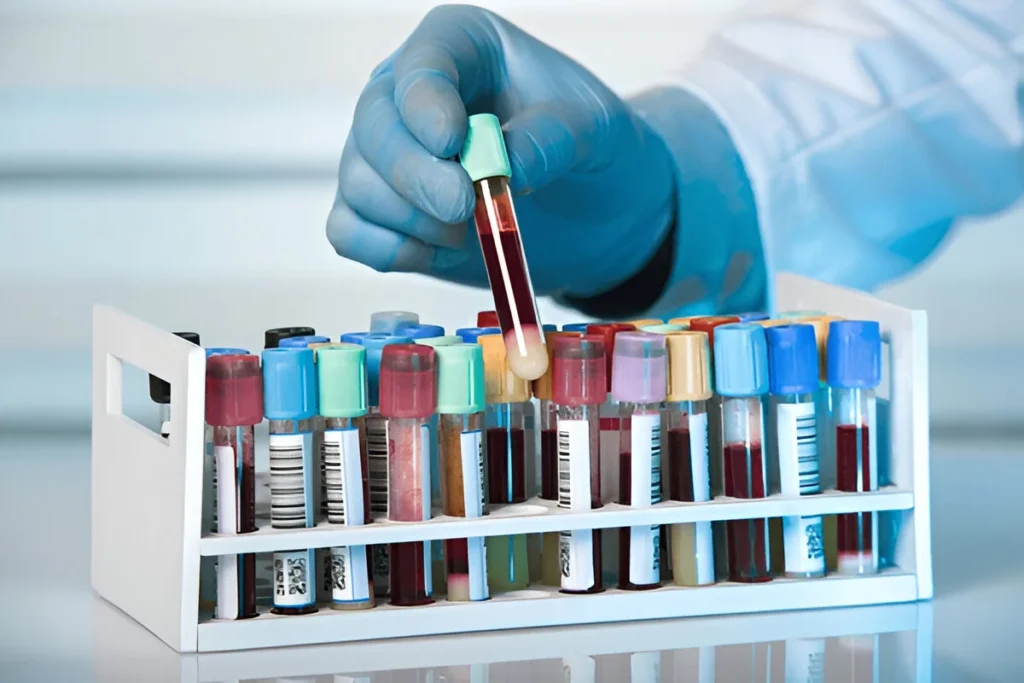
6. Specimen Collection and Point-of-Care Testing

Clinics that perform laboratory testing or collect specimens need a separate inventory category.

Depending on services, this may include:

  • Specimen containers
  • Blood-collection tubes
  • Lancets
  • Test strips
  • Swabs
  • Transport media
  • Labels
  • Biohazard bags
  • Disposable collection materials
  • Gloves and other PPE

One frequently overlooked item is labeling material.

A test cannot be managed safely if the specimen is collected correctly but identification is incomplete or inaccurate. Therefore, labels, markers, requisition forms, and specimen bags should be treated as clinical supplies—not office stationery.


7. Cleaning, Disinfection and Medical Waste Supplies

Clinical inventory does not end at the examination table.

Cleaning and waste-management supplies help maintain a safe environment between patients. CDC guidance emphasizes cleaning and disinfecting patient-care environments and ensuring appropriate PPE for cleaning activities.

Clinics should assess their need for:

  • Surface disinfectants
  • Disposable cleaning cloths or wipes
  • Utility gloves
  • Aprons
  • Biohazard bags
  • Sharps containers
  • Waste bins with appropriate segregation
  • Spill-management materials
  • Hand-hygiene products

The goal is not merely to make rooms look clean. Frequently touched surfaces close to patients can become contaminated and require appropriate cleaning and disinfection.


8. How Much Should a Clinic Keep in Stock?

This is where many inventory systems go wrong.

Buying six months’ worth of everything may sound safe, but excessive inventory can create expired products, tied-up capital, storage problems, and hidden waste.

A better approach is to divide products into three groups:

Stock levelExamplesSuggested approach
CriticalGloves, syringes, gauze, hand hygiene productsMaintain safety stock
RoutineDressings, tapes, examination consumablesReorder based on usage
SpecialtyProcedure-specific productsStock according to scheduled demand

A useful starting point is to calculate average monthly consumption and establish a reorder point based on supplier lead time plus a safety buffer.

For example:

Reorder Point = Average Daily Usage × Supplier Lead Time + Safety Stock

This turns inventory management from guesswork into a measurable process.


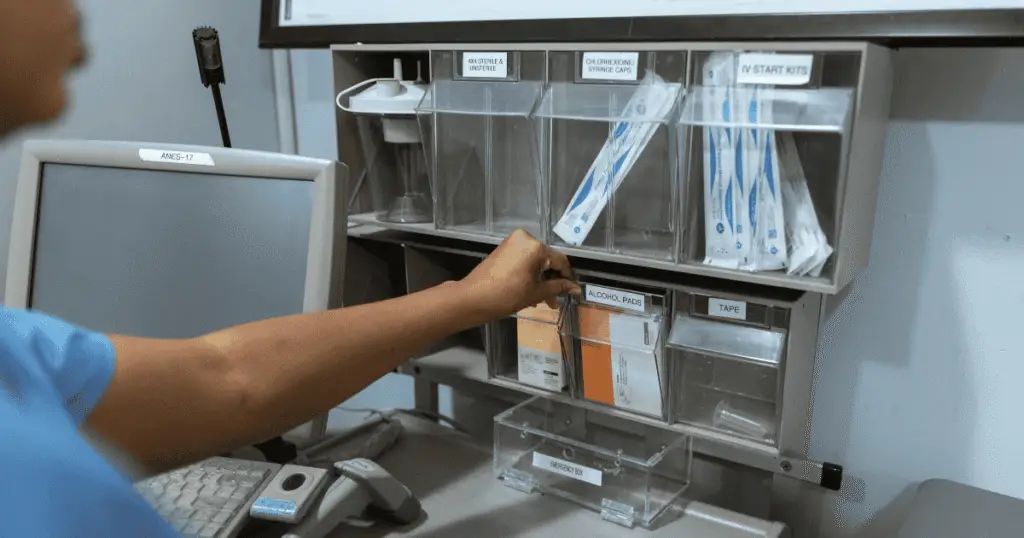
The “Two-Bin” Trick for High-Use Supplies

One simple system can make a surprisingly large difference.

For frequently used products such as gloves, gauze, syringes, or masks, use two clearly identified storage bins.

The first bin is the active stock. The second is the reserve.

When the first bin becomes empty, staff move the reserve forward and trigger a reorder.

This reduces the classic problem of discovering an empty shelf during a busy clinic session.

It also works particularly well when combined with FIFO (First In, First Out) rotation for products with expiry dates.


Don’t Forget Product Quality and Traceability

Price matters, but healthcare purchasing should never be based on price alone.

Before purchasing essential medical supplies, evaluate:

  • Product quality and intended clinical use
  • Regulatory compliance applicable to your country
  • Manufacturer reputation
  • Batch or lot traceability
  • Expiry dates
  • Packaging integrity
  • Storage requirements
  • Supplier reliability
  • Replacement availability
  • Total cost of ownership

Supply interruptions are a real operational risk. The FDA maintains a medical-device shortage list and notes that disruptions can result from manufacturing problems, natural disasters, geopolitical issues, delays, and discontinuations.

For critical supplies, maintaining an approved alternative supplier can therefore be as important as maintaining extra stock.


A Smarter Way to Build Your Clinic’s Supply Room

Instead of asking, “What medical products should we buy?”, ask five better questions:

1. What procedures do we perform most often?

Your inventory should reflect your actual clinical workload.

2. What items could stop patient care if they ran out today?

These deserve higher safety-stock levels.

3. Which products expire quickly?

Avoid excessive purchasing of short-dated products.

4. Which supplies have compatible alternatives?

Knowing acceptable alternatives improves resilience during shortages.

5. Can staff find each product within seconds?

A supply room should be organized for use, not merely storage.

WHO’s guidance on safe health facilities also emphasizes ensuring essential medicines and medical equipment remain accessible and protected from hazards.


Essential Medical Supplies: A Practical Master List

For a general outpatient clinic, the core inventory can be summarized as:

  • PPE: Gloves, masks, gowns, eye protection
  • Hand hygiene: Alcohol-based hand rub, soap, paper towels
  • Diagnostics: BP monitors, thermometers, stethoscopes, pulse oximeters
  • Injection supplies: Syringes, needles, swabs, sharps containers
  • Wound care: Gauze, dressings, tape, bandages
  • Emergency: Resuscitation and emergency-response equipment appropriate to the clinic
  • Testing: Specimen containers, swabs, lancets, test strips
  • Cleaning: Disinfectants, wipes, cleaning PPE
  • Waste management: Sharps and appropriate clinical-waste containers
  • Administrative: Labels, markers, procedure documentation and inventory records

This should be adapted to the clinic’s specialty, patient population, local regulations, and clinical protocols.


Conclusion: Stock for the Patient You See—and the Emergency You Don’t Expect

The best clinic inventory is not the largest one. It is the inventory that quietly supports good care every day.

A box of gloves prevents an avoidable interruption. A functioning pulse oximeter provides information when it matters. Proper sharps disposal protects staff. A well-maintained emergency kit can become critical within seconds.

The deeper lesson is that essential medical supplies should be managed as part of patient safety, infection prevention, and operational planning—not simply purchasing.

Start by analyzing your clinic’s actual consumption. Identify critical products. Set minimum and maximum stock levels. Rotate inventory by expiry date. Keep backup suppliers for high-risk items, and review the stock regularly.

A well-organized supply room may not be the most visible part of a healthcare facility, but when the right product is available at exactly the right moment, its value becomes obvious.

Ready to improve your clinic’s inventory?

Review your current stock today and identify the 10 supplies that would cause the biggest disruption if they ran out tomorrow. Prioritize those first, establish reorder levels, and build the rest of your inventory around actual clinical demand.

For more practical guidance, explore your clinic’s related resources on medical supplies, diagnostic equipment, infection prevention, and healthcare inventory management.


Suggested Visual Elements

Hero image: A modern outpatient clinic supply room with neatly organized PPE, diagnostic equipment, wound-care products, syringes, dressings, and labeled storage bins. Use a clean blue-and-white healthcare aesthetic.

Infographic: “10 Essential Medical Supply Categories Every Clinic Needs” featuring:

  1. PPE
  2. Hand hygiene
  3. Diagnostic tools
  4. Injection supplies
  5. Wound care
  6. Emergency supplies
  7. Specimen collection
  8. Cleaning supplies
  9. Medical waste management
  10. Inventory-control products

Authoritative Resources

Leave a Reply

Your email address will not be published. Required fields are marked *

Related Post

52b95d5d81c3fcc47b79fb85e7105d8d10dfe746 2 1024x682

Pharmacy & Healthcare Essentials: Medicines, Everyday Health Products & Smart Product Awareness

Introduction: The Aisle Everyone Walks Through, But Few Really Understand Think about the last time you stood in a pharmacy aisle, scanning ten nearly identical boxes of cold medicine, unsure which one actually matched your symptoms. You’re not alone — most of us treat pharmacy healthcare decisions the same way we treat grocery shopping: quick, instinctive, and based on packaging rather than substance. But here’s the catch. Unlike a bag of chips, the wrong choice in a pharmacy aisle can interact badly with a medication you’re already taking, mask a symptom that needed attention, or — in a worrying number of cases — turn out to be counterfeit altogether. Pharmacy healthcare isn’t just about grabbing a bottle off a shelf; it’s a small, frequent decision that quietly shapes how well your body recovers, and how safely. This post breaks down the three things that actually matter in everyday pharmacy healthcare: understanding medicines, using everyday health products correctly, and building the kind of product awareness that protects you from bad — sometimes dangerous — purchases. Understanding Medicines: Prescription vs. Over-the-Counter Every medicine sold legally falls into one of two buckets, and knowing the difference changes how carefully you should treat it. Prescription (Rx) Medicines These require a doctor’s evaluation because the risk of misuse, incorrect dosing, or dangerous interaction is high enough that professional oversight is built into the system. Over-the-Counter (OTC) Medicines The FDA defines OTC medicines as products the agency has determined are safe and effective for consumers to use without a doctor’s supervision — but only <cite index=”7-1″>when you follow the directions on the label and as directed by your health care professional</cite>. That “only if” clause is where most people slip up. Interestingly, the boundary between these two categories isn’t fixed. Through a process called Rx-to-OTC switch, <cite index=”9-1″>more than 700 products sold over the counter today use ingredients or dosage strengths that were available only by prescription three decades ago</cite>. Allergy medicines, certain heartburn drugs, and pain relievers have all made this journey — which is exactly why label literacy matters more now than ever. The Drug Facts Label: Your Five-Second Safety Check Before buying anything, the FDA’s Drug Facts label tells you everything that matters in one glance: Label Section What It Tells You Why It Matters Active ingredient The actual drug compound Prevents accidental double-dosing on the same ingredient across two products Purpose What condition it treats Confirms it actually matches your symptom Warnings Who shouldn’t take it, and interactions Flags risks for pregnancy, allergies, or existing conditions Directions Dose, frequency, age limits The single biggest source of preventable harm when ignored Inactive ingredients Fillers, dyes, preservatives Critical for people with allergies or sensitivities A simple habit — reading this box before checkout, not after you’re already home — solves a surprising share of medicine-related problems before they start. Everyday Health Products: Small Choices, Real Consequences Pharmacy healthcare isn’t only about pills. Thermometers, glucose monitors, wound-care supplies, vitamins, contact lens solutions, and even sunscreen fall under the same regulatory and safety logic — and the same room for error. A few patterns worth knowing: These aren’t dramatic rules. They’re boring, repeatable habits — which is exactly why they work. Smart Product Awareness: Spotting What Doesn’t Belong on the Shelf This is the part most “health tips” articles skip, and it’s arguably the most important one in 2026. The Counterfeit Problem Is Bigger Than Most People Assume A recent global analysis found that <cite index=”12-1″>around one in ten medicines sold worldwide is thought to be either counterfeit or substandard</cite>, and <cite index=”12-1″>roughly 60% of people surveyed said they fear the medicine they buy could be fake</cite> — a fear that turns out to be well-founded. The risk isn’t evenly spread, though. It concentrates heavily online: the World Health Organization estimates that <cite index=”13-1″>over 50% of medicines purchased from online pharmacies operating outside legitimate regulatory channels are counterfeit</cite>, compared with <cite index=”13-1″>less than 1% of medicines sold through licensed U.S. brick-and-mortar pharmacies</cite>. Online convenience has a dark side. According to the National Association of Boards of Pharmacy, <cite index=”11-1″>about 95% of online entities selling prescription medicine do so illegally</cite> — often mimicking real pharmacy branding closely enough that most shoppers can’t tell the difference. A Quick Comparison: Legitimate vs. Risky Pharmacy Sources Signal Legitimate Pharmacy Red Flag Source Prescription requirement Always asked for Rx drugs Sells prescription drugs with no prescription Pricing Consistent with market rate Unusually cheap, “too good to pass up” Licensing Verifiable pharmacist and state license No verifiable license or address Packaging Sealed, labeled, matches manufacturer standard Mismatched fonts, missing expiry dates, foreign-language labels with no translation Domain/verification Checkable via FDA’s BeSafeRx or similar tools No verification tool returns a match Practical Habits for Smarter Pharmacy Healthcare Decisions Key Insights: What Ties It All Together Conclusion: Make the Small Decisions Count Pharmacy healthcare rarely feels high-stakes in the moment — it’s a five-minute errand sandwiched between other tasks. But those small, frequent choices about medicines and everyday health products add up to a meaningful chunk of your family’s overall wellbeing. The good news is that the fixes aren’t complicated: read the label, ask your pharmacist, verify unfamiliar sellers, and treat “too cheap to be true” as exactly that. What’s your take? Have you ever caught a labeling issue, a dosing mistake, or a suspicious online “pharmacy” before it caused a problem? Share your experience in the comments — and if this guide helped you look at your medicine cabinet differently, pass it along to someone who could use the reminder. For more practical, well-sourced health guidance, explore our other posts on everyday wellness and consumer safety.

Dental Materials

Dental Consumables: A Complete Buying Guide for Dentists & Dental Clinics

Introduction: The “Small” Dental Supplies That Keep a Clinic Running A dental clinic can have an excellent dental chair, advanced imaging equipment, and experienced clinicians—but if the right consumables are missing, the entire workflow can slow down. From examination gloves and masks to composite resin, impression materials, bonding agents, burs, suction tips, sterilization pouches and endodontic accessories, dental consumables are the products dentists use repeatedly during everyday clinical care. The challenge is not simply finding dental supplies near me. The real challenge is finding supplies that are clinically appropriate, consistently available, authentic, safely packaged and economical over time. A low-priced box that produces inconsistent results—or expires before it is used—is rarely a bargain. This guide explains how dentists and clinic managers can evaluate dental consumables more intelligently, build an efficient purchasing system and avoid some of the most common procurement mistakes. What Are Dental Consumables? Dental consumables are products that are used during diagnosis, treatment, infection prevention or routine clinic operations and are either disposed of after use or gradually depleted. They include everything from basic PPE to sophisticated restorative and endodontic materials. Common categories include: The important point is that consumables are not one homogeneous category. A disposable saliva ejector and a light-cured restorative composite may both be consumables, but their purchasing criteria are completely different. Why Buying Dental Consumables Requires More Than Comparing Prices One of the easiest purchasing mistakes is comparing two products solely on their price per box. Instead, think about cost per successful procedure. For example, a composite may look cheaper per syringe but require more material, have poorer handling characteristics or produce more wastage. A premium product with better handling and predictable results can sometimes have a lower effective cost. A useful purchasing formula is: True Cost = Purchase Price + Wastage + Storage Cost + Expiry Loss + Replacement Cost + Clinical Failure Risk This is particularly important for high-value materials. A simple purchasing comparison Factor Budget Product Premium Product Initial price Lower Higher Handling consistency Variable Usually more predictable Packaging Basic to advanced Often advanced Wastage May be higher Potentially lower Technical support Variable Often stronger Cost per procedure Not always lower Can be competitive Best use High-volume basic items Critical clinical materials The lesson is simple: buy for value, not merely for the lowest invoice total. The 8 Major Types of Dental Consumables Every Clinic Should Understand 1. Infection-Control Consumables These are among the most frequently purchased products in a dental practice. Typical items include: The CDC identifies hand hygiene, PPE, sharps safety, sterile instruments and clean/disinfected environmental surfaces among the core elements of standard precautions in dental settings. The ADA also emphasizes that instruments and materials should be processed according to appropriate infection-control procedures and manufacturer instructions. Buying tip Don’t stock PPE purely according to the number of patients. Calculate consumption according to procedures per day × staff members × expected usage per procedure + safety stock. 2. Restorative Materials Restorative dentistry can involve a surprisingly large number of consumables: When comparing restorative materials, look beyond shade selection. Evaluate: For a busy clinic, predictable handling can be just as important as laboratory specifications. 3. Endodontic Consumables Endodontic procedures depend heavily on consumable quality and dimensional consistency. Common products include: A useful procurement strategy is to divide endodontic inventory into high-frequency, procedure-specific and emergency stock. For example, basic hand files may be high-frequency inventory, while specialized rotary systems can be purchased according to the clinicians’ treatment preferences. 4. Impression and Prosthodontic Materials Prosthodontic workflows often depend on materials where small variations can affect the final result. Common consumables include: What should you compare? Property Why It Matters Working time Determines clinical convenience Setting time Affects appointment duration Dimensional stability Important for accuracy Tear strength Important during removal Mixing characteristics Reduces bubbles and inconsistencies Shelf life Helps control inventory losses Packaging Protects material from contamination/moisture 5. Preventive and Periodontal Consumables Preventive dentistry requires a different inventory mix. Typical supplies include: These products are often inexpensive individually but can represent significant monthly expenditure because of their high usage. This makes consumption tracking particularly valuable. 6. Surgical Consumables Dental surgery requires products where sterility, packaging integrity and clinical suitability are particularly important. Common products include: For sterile products, inspect packaging before use. A damaged or compromised package should not simply be treated as “probably fine.” 7. Orthodontic Consumables Orthodontic practices have their own inventory ecosystem. These can include: Orthodontic inventory is particularly vulnerable to SKU confusion because products may differ by prescription, size, torque, angulation, material and configuration. A standardized inventory naming system can save considerable time. 8. Disposable Chairside Accessories These products are easy to overlook until they run out. Examples include: A clinic may not notice the value of these items individually, but collectively they can become a major recurring expense. How to Choose the Right Dental Consumables 1. Start With Clinical Requirements Don’t begin with: “Which brand is cheapest?” Start with: “What clinical problem does this product need to solve?” For example, a restorative material for anterior esthetic work may require different properties from one used for posterior restorations. 2. Verify Authenticity and Regulatory Information When purchasing medical devices or regulated products in India, clinics should understand the applicable regulatory requirements. The Central Drugs Standard Control Organisation (CDSCO) states that medical devices in India are regulated under the Drugs & Cosmetics Act and Medical Devices Rules, 2017, with risk-based classification from Class A through Class D. Therefore, depending on the product, purchasing teams should check: Don’t assume that an attractive online listing automatically means the product is genuine. 3. Check the Expiry Date—But Also Check Your Consumption Rate Expiry management is one of the most overlooked areas of dental inventory. A clinic purchasing a large quantity because of a discount can actually lose money if the products expire before they are used. Better approach: FEFO Use FEFO — First Expiry, First Out. This means products with the earliest expiry date should generally be used first, provided they remain within required

6 e1760693811715

Common Mistakes to Avoid When Buying Healthcare Products: A Smart Buyer’s Guide

Buying healthcare products should never feel like a gamble. Yet every day, clinics overspend on low-quality supplies, patients purchase ineffective devices online, and businesses lose money because they focused on price instead of value. Whether you’re stocking a dental clinic, opening a medical practice, or simply buying a blood pressure monitor for your family, one poor purchasing decision can affect safety, treatment outcomes, and long-term costs. This guide breaks down the most common mistakes buyers make—and more importantly, how to avoid them. Instead of generic advice, you’ll learn practical strategies used by experienced healthcare professionals and procurement teams to make confident purchasing decisions. Why buying healthcare products is different from ordinary shopping A stethoscope isn’t just another gadget. A surgical glove isn’t just another disposable item. Healthcare products directly influence patient safety, infection control, diagnostic accuracy, and clinical efficiency. 6 Unlike consumer goods, medical products must meet regulatory standards, maintain consistent quality, and often require compatibility with other equipment. That means the cheapest option is rarely the smartest one. The 10 biggest mistakes buyers make 1. Choosing price over quality Everyone loves saving money—but healthcare is one area where the lowest price often becomes the highest long-term expense. Consider two dental curing lights: Feature Budget model Quality-certified model Initial cost Low Higher Lifespan 1–2 years 5+ years Accuracy Inconsistent Reliable Warranty Limited Comprehensive Maintenance cost High Lower The lesson: Evaluate the total cost of ownership, not just the purchase price. 2. Ignoring certifications and regulatory approvals One of the easiest ways to identify trustworthy healthcare products is by checking certifications. Look for products that comply with relevant standards such as: 6 These certifications don’t guarantee perfection—but they significantly reduce the risk of purchasing poorly manufactured products. Pro tip: Always verify certification claims on the manufacturer’s official website rather than relying solely on marketplace listings. 3. Buying from unverified sellers Online marketplaces have made medical supplies incredibly accessible. Unfortunately, they’ve also made counterfeit products easier to distribute. Warning signs include: A reliable supplier should always provide documentation, invoices, and traceability. 4. Overlooking product compatibility Many buyers purchase devices without checking whether they’ll work with existing equipment. Examples include: Before ordering, create a compatibility checklist with: Checkpoint Why it matters Brand compatibility Prevents fitting issues Model number Ensures correct replacement Connector type Avoids operational failure Software version Important for digital devices 5. Ignoring expiry dates and shelf life This mistake is surprisingly common among clinics buying in bulk. Products with limited shelf life include: Buying excessive quantities may reduce unit costs—but expired inventory becomes pure waste. A smarter inventory approach 6. Skipping user reviews—but trusting them blindly Reviews are valuable, but they require interpretation. Look for patterns instead of individual opinions. Helpful reviews mention: Avoid reviews that only say “Good product” or “Nice quality.” 7. Forgetting after-sales support Medical equipment eventually needs servicing. Before purchasing, ask: A slightly more expensive supplier with excellent support often saves thousands later. 8. Buying in bulk without analyzing usage Bulk discounts are attractive—but unused inventory ties up capital. A simple purchasing formula works well: Optimal Order≈Monthly Usage×(Lead Time+Safety Stock)Optimal\ Order \approx Monthly\ Usage \times (Lead\ Time + Safety\ Stock)Optimal Order≈Monthly Usage×(Lead Time+Safety Stock) For example: Product Monthly usage Suggested stock Examination gloves 2,000 pairs 4,500 pairs Surgical masks 1,500 units 3,200 units Dental composite 60 syringes 140 syringes This approach balances availability with cash flow. 9. Ignoring infection control requirements Not all healthcare products meet the same hygiene standards. 6 Pay close attention to: Infection prevention begins long before patient treatment—it starts with purchasing. 10. Not asking the right questions before buying Experienced buyers ask questions that beginners rarely consider. Ask suppliers these 8 questions Question Why it matters Is this product certified? Ensures compliance What’s the warranty? Protects investment Are consumables easily available? Prevents downtime What’s the manufacturing date? Maximizes shelf life Can I see clinical documentation? Validates performance Is training included? Improves adoption What’s the replacement policy? Reduces purchasing risk Do you offer technical support? Ensures long-term reliability Comparing smart buyers vs impulsive buyers Smart buyer Impulsive buyer Researches certifications Buys based on discounts Compares total ownership cost Focuses only on price Checks compatibility Assumes everything fits Reviews supplier credibility Chooses unknown sellers Plans inventory Overstock purchases Prioritizes patient safety Prioritizes immediate savings The difference isn’t experience—it’s process. A practical buying checklist Before placing your next order, use this checklist: Verify certifications and regulatory approvals. Compare quality, warranty, and long-term costs. Confirm compatibility with existing equipment. Review expiry dates for consumables. Buy only from authorized or reputable suppliers. Evaluate after-sales support and spare parts. Analyze inventory usage before bulk purchasing. Keep documentation for traceability and audits. Print it, laminate it, and keep it near your procurement desk. The hidden cost of a “cheap” healthcare product A procurement manager once shared an insightful lesson after purchasing inexpensive examination gloves from an unfamiliar supplier. The gloves saved nearly 18% initially. Within weeks: The final cost exceeded what they would have paid originally. The takeaway? Quality compounds just like savings do. Conclusion: Buy with confidence, not just convenience The healthcare industry rewards thoughtful purchasing. Whether you’re sourcing medical equipment for a hospital, consumables for a dental clinic, or home monitoring devices for your family, every buying decision should balance quality, safety, compliance, and long-term value. Avoiding these common mistakes won’t just save money—it will improve patient outcomes, reduce operational headaches, and build trust in every healthcare setting. Frequently Asked Questions How can I verify whether healthcare products are genuine? Check the manufacturer’s website, verify batch numbers, confirm regulatory approvals, and purchase from authorized distributors whenever possible. Is buying healthcare products online safe? Yes—provided you buy from reputable platforms or authorized sellers that provide certification, invoices, and warranty support. Why are certified medical products more expensive? Certification involves rigorous quality management, testing, documentation, and compliance, which increases manufacturing costs but improves reliability and safety. Should clinics always buy in bulk? Not necessarily. Purchase quantities should reflect monthly consumption, lead time, and product shelf life rather than discounts alone. Related content (Internal links) Trusted resources For