Introduction: The Right Equipment Can Change the Recovery Journey
Recovery is rarely about one product. A brace may protect a joint, crutches may reduce weight-bearing, and rehabilitation equipment may help rebuild strength—but the real difference comes from choosing the right equipment for the right stage of recovery.
Consider someone recovering from a knee injury. They may initially need a support to stabilize the joint, then mobility assistance to walk safely, followed by exercise equipment to restore strength and eventually return to normal activities. Buying the most expensive product at each stage does not necessarily produce the best result.
This is why orthopaedic products, supports and rehabilitation equipment should be viewed as part of a recovery pathway, rather than as isolated purchases.
The World Health Organization (WHO) estimates that around 1.71 billion people worldwide live with musculoskeletal conditions, making these conditions a major global contributor to disability. Rehabilitation plays an important role in helping people regain function, independence and participation in everyday life. WHO’s musculoskeletal health overview provides useful background on this growing need.
Whether you are a patient, caregiver, physiotherapist, hospital, clinic or medical-equipment buyer, understanding what different products actually do can help you make more informed decisions.

What Are Orthopaedic Products and Rehabilitation Equipment?
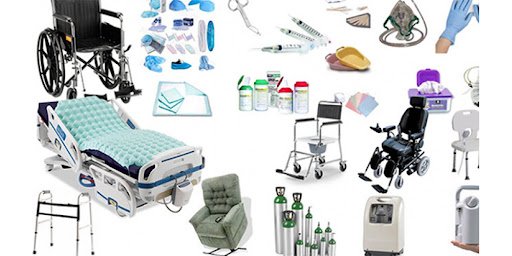
The term orthopaedic products covers a broad range of devices designed to support the bones, joints, muscles and surrounding structures.
These products may help:
- Stabilize an injured joint
- Reduce unwanted movement
- Support weakened muscles or joints
- Improve posture and positioning
- Assist mobility
- Protect an area during recovery
- Improve independence during daily activities
- Support rehabilitation exercises
Rehabilitation equipment takes this concept further. It is generally used to help restore or maintain physical function through movement, strengthening, balance, mobility and functional training.
The WHO describes assistive products as devices and equipment that can help maintain or improve functioning, including mobility and independence. Its rehabilitation resources also emphasize that equipment should be selected alongside appropriate professional assessment and training.
In other words, equipment is a tool—not the rehabilitation programme itself.
Major Categories of Orthopaedic Products
1. Braces and Supports
Braces are among the most commonly used orthopaedic products.
Depending on their design, they may provide compression, stabilization, protection or controlled movement.
Common examples include:
- Knee braces
- Ankle supports
- Wrist braces
- Elbow supports
- Shoulder immobilizers
- Back supports
- Cervical collars
- Thumb and finger splints
A major mistake is assuming that a tighter or more rigid brace is automatically better. Excessive restriction may interfere with comfortable movement and everyday function.
The better question is: What level of support is actually required?
2. Mobility Aids
Mobility products help people move more safely when pain, weakness, injury or reduced balance makes normal walking difficult.
Examples include:
- Walking sticks
- Crutches
- Walking frames
- Rollators
- Wheelchairs
- Transfer aids
The correct device depends on the individual’s strength, balance, weight-bearing restrictions, environment and rehabilitation goals.
For example, a walking stick and a walking frame are not interchangeable. A person requiring substantial stability may need a different solution from someone who simply needs light support outdoors.
Incorrect adjustment can also create problems. Height, handle position and technique should therefore be assessed rather than guessed.
3. Rehabilitation and Physiotherapy Equipment
Rehabilitation equipment is particularly important when the objective changes from protection to rebuilding function.
Common categories include:
| Equipment | Typical Purpose | Common Setting |
|---|---|---|
| Exercise bands | Resistance and strengthening | Home/Clinic |
| Therapy balls | Mobility, balance and strengthening | Home/Clinic |
| Pedal exercisers | Lower-limb movement and conditioning | Home/Clinic |
| Parallel bars | Gait and balance training | Rehabilitation centre |
| Exercise bikes | Controlled cardiovascular exercise | Clinic/Gym |
| Balance boards | Proprioception and balance | Physiotherapy |
| Hand exercisers | Grip and hand rehabilitation | Home/Clinic |
| CPM devices | Controlled joint movement in selected cases | Clinical/Home |
| TENS units | Pain-management support in appropriate cases | Home/Clinic |
| Therapy steps | Functional strengthening and mobility | Clinic |
Not every patient needs every type of equipment. WHO’s rehabilitation guidance emphasizes matching interventions and resources to specific functional needs and conditions rather than treating equipment as a one-size-fits-all solution. WHO’s rehabilitation package for musculoskeletal conditions covers areas including low back pain, osteoarthritis, rheumatoid arthritis, fractures, sarcopenia and amputation.
Orthopaedic Supports vs Rehabilitation Equipment: What’s the Difference?
The two categories often overlap, but their primary roles are different.
| Feature | Orthopaedic Supports | Rehabilitation Equipment |
| Primary goal | Support/protection | Restore or maintain function |
| Typical use | Injury, instability, weakness | Recovery and functional training |
| Examples | Knee brace, wrist splint | Resistance bands, balance equipment |
| Movement | May restrict/control movement | Usually encourages controlled movement |
| User | Patient under appropriate guidance | Patient, therapist or caregiver |
| Duration | Often condition-dependent | Often changes as function improves |
A useful way to remember the distinction is:
Supports help manage movement; rehabilitation equipment helps train movement.
That is not an absolute rule, but it provides a practical starting point.
How to Choose the Right Orthopaedic Equipment
1. Start With the Problem, Not the Product
Instead of searching for “the best knee brace,” start by identifying the actual problem.
Is the goal:
- Pain reduction?
- Joint stabilization?
- Post-surgical protection?
- Weight-bearing assistance?
- Improving balance?
- Strengthening?
- Returning to sport?
- Performing everyday activities more independently?
The answer can completely change the product choice.
2. Consider the Stage of Recovery
A product that is useful immediately after an injury may become unnecessary later.
For example:
Protection → Supported movement → Strengthening → Functional training → Return to activity
This progression explains why buying equipment based only on the diagnosis can be misleading.
A person recovering from surgery may need different support during different phases of recovery.
3. Prioritize Fit and Adjustability
Fit is one of the most overlooked factors.
For braces and supports, check:
- Correct anatomical positioning
- Size and circumference measurements
- Strap adjustment
- Pressure points
- Skin comfort
- Breathability
- Ease of application
For mobility equipment, check:
- Correct height
- Handle position
- Weight capacity
- Stability
- Portability
- Indoor/outdoor suitability
A technically excellent device can still be a poor choice if the user cannot comfortably or safely use it.
What Should Clinics Look for When Buying Rehabilitation Equipment?
For hospitals, physiotherapy centres and orthopaedic clinics, purchasing decisions require a broader perspective.
Safety
Equipment should be sturdy, stable and appropriate for the intended patient population.
Durability
High-use equipment needs to withstand repeated cleaning, adjustment and patient handling.
Ergonomics
Therapists should be able to position and operate equipment efficiently without unnecessary strain.
Maintenance
Consider replacement parts, servicing requirements, cleaning procedures and manufacturer support.
Patient Capacity
Equipment should accommodate the expected range of patient sizes and functional abilities.
Space Requirements
A large rehabilitation device may be impressive but impractical in a small clinic.
The best equipment is not necessarily the most sophisticated. It is the equipment that gets used consistently, safely and effectively.
A Practical Buying Checklist
Before purchasing any orthopaedic support or rehabilitation equipment, ask:
For patients
- Has the underlying problem been assessed?
- Is the product appropriate for my stage of recovery?
- Is the size correct?
- Can I put it on and remove it safely?
- Can I use it without excessive pain or discomfort?
- Have I been shown how to use it?
For clinics
- Is the equipment suitable for our patient population?
- Is it easy to clean?
- Is replacement or servicing available?
- Does it meet relevant safety and quality requirements?
- Is staff training required?
- Will the equipment actually be used regularly?
These questions can prevent an expensive but unsuitable purchase.
Common Mistakes to Avoid
Choosing Based Only on Price
Cheap does not always mean poor, and expensive does not automatically mean better. Evaluate construction, fit, intended use, warranty, service and suitability.
Using Someone Else’s Brace
A brace that works for one person may not be appropriate for another—even when the diagnosis sounds similar.
Buying Without Measuring
Incorrect sizing can reduce comfort and effectiveness.
Treating Equipment as a Substitute for Rehabilitation
A brace cannot replace appropriate strengthening, mobility training or professional assessment when these are required.
Continuing to Use Equipment Indefinitely
Recovery changes. The equipment that was helpful early on may eventually become unnecessary or inappropriate.
Ignoring the Home Environment
A mobility aid that works well in a spacious clinic may be difficult to use in a narrow hallway, bathroom or staircase.
The Most Important Insight: Think in Terms of Function
The best purchasing decision begins with a simple question:
“What do we want this person to be able to do?”
Perhaps the answer is walking to the bathroom independently. Maybe it is climbing stairs, returning to work, holding a cup, exercising, or getting back on the sports field.
WHO describes rehabilitation as a process focused on optimizing functioning and reducing disability. Assistive products and equipment are part of that larger process, alongside exercise, education, environmental modification and professional support. WHO’s rehabilitation guidance explains this person-centred approach in greater detail.
This functional perspective changes how equipment is selected.
Instead of asking, “Which brace should I buy?” ask:
“Which product will safely help me achieve the next meaningful step in recovery?”
That is a much better question.
Orthopaedic Equipment at Home: What Matters Most?
Home rehabilitation introduces practical challenges that are easy to overlook in a clinic.
Storage matters. A large device that remains folded in a cupboard provides little benefit.
Convenience matters too. If an exercise product takes 20 minutes to assemble, adherence may quickly decline.
Safety is equally important. Floors, stairs, furniture, lighting and bathroom access can all influence whether a mobility device is appropriate.
For home users, prioritize:
- Simplicity
- Correct fit
- Ease of cleaning
- Safe operation
- Appropriate weight capacity
- Storage requirements
- Clear instructions
- Professional guidance when needed
The goal is not to turn a home into a hospital. It is to make recovery practical enough to fit into everyday life.
When Should You Consult a Healthcare Professional?
Professional assessment is especially important when there is:
- Severe or unexplained pain
- Significant swelling
- New weakness or numbness
- Suspected fracture
- Major loss of movement
- Difficulty bearing weight
- A recent operation
- Persistent symptoms despite treatment
- Sudden deterioration in function
A physiotherapist, orthopaedic specialist, occupational therapist, orthotist/prosthetist or rehabilitation professional may be involved depending on the condition and goals.
Rehabilitation is highly individualized, and WHO notes that the appropriate intervention, intensity and duration should be based on assessment and the person’s goals.
Conclusion: Buy for the Recovery Journey, Not Just the Diagnosis
Orthopaedic products, supports and rehabilitation equipment can make recovery safer, more comfortable and more independent—but only when they match the person’s actual needs.
The strongest approach is to think beyond the product itself.
Start with the functional problem. Understand the stage of recovery. Choose the appropriate level of support. Check fit, safety and usability. Then reassess as the person’s abilities change.
Whether you are selecting a knee brace for an individual, mobility aids for home use or professional rehabilitation equipment for a physiotherapy clinic, the right equipment should support a clear purpose.
Recovery is not about owning more equipment. It is about using the right tools at the right time to help people move, function and live more independently.
Ready to make a smarter choice? Explore your available orthopaedic supports and rehabilitation equipment, compare specifications carefully, and consult an appropriately qualified healthcare professional when you need help selecting or using a device.
Medical disclaimer: This article is for general educational purposes and is not a substitute for diagnosis, treatment or individualized medical advice. Product selection should be based on the user’s condition, functional needs and, where appropriate, guidance from a qualified healthcare professional.