
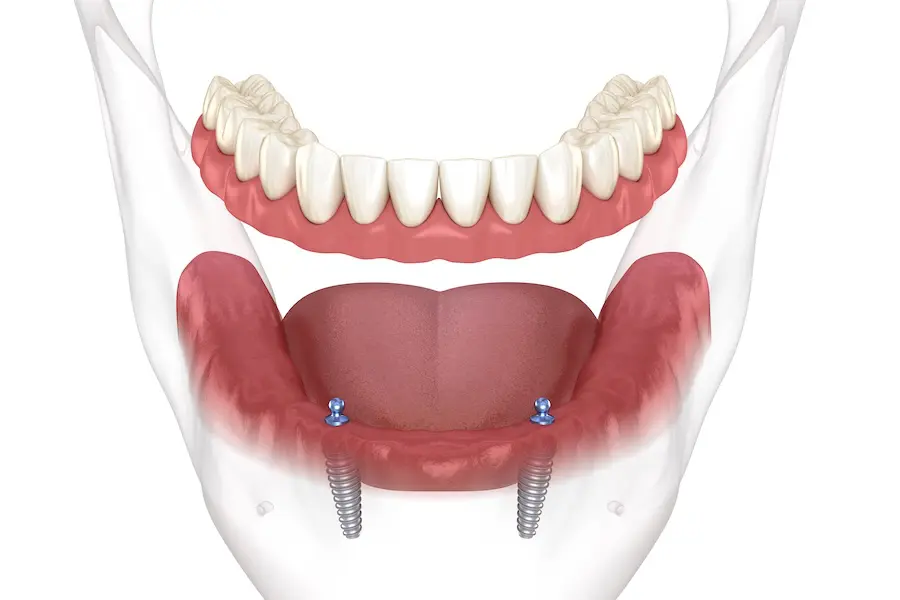
Category: Dental — Prosthodontics & Implants | Medical Specialist: Prosthodontist; implant dentist; oral and maxillofacial surgeon when indicated | References: American College of Prosthodontists (ACP); ADA; AAOMS
Introduction: When “Loose Dentures” Become More Than an Annoyance
A denture that moves when you chew, slips while you speak, or needs repeated adhesive can gradually change how you eat and socialize. For many people who have lost most or all of their teeth, the problem isn’t simply replacing missing teeth—it’s creating a prosthesis that feels secure enough to function naturally.
That is where Overdentures can make a meaningful difference.
Unlike conventional complete dentures, overdentures are designed to gain additional support or retention from remaining natural teeth, tooth roots, dental implants, or specially designed attachments. The result can be a more stable prosthesis without necessarily moving directly to a fixed implant-supported bridge.
Recent research is particularly encouraging for implant-retained overdentures. A 2026 systematic review found that patients who transitioned from conventional complete dentures to implant-retained overdentures generally experienced improvements in satisfaction and oral-health-related quality of life.
But are overdentures right for everyone? And how do they compare with conventional dentures?
Let’s take a closer look.
What Are Overdentures?
An overdenture is a removable dental prosthesis that fits over and receives support from something beneath it.
Depending on the patient’s oral condition, that support may come from:
- Remaining natural teeth
- Prepared tooth roots
- Dental implants
- Implant attachments such as locator, ball or bar systems
This makes overdentures different from conventional dentures, which depend primarily on the shape of the gums and underlying jawbone for support and retention.
One of the most important distinctions is that an overdenture is not automatically an implant denture. Some overdentures are tooth-supported, while others are retained by implants.
Why Do People Need Overdentures?
The need for an overdenture usually develops from extensive tooth loss or difficulty obtaining adequate stability from conventional dentures.
Common Causes
1. Extensive Tooth Loss
When many teeth are missing, there may not be enough natural teeth remaining to support a conventional fixed restoration. An overdenture can replace the missing teeth while using selected remaining teeth or implants for additional support.
2. Poor Denture Retention
Lower complete dentures are particularly prone to movement because the tongue, cheeks and lips constantly influence their position.
An implant-retained overdenture can provide mechanical retention, reducing unwanted movement during everyday activities.
Research has consistently investigated implant-retained mandibular overdentures as a way to improve retention and stability compared with conventional complete dentures.
3. Jawbone Resorption
After tooth extraction, the alveolar bone gradually remodels and may shrink over time. This can make an old denture increasingly unstable.
However, implant treatment is not simply about “stopping bone loss.” Treatment planning must consider existing bone volume, anatomy, systemic factors, prosthetic space and long-term maintenance.
4. Difficulty Eating or Speaking
Repeated denture movement can make certain foods difficult to chew and may affect speech confidence.
A more stable prosthesis can help patients regain confidence in everyday activities, although the degree of improvement varies from person to person.
5. Remaining Teeth That Can Still Be Used
Sometimes the best solution isn’t to remove every remaining tooth.
If selected teeth have a reasonable prognosis, they may be modified and incorporated into a tooth-supported overdenture. This approach can preserve natural tooth structures and provide additional proprioceptive feedback.
That decision, however, requires careful periodontal, restorative and prosthodontic evaluation.
Overdentures vs Conventional Dentures vs Fixed Implant Prostheses
Choosing a prosthesis is less about finding the “best” option and more about finding the option that matches the patient’s anatomy, health, expectations, finances and ability to maintain it.
| Feature | Conventional Denture | Overdenture | Fixed Implant Prosthesis |
|---|---|---|---|
| Removable | Yes | Usually yes | Usually no |
| Natural teeth/root support | No | Sometimes | No |
| Implant support | No | Often | Yes |
| Stability | Moderate to variable | Usually improved | Generally high |
| Surgical treatment | No | May or may not require implants | Usually required |
| Cleaning | Relatively simple | Requires prosthesis and attachment care | Requires meticulous home care |
| Maintenance | Relining/replacement may be needed | Attachment and denture maintenance | Implant and prosthetic maintenance |
| Cost | Generally lower | Moderate to high | Generally higher |
The important takeaway is that more expensive does not automatically mean more appropriate.
For a patient with two healthy strategic teeth, a tooth-supported overdenture may be a sensible option. For someone with severe mandibular denture instability and suitable bone, an implant-retained overdenture may provide a substantial functional improvement.
Types of Overdentures
1. Tooth-Supported Overdentures
These are designed over retained natural teeth or prepared roots.
The remaining teeth may receive special restorations or attachments that help support and stabilize the prosthesis.
Potential advantages include:
- Preservation of selected tooth roots
- Additional support
- Potential preservation of some alveolar bone around retained roots
- Retention of natural sensory feedback
The downside is that the remaining teeth must be carefully selected and maintained. Root caries, periodontal disease and endodontic problems can compromise the treatment.
2. Implant-Retained Overdentures
Implants can be placed in the jaw and connected to the removable denture using attachments.
Common attachment designs include:
- Locator-type attachments
- Ball-and-socket attachments
- Bar-and-clip systems
- Magnetic attachments in selected situations
There is no single attachment that is universally superior. A systematic review found broadly similar marginal bone-loss outcomes between ball and locator attachments, while also noting substantial variation among studies.
3. Mandibular Overdentures
The lower jaw is a particularly important application because conventional mandibular dentures can be difficult to stabilize.
Two-implant mandibular overdentures have long been an important evidence-based treatment approach, although newer research continues to examine alternatives such as single-implant and narrow-diameter implant designs.
A 2026 systematic review found that single midline implant overdentures may be a suitable alternative for selected patients, but emphasized that current evidence is not strong enough to make them a universal replacement for two-implant protocols.
Symptoms and Signs That May Suggest You Need More Denture Support
Strictly speaking, overdentures do not have “symptoms” because they are a treatment rather than a disease. Instead, patients usually notice problems associated with inadequate denture support or tooth loss.
Watch for:
- Dentures slipping while talking
- Difficulty chewing firm foods
- Frequent use of denture adhesive
- Sore spots beneath the denture
- Clicking or movement while speaking
- Difficulty keeping the lower denture in position
- Reduced confidence when eating socially
- A feeling that the denture is becoming increasingly loose
- Changes in facial appearance following extensive tooth loss
- Repeated need for denture adjustment or relining
A loose denture isn’t necessarily a sign that you immediately need implants. Sometimes the issue is simply an old denture, inadequate fit, changes in the supporting tissues, or an incorrect bite.
That is why a professional assessment matters.
How Are Overdentures Diagnosed and Planned?
The treatment begins with evaluation rather than simply choosing an attachment.
A dentist or prosthodontist may assess:
Oral Examination
The clinician evaluates:
- Remaining teeth
- Gum health
- Jawbone contours
- Existing denture fit
- Oral hygiene
- Bite and jaw relationships
- Available prosthetic space
Imaging
When implants are being considered, dental imaging helps evaluate bone volume and important anatomical structures.
Depending on the case, this may include conventional dental radiographs or three-dimensional imaging such as CBCT.
Medical and Dental History
Smoking, medications, systemic diseases, previous radiation therapy and other health factors may influence surgical and prosthetic planning.
The objective is not merely to place implants. It is to design a restoration that the patient can maintain successfully for years.
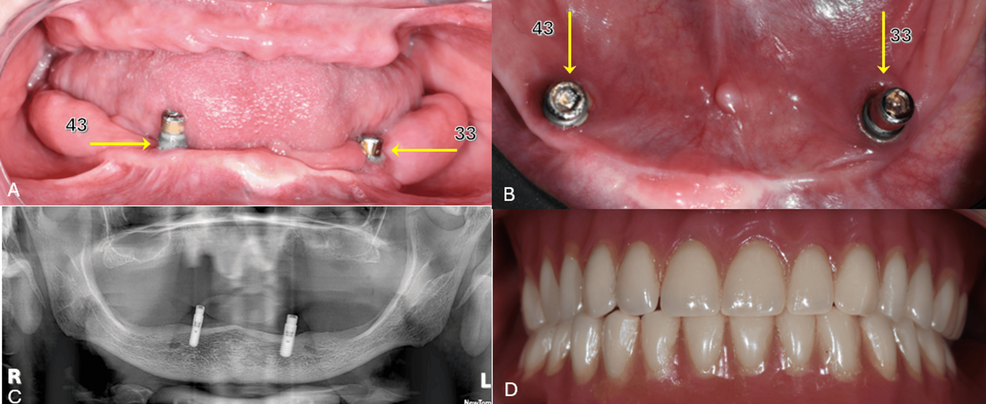
Overdenture Treatment: What Happens?
Treatment varies considerably depending on whether natural teeth or implants will provide support.
Step 1: Treatment Planning
The dentist determines whether remaining teeth are worth retaining and whether implants are appropriate.
Step 2: Preparing the Foundation
If natural teeth are being used, they may require periodontal, restorative or endodontic treatment.
If implants are selected, they are surgically placed according to the planned prosthetic design.
Step 3: Healing and Integration
Implants generally require a period of healing before the final prosthesis is connected, although loading protocols vary.
Interestingly, recent systematic-review evidence suggests that immediate and non-immediate loading of reduced-diameter implants can produce comparable implant survival in appropriately selected situations, but treatment timing remains case-dependent.
Step 4: Fabricating the Overdenture
The removable prosthesis is designed to work with the underlying support system.
The fit, bite, tooth position, aesthetics and attachment relationship all matter.
Step 5: Maintenance and Adjustment
This stage is often underestimated.
Overdentures contain mechanical components that can wear. Attachments may need replacement or activation, while the denture itself may eventually require repair, relining or replacement.
In other words, successful overdenture treatment is a long-term maintenance relationship—not a one-time procedure.
Benefits of Overdentures
When appropriately planned, overdentures can offer several advantages.
Improved Stability
Implant attachments can reduce unwanted denture movement.
Better Chewing Confidence
A stable prosthesis may make eating more comfortable and predictable.
Improved Patient Satisfaction
Recent evidence supports improvements in patient satisfaction and oral-health-related quality of life after transitioning from conventional dentures to implant-retained overdentures in appropriately selected edentulous patients.
Removable Design
Unlike many fixed implant restorations, overdentures can be removed for cleaning.
Potentially Less Extensive Than a Fixed Reconstruction
Depending on the case, fewer implants and a removable prosthesis may provide a practical alternative to a full fixed implant rehabilitation.
Potential Risks and Disadvantages
Overdentures are not maintenance-free.
Possible complications include:
- Attachment wear
- Denture fracture
- Loss of retention
- Sore areas
- Peri-implant mucositis
- Peri-implantitis
- Implant failure
- Relining requirements
- Fractured or worn denture teeth
- Difficulty maintaining hygiene around attachments
A systematic review of attachment systems found that implant and overdenture failures occur at relatively low rates overall, but prosthetic and biological complications remain important considerations.
This is why follow-up appointments should not be treated as optional.
How to Care for Overdentures
Good home care can make a major difference.
Daily Habits
- Remove the overdenture as advised by your dentist.
- Clean the prosthesis regularly with an appropriate denture-cleaning method.
- Brush remaining natural teeth carefully.
- Clean around implant attachments.
- Follow professional recommendations for interdental cleaning.
- Avoid using abrasive household cleaners on the denture.
- Store the prosthesis appropriately when it is not being worn.
If implants are involved, hygiene around the implant-abutment area is particularly important.
Key Insights: What Patients Often Don’t Hear
Stability Is Only One Part of Success
A denture can be extremely retentive but still uncomfortable if its borders, bite or tooth arrangement are poorly designed.
Fewer Implants Can Sometimes Be Appropriate—But Not Automatically Better
Research is increasingly examining single and narrow-diameter implants. However, “minimally invasive” should not be confused with “universally appropriate.”
Patient selection remains crucial.
Attachments Are Replaceable Components
Locator inserts, clips and other components may wear. Replacement does not necessarily mean treatment has failed—it can simply be part of normal maintenance.
The Best Overdenture Is the One You Can Maintain
A technically sophisticated prosthesis isn’t a success if the patient cannot clean it, attend follow-ups or afford its long-term maintenance.
That is perhaps the most practical lesson in overdenture treatment.
Frequently Asked Questions About Overdentures
Are overdentures better than normal dentures?
They can provide greater stability and retention in appropriately selected patients, particularly when implants are used. However, conventional dentures remain a suitable option for many people.
Do overdentures stay permanently in the mouth?
Most overdentures are removable. They are designed to remain stable during function while still being removable for cleaning.
How many implants are needed?
The number depends on the jaw, bone anatomy, prosthetic design and treatment objectives. Two implants are a well-established approach for many mandibular overdentures, while other configurations may be appropriate in selected cases.
Are overdentures painful?
Implant surgery can involve temporary discomfort and swelling. After healing, a properly fitting overdenture should not cause persistent pain. Continued soreness warrants professional evaluation.
How long do overdentures last?
There is no single lifespan. The denture, teeth, attachments, implants and supporting tissues all have different maintenance requirements.
Can I eat normally with an overdenture?
Many patients can eat more comfortably once they adapt to the prosthesis. However, adaptation takes time, and very hard or sticky foods may remain challenging.
Final Thoughts
Overdentures sit between conventional dentures and fixed implant restorations—and that middle ground can be remarkably valuable.
They can provide improved retention without necessarily requiring the complexity of a completely fixed reconstruction. For some patients, preserving strategic natural teeth is the smartest route. For others, implant-retained overdentures can transform an unstable lower denture into a much more predictable prosthesis.
The key is individualized planning.
If your denture moves, causes repeated sore spots, interferes with eating, or no longer feels like a dependable part of your daily life, don’t simply keep adding adhesive. Ask your dentist or prosthodontist whether your remaining teeth, bone anatomy and overall oral health make you a candidate for an overdenture.
A better-fitting denture may be the solution. An overdenture may be the next step. The right choice starts with a proper evaluation.
Recommended Internal Links
For a dental website, consider linking naturally to related pages such as:
- [Dental Implants]
- [Complete Dentures]
- [Tooth Replacement Options]
- [Dental Prosthodontics]
- [Denture Care Guide]
- [Dental Implant Aftercare]